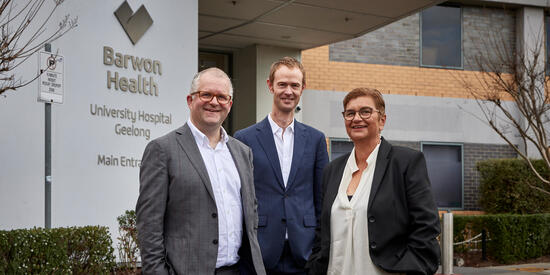
Deakin Institute for Frontier Materials
Leading innovation in materials science and engineering
Australia’s largest materials science research institute
The Deakin Institute for Frontier Materials is a global leader in materials science and engineering. We combine collaborative research with unique industry-scale facilities for battery technology, carbon fibre and composites, fibres and textiles, accelerating the commercialisation of novel products. We bring together some of the best and brightest minds in materials science to work with industry and organisations to create innovative, functional and sustainable solutions that transform the future. Our work is underpinned by two core missions: to redesign materials for a circular economy and to impart materials with extraordinary functionality.
Our research areas
Our multidisciplinary expertise covers a diverse range of areas – including engineering, chemistry, textile science and technology, and metallurgy – enabling the design of lighter, stronger and more sustainable materials.
Fibres, polymers and composites
Our researchers have expertise and capability across fibres, polymers and textiles, with strengths in carbon fibre and composites, circular innovations for textiles, repurposing and recycling textile waste, and surface engineering.
Metals and infrastructure materials
We conduct world-leading research that combines metallurgy, physics and engineering with AI-driven design to accelerate innovation and shape the future of manufacturing and sustainability.
Electro and energy materials
Our researchers are leading breakthroughs in electrochemistry and energy storage, and driving the development of safer, more sustainable technologies.
Help drive transformational change
Work on immersive, innovative projects to address material challenges in the energy, mining, environment, health, transport, textiles and manufacturing sectors.
Our researchers
We bring together the expertise of researchers from all over the world, and from many different research areas including engineering, chemistry, and textile science, to solve global problems through material design.
Deakin Distinguished Professor Matthew Barnett has made significant technical contributions to alloy development in sheet steel research, light metals development, alloy characterisation and alloy functionality. His area of research involves designing the microstructure of new metal alloys to give enhanced properties.
Professor Minoo Naebe is a professor of carbon fibre and composites and associate dean (research) in the Faculty of Science, Engineering and Built Environment. Her research focuses on leveraging carbon fibre and polymer composite materials to advance sustainability and enable future emerging applications.
Deakin Distinguished Professor Ying Ian Chen is a globally recognised expert in nanotechnology and energy storage, leading a pioneering research team focused on new materials discovery and clean energy applications.
Professor Jenny Pringle leads a research team developing innovative electromaterials for cleaner, smarter technologies – including next-generation batteries, gas separation and sustainable cooling.
Professor Luke Henderson is a materials chemist whose research explores how surface chemistry can be tailored to create smarter, more functional composite materials.
Featured facilities
We have facilities located across Deakin’s Waurn Ponds and Burwood campuses that foster groundbreaking innovations in advanced manufacturing. Our three pilot-scale facilities accelerate the commercialisation of novel products or components at any stage of the value chain without interrupting business as usual in a commercial factory.
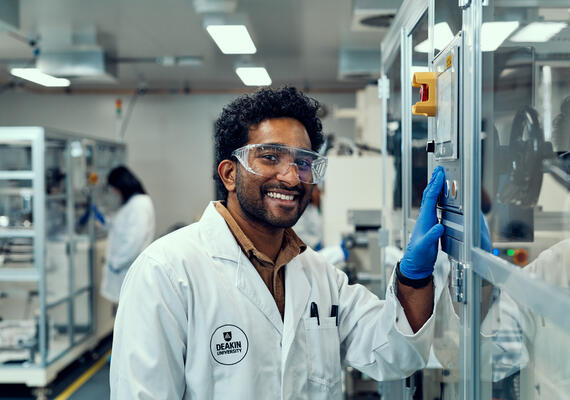
Battery Research and Innovation Hub
The Battery Research and Innovation Hub, managed by the Deakin Institute for Frontier Materials, provides world-class equipment for advanced battery prototyping and the commercialisation of energy storage technologies.
The hub includes a research laboratory for new battery design and development, prototyping and a cell and systems test facility for multiple battery types and sizes.
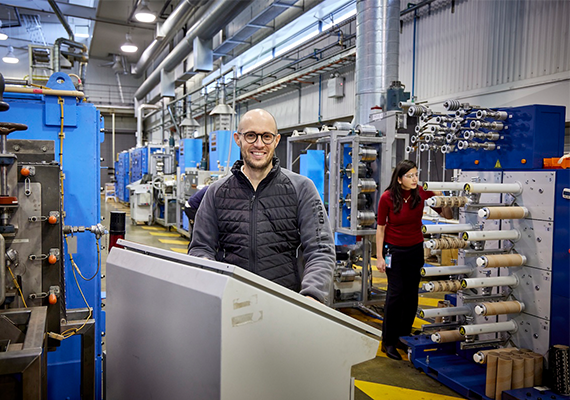
Carbon Nexus
Carbon Nexus is a world-class open-access carbon fibre and composites facility situated on Deakin’s Waurn Ponds campus. Established in 2014, it delivers globally significant, industrial-scale research to support the growth of a new generation of carbon fibre products and technologies.
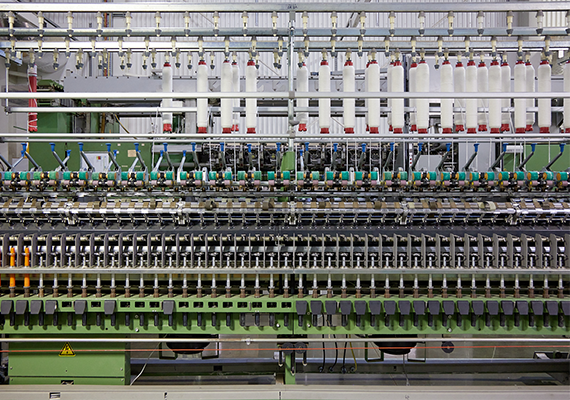
Future Fibres Facility
The Future Fibres Facility at the Deakin Institute for Frontier Materials has an unparalleled mix of research and industrial-scale equipment that can take fibre products from ideation to prototype and pilot-scale.
Our partnerships
We collaborate with partners from across the globe to produce breakthrough results across advanced manufacturing, defence, energy and sustainability systems. Some of our partners include:
- Xefco
- FormFlow
- Li-S Energy
- Uluu
- HeiQ
Contact us
Stay in touch to hear about the latest alumni opportunities, research news, partnership and industry opportunities, and much more. Have a question? Get in touch with the team.
Follow us on LinkedIn
Visit the website