If you'd like to study with us, work or collaborate with us, or learn more about our research, we'd love to hear from you.
Email Deakin Institute for Intelligent Systems
Deakin Institute for Intelligent Systems
Australia’s largest research group in intelligent systems modelling and simulation
Shaping the future through intelligent systems
The Deakin Institute for Intelligent Systems is home to Australia's largest research team in systems modelling and simulation, providing practical solutions and commercial-ready products for aerospace, rail, automotive, defence, security and health sectors.
Our researchers harness cutting-edge innovation, and specialised facilities and infrastructure to transform bold ideas into technologies that deliver real commercial impact.
Our research areas
Our expertise spans motion simulators and haptics, simulation training, autonomous systems and robotics, systems modelling and human performance – delivering high-impact solutions with proven real-world value.
Autonomous systems and robotics
Defence, security and medical industries rely on robotics to improve safety, efficiency and national security. We design and engineer smarter, more reliable autonomous systems for government and industry partners.
Systems modelling and simulation
We help organisations analyse complex data and test scenarios through advanced modelling and simulation. With Australia’s largest research team in this field, we lead projects in simulation, data visualisation, complex systems and decision-making under uncertainty.
Human factors and performance
By analysing human movement, cognition and sensory responses, we create intelligent systems that interact seamlessly with people.
Using techniques such as eye tracking, motion capture and respiration monitoring, our research is redefining how humans and machines work together.
Motion simulators and simulation training
Our Motion Simulation Lab recreates real-world experiences – from jet fighter G-forces to combat vehicle driving – in safe, controlled environments. It houses advanced mobile and industrial robots, including the world’s first haptically enabled universal motion simulator, designed and built in-house.
Excellence, translation, impact
We deliver impact through research, development and commercialisation. We partner with industry, government and community to create agile, adaptive solutions ready for real-world challenges.
The Deakin Institute for Intelligent Systems is dedicated to fostering innovation and excellence and shaping Industry 5.0 technologies that leverage the creativity of humans with the scalability of autonomy and AI.
Our researchers
At the heart of our work is a collaborative team of internationally renowned experts, who drive innovation across intelligent systems disciplines to deliver real-world, commercial-ready solutions.
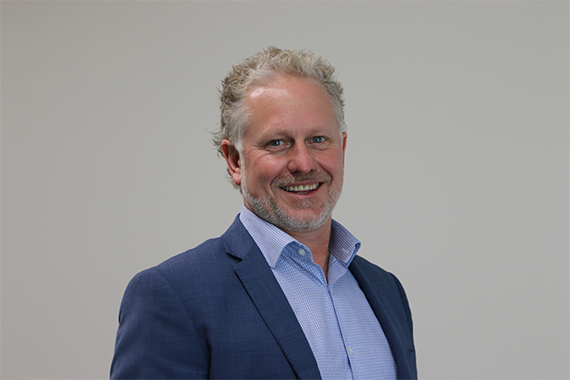
Deakin Distinguished Professor Doug Creighton is the Director of Deakin Institute for Intelligent Systems, where he leads a team of 100 researchers. His career has focused on developing methods and algorithms to model complex systems, leading translational research in systems thinking, AI, and agent-based modelling. He uses these research outcomes to create novel and innovative technologies supporting solutions for real-world problems.
Our facilities
Our world-class facilities power breakthroughs in intelligent systems research and training. From advanced simulators to unique motion systems, they enable safer, smarter and faster solutions for industry, defence, space and beyond.
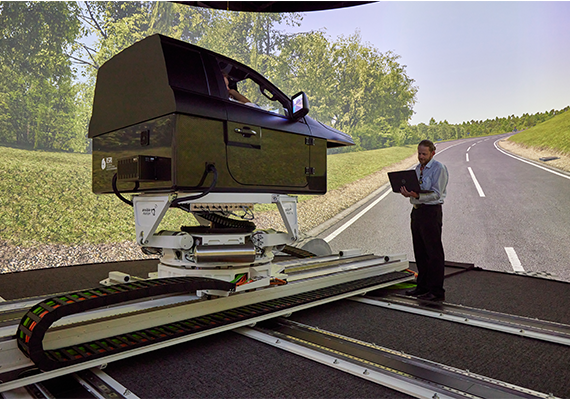
Motion simulators
The Deakin Institute for Intelligent Systems houses $40M in infrastructure, including the Genesis Simulator — the first of its kind in Australia. Genesis is the centrepiece of a broader research ecosystem that brings together motion simulation, systems modelling, autonomy, human factors and measurement to support closed-loop studies of human, machine and environment interaction. It enables controlled, repeatable experiments in transport, aviation, shipping and road safety.
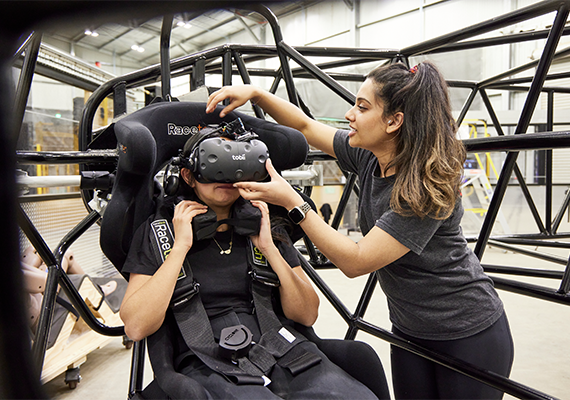
CYCLONE centrifuge
CYCLONE, Australia’s first high-G centrifuge motion system, places the nation at the forefront of aviation and space training. It delivers safe, cost-effective simulation for aircrews and astronauts while enabling virtual prototyping and testing of new land and vehicle designs.
Our partnerships
Partnering with the Deakin Institute for Intelligent Systems means accessing Deakin’s nationally recognised research commercialisation expertise, a collaborative team of 50 specialists in intelligent systems, and a proven track record of impactful collaborations with 300+ industry and government organisations worldwide.
Some of our industry partners include:
- Australian Defence Force
- Australian Electoral Commission
- Boeing
- Ford Australia