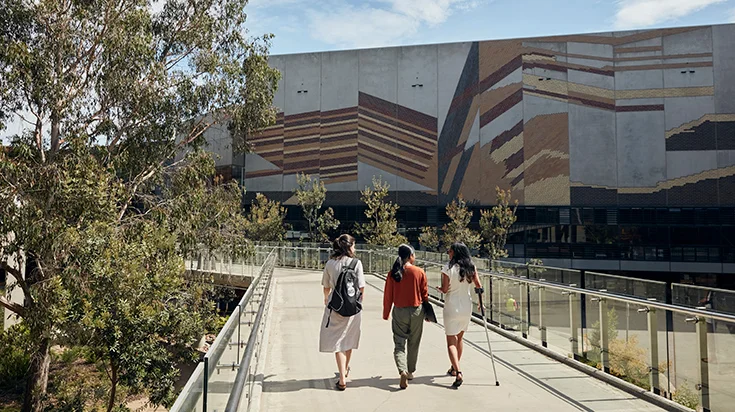
Walking
One of the easiest and most accessible physical activities available for everyone is walking: you don’t require any special equipment or training and it’s also free. Nearly everyone can walk whether it is as a mode of travel, for fitness, weight loss or relaxation.
If you live within 3km from Deakin, consider walking to campus. At the Melbourne Burwood Campus, Gardiner's Creek Trail is located just behind the University – it begins at the Main Yarra Trail in Toorak and follows Gardiner's Creek through Glen Iris, Malvern, Burwood (Deakin University), Ashwood, Box Hill and ends near the Blackburn Lake Sanctuary. At the Geelong Campuses the Barwon River Trail, Bay Trail and Waurn Ponds Creek Trail take you to the campuses. Hop on at various points for a short walk to get to Deakin, you can even meet up with a friend and walk together.
You will avoid parking hassles, save money that you would otherwise use for petrol or parking fees and get some exercise at the same time.
Benefits of walking
You carry your own body weight when you walk. This is sometimes called ‘weight bearing’ exercise. Some of the benefits include:
- Increased cardiovascular and pulmonary (heart and lung) fitness
- Reduced risk of heart disease and stroke
- Improved management of conditions such as hypertension (high blood pressure), high cholesterol, joint and muscular pain or stiffness, and diabetes
- Stronger bones and improved balance
- Increased muscle strength and endurance
- Reduced body fat.
Walk for 30 minutes a day
To get the health benefits, try to walk for at least 30 minutes as briskly as you can most days of the week. ‘Brisk’ means that you can still talk but not sing, and you may be puffing slightly. Moderate activities such as walking pose little health risk but, if you have a medical condition, check with your doctor before starting any new exercise program of physical activity.
Build physical activity into your life
If it’s too difficult to walk for 30 minutes at one time, do regular small bouts (10 minutes) three times per day and gradually build up to longer sessions. If your goal is to lose weight, you will need to do physical activity for longer than 30 minutes each day. You can achieve this by starting with smaller bouts of activity throughout the day and increasing these to sessions of more than 30 minutes as your fitness improves.
Physical activity built into a daily lifestyle plan is also one of the most effective ways to assist with weight loss and keep weight off once it’s lost. Some suggestions to build walking into your daily routine include:
- Try taking the stairs instead of the lift (for at least part of the way).
- Get off public transport one stop earlier and walk to work or home.
- Do housework like vacuuming.
- Walk (don’t drive) to the local shops.
- Walk the dog (or your neighbour’s dog).
Walk regularly if you can
Try to make walking a routine – for example, try to walk at the same time each day. Remember, you use the same amount of energy no matter what time of day you walk, so do what is most convenient for you. You may find that asking someone to walk with you will help make it a regular activity. Some people find that keeping an ‘activity diary or log’ also makes it easier.
(National Heart Foundation 2010)