3MT® presentations: Tips for presenting and public speaking
Have you ever dreamed of changing the world in just three minutes? The question might sound like hyperbole, but it’s the sort of attention-grabbing hook that Deakin’s Dr Wade Kelly recommends to prospective Three Minute Thesis (3MT®) speakers – and his advice doesn’t stop there.
3MT presentations are an opportunity for PhD candidates to translate their complex, years-long study into a speech of just 180 seconds, targeted at an unfamiliar, non-specialist audience. It’s definitely a challenge, but for Wade, that’s the crux of why 3MT presentations are important. Wade sees a PhD as more than just an insular academic pursuit – it’s a chance to grow, learn and develop as a person.
Rather than sharing discipline-specific knowledge within a small circle of academic colleagues, 3MT encourages graduate researchers to develop the skills to communicate their specialised knowledge and expertise with anyone.
‘It's so important that we develop the skills and muscles to be able to communicate with people who are not like us,’ says Wade. ‘And that means not talking to other academic researchers, but talking to people in the community, in industry, in government.’
Wade Kelly’s 3MT presentation tips
At the end of the day, 3MT is a competition, which means there are winners. And while the winner can go home with $3000, the experience is about more than just the prize.
‘To me, Three Minute Thesis is more so about the journey than it is about the destination. How often do you get three minutes undivided of somebody else's attention and have an opportunity to convince them that what you're doing has value, has purpose and that it matters?’ Wade says.
So, whether you’re hoping to become a 3MT finalist or just excited to share your research with a new audience, a 3MT presentation can be a valuable experience. With that in mind, Wade has plenty of useful tips to share to make the most of your 3MT journey.
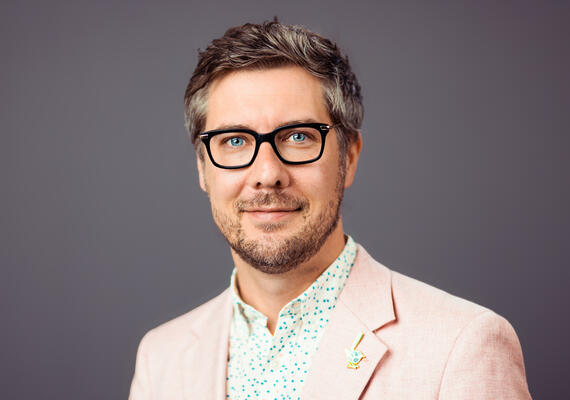
It's about the skills that you're developing, it's about that ability to stand in front of a room of people and tell your story. Just having that opportunity to do that is kind of a rare gift.
Senior lecturer
Tips for presenting: what makes a great 3MT speech
A successful 3MT speech isn’t the same as a great PhD thesis. There’s going to be plenty of overlap, naturally, but a 3MT presentation is all about making your PhD approachable for a general audience. Wade suggests four key tips for presenting:
- Start with a compelling hook: ‘This is an opening statement that grabs the attention of the audience and gets them to care,’ Kelly says. ‘It could be a startling statistic or a relatable story, an intriguing question. You’ve got just 15 seconds to grab that audience, so you’ve got to make it count.’
- Clearly state your research problem: ‘What's the thing that you're trying to solve? What's the gap in knowledge? What's the mystery? You’ve got to make this crystal clear and jargon-free.’
- Explain how you’re going to solve that problem: ‘You’ve got to keep this high-level. It's not detailed methodology. You’re not at an academic conference. This is just enough information so that the audience understands your approach to the problem.’
- Emphasise the impact of your research: ‘You've talked about the problem, you've talked about how you're approaching that problem – why does it matter? Who does it matter to? Who are the people that will benefit from your research? How does it change our understanding or improve lives? This is the thing that the judges and the audience will most likely remember most.’
Dealing with nerves and the challenges of public speaking
Standing on stage in front of a packed auditorium is a completely different ball game from chatting with your research supervisor or writing a paper. For most of us, it’s a nerve-wracking scenario – for some, it’s nightmare fuel. With all the benefits of 3MT presentations, though, it’s worth trying to work through the nerves and the challenge of public speaking – and Wade has some tips on how to do it.
One technique that Wade recommends to deal with 3MT presentation nerves is to get familiar with the space (in this case, the auditorium) before your speech. Get there early and know what you’re dealing with.
‘If you can get there early, familiarise yourself with the space,’ Wade says. ‘If you're going to be behind a lectern, on top of a podium or on a stage, or if you're using a handheld mic or a lavalier. All of that, when you've checked it off mentally in your head, reduces the unknown and reduces the additional nerves that you might be experiencing.’
Another idea is reframing your mindset – in other words, mind over matter.
‘All those symptoms you're feeling, the elevated heart rate and the butterflies in the stomach – well, instead of saying “I'm nervous”, say “I'm excited,”’ Kelly says.
Simple cognitive reframing can really transform your mindset to positive energy. Yes, you are nervous, but reframe the things you're feeling in your body as excitement. Look in the mirror and say, “I'm excited.”
Senior lecturer
Show the impact of your research with your 3MT thesis presentation
Your research exists to make an impact – and the 3MT judges want to hear all about it. As Wade explains, impact should be infused throughout the entire presentation. ‘The strongest 3MT presentations don't just explain research; they explain why it matters,’ he says.
For maximum impact, keep Kelly’s tips in mind:
- Identify your impact sphere: ‘Is your research changing our understanding of fundamental science?’ Kelly asks. ‘Is it solving a practical problem? Maybe it's challenging existing paradigms. Be clear about where it sits.’
- Quantify that impact where possible: ‘Saying “my research could reduce hospital readmissions by 30%” is a lot more powerful than saying it will help people. Numbers can help people understand complexity.’
- Humanise your impact: ‘Even the most theoretical research ultimately impacts people. Explain to people how the baton gets passed from you, as a fundamental researcher, onto the next researchers who ultimately will create interventions that will save lives. Do that heavy lifting for your audience.’
- Connect your research to larger issues: ‘Is this about climate change or public health or social inequality or technological advancement? Connecting to broader concerns helps audiences grasp why it matters.’
Five common mistakes to avoid: Wade Kelly’s checklist for public speaking
An impactful 3MT presentation can be as much about what you leave out as what you put in. From Wade’s perspective, there are some common mistakes that speakers make in their short time on the 3MT stage. In that sense, keep this checklist for public speaking in mind and avoid some common mistakes:
- Talking too much about methodology: Methodology is a vital piece of your PhD thesis, but it shouldn’t be a big focus here. ‘I understand the methods are important – all those months of painstaking work – but for a general audience, they don't know and they really don't care,’ Wade says. 'Limit your methods to 10, 20, 30 seconds.’
- Communicating without passion: As Wade explains, if you want the audience to care about your research, you need to show why it’s worth caring about – and that starts with passion. ‘Engage yourself, engage the audience. Passion is contagious, so bring it.’
- Too much technical jargon: Remember: 3MT presentations are about communicating with people without your level of expertise, so avoid terms that are hard to understand. Reach out to a friend outside of academia and ask them to listen to your talk. 'They will be amazing critical allies in helping you get rid of technical jargon. And when there are really specific terms that are really necessary, you have to explain them clearly and concisely.’
- Not explaining why your research is important: Your research exists for an important reason, so don’t forget to convey that to the audience and judges. ‘Who benefits? What problems are getting solved? Why is it significant?’
- Being under-rehearsed: A 3MT presentation is, ultimately, a performance – and performances need practice. ‘If it's not well practiced, it's going to be clear that it's not well practiced. So practice, practice, practice. Aim for at least 15 to 20 practice runs in front of a mirror, in front of friends, in front of colleagues, in front of your mother. It will help, I promise.’
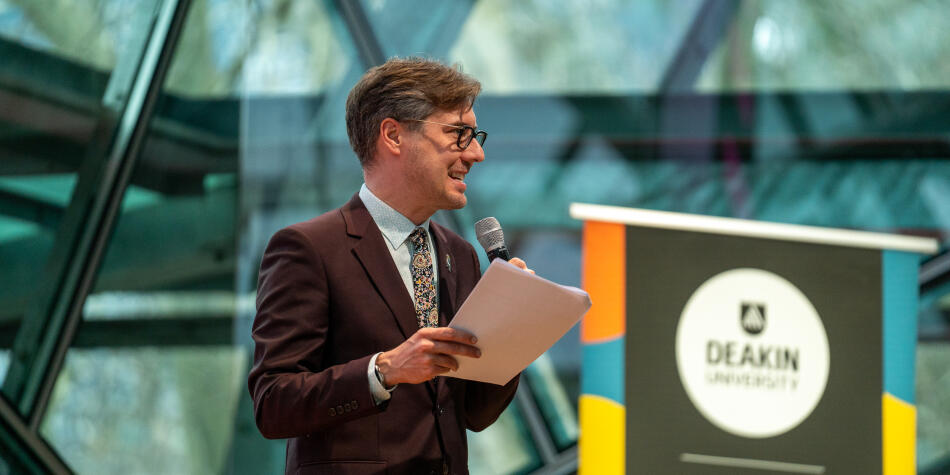
Top Five Presenter Tips
Elevate your 3MT presentation with five powerful delivery techniques used by winning competitors.
3MT presentations: Wade’s final words of advice
Giving a 3MT presentation is a wonderful opportunity. While it’s just three minutes speaking to the audience, the impact could go far beyond that small slice of stage time. As Wade says: if you’re in the position to share your PhD as a 3MT presentation, grab that chance.
‘Just go for it,’ he says. ‘I'd particularly give that advice to the people who didn't love drama, who were scared about public speaking, who really like to be in the library. Challenge yourself, develop those new skills. The PhD is the perfect opportunity to expose yourself to a wealth of skill development that doesn't have to only be centred on methodological processes. This is an opportunity to develop and grow yourself, so give it a go.’