Now is the time to study arts and cultural management
From where I sit as a lecturer in arts and cultural management, who works closely with artists, organisations, policymakers and students, the question is no longer whether the arts and cultural sector needs stronger leadership – it is how quickly we can build it.
Across Australia, the arts are operating in a climate of heightened pressure. Public funding is increasingly competitive and politicised. Organisations are being asked to justify their value in economic, social and cultural terms simultaneously. Audiences are changing how, when and why they engage. Workforces are stretched, often precarious, and experiencing burnout. At the same time, expectations around inclusion, governance, ethics, sustainability and impact have never been higher.
These conditions are not temporary. They are structural.
Layered onto this is a critical reckoning with Australia’s cultural foundations. There is growing recognition of the central role of First Nations cultures, knowledge systems and leadership in shaping the future of the arts. Cultural organisations are being called to move beyond symbolic inclusion towards genuine, sustained engagement with First Nations sovereignty, storytelling, governance and self-determination. This requires leaders who understand cultural authority, ethical collaboration and the responsibilities that come with working on unceded lands – not as an add-on but as core to cultural practice and management.
What this means is that the sector urgently needs leaders who can think strategically, manage complexity and act with cultural responsibility – leaders who understand both the creative heart of the work and the systems that sustain it.
This is why now is a critical moment to undertake postgraduate study in arts and cultural management.
More accessible entry requirements
From 2026, Master of Business (Arts and Cultural Management) entry is more flexible, with two years of professional experience now accepted instead of three. Standard academic entry requirements continue to apply.
Contemporary cultural leadership requires more than goodwill, intuition or experience alone. It requires the ability to navigate funding and policy environments, design audience-centred strategies, lead teams with care, manage risk and make informed decisions under uncertainty – all while protecting artistic integrity, public value and cultural accountability. These capabilities are learned, practised and refined over time, and a postgraduate arts management course provides a rare space to do this with rigour.
Importantly, the strongest arts management courses today are not about forcing the arts into generic business templates. They are about developing context-aware leadership: applying management, finance, marketing and governance principles in ways that are attuned to cultural work, community accountability and social purpose. In the Australian context, this includes understanding First Nations-led models of cultural governance and recognising where leadership must be shared, supported or stepped back.
At Deakin University, the Master of Business (Arts and Cultural Management) reflects this reality. It is a tailored business education for arts managers, delivered through a business school and shaped by creative industries expertise, it responds directly to the challenges facing the sector right now. It recognises that cultural leadership today sits between strategy and creativity, care and accountability, resilience and imagination, and that First Nations cultures are foundational to this work.
Finally, access matters. As entry pathways become more inclusive and recognise professional and volunteer experience, postgraduate leadership education is opening up to a broader range of cultural workers – precisely at a time when the sector needs diverse, informed, and courageous leadership voices.
If you're interested in advancing your career in this exciting field, learn more about the Master of Business (Arts and Cultural Management).
Direct applications for Trimester 1, 2026, are now open and close on 22 February.
Frequently asked questions about arts and cultural management
Arts and cultural management is the practice of leading and managing creative organisations, projects and cultural initiatives across the arts and creative industries. It spans strategy, operations, audience engagement, funding and programming — from galleries, festivals and theatre companies to music organisations, publishing, digital media and community arts. Professionals in this field ensure creative work can be produced, presented and sustained. At its core, arts and cultural management blends creative vision with business expertise to help cultural work thrive in complex and rapidly evolving environments.
Graduates move into roles such as arts manager, festival producer, cultural policy advisor, development manager and executive director across not-for-profit, government and commercial organisations.
Arts and cultural management takes a broader, contemporary approach than traditional arts administration, emphasising strategic leadership, innovation and business skills across the creative industries and preparing graduates for senior roles in diverse cultural contexts.
Key challenges include securing sustainable funding amid constrained government investment and competitive philanthropy, diversifying audiences beyond traditionally narrow demographics, and moving beyond symbolic inclusion towards genuine, sustained engagement with First Nations sovereignty, storytelling, governance and self-determination.
Organisations must also respond to digital transformation — including the rise of AI and data-driven technologies — and shifting audience behaviours, while balancing artistic vision with strategic and commercial realities. These conditions demand leaders who are culturally informed, ethically grounded and business-savvy, capable of adapting and innovating with purpose.
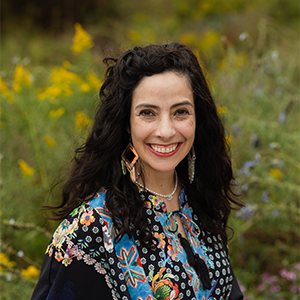
This article was written by Dr Claudia Escobar Vega. Claudia is a lecturer in arts and cultural management at Deakin Business School. Escobar Vega is an international researcher and arts leader shaping how the next generation understands leadership. She has extensive experience across the arts and cultural sector as an arts manager, creative practitioner, consultant, and board member.