
The text of this article is licensed under the Creative Commons Attribution (CC BY) 4.0 International license. We'd love for you to share it, so feel free. Images, videos, graphics and logos are not covered by the CC BY license and may not be used without permission from Deakin or the respective copyright holder. For more information on how to share or reuse this content, please contact researchcomms@deakin.edu.au.
Cultivating a living library for marine conservation
Research news
6 May 2026
Tucked away in a laboratory at Queenscliff in Victoria, there’s a cornucopia of marine life, just waiting for its chance to go out into the world and flourish.
At Deakin University’s Centre for Marine Science, leading researchers have been working together to build a dedicated biobank, or ‘living library’, to help safeguard biodiversity and enable future scientific research and conservation.
Victoria’s coastal ecosystems have been cared for by local First Nations communities for tens of thousands of years. Now, with accelerating environmental change, habitat loss and species decline, biobanks provide a crucial way to protect genetic diversity and support restoration for future generations.
Seeding oysters
Throughout Australia’s southern coastline, reefs created by the native flat oyster (also known as Ostrea angasi) are considered critically endangered, but Dr Kathy Overton hopes to change that.
Over the past year, she and her fellow researchers have been working with the Nature Conservancy to collect oysters along 500km of Victorian coastline, ranging from Port Phillip Bay to Mallacoota.
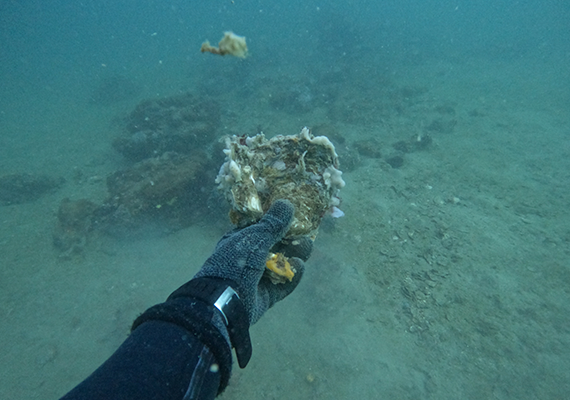
‘The native flat oyster used to form extensive reefs in the temperate regions of Australia, which provided important habitat for a huge range of different marine species. They also filter and clean vast amounts of seawater, and in that way are the kidneys of our coastal areas,’ says Dr Overton.
‘Having a living library will allow for targeted restoration of flat oyster reefs throughout Victoria, so that current and future generations can enjoy these spectacular ecosystems and the ecological, cultural and economic benefits they provide.’
Gathering kelp
Dr Prue Francis and her team have travelled to 15 sites along the Victorian coastline to collect the reproductive tissue of Golden Kelp, or Ecklonia radiata.
From these tissues, they're able to isolate the second life stage of kelp known as gametophytes, which is essentially the sexual reproductive phase of the kelp.
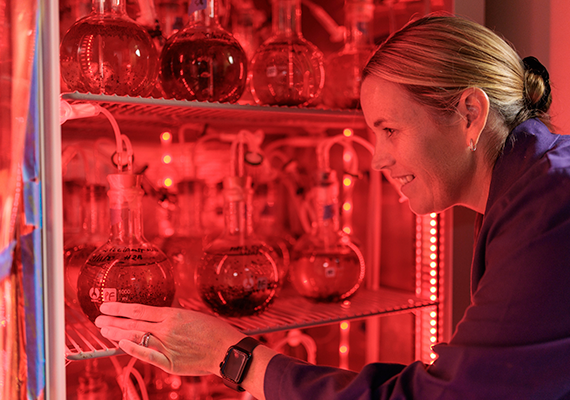
‘Using red light and constant temperature, the kelp stay in a gametophyte lifeform which stabilises them for longer term storage,’ says Dr Francis.
‘These gametophytes function as the living biobank for this species. We can then adapt the environmental conditions so they know it’s time to grow and transition into the next life stage when planted out.’
Sowing seagrass
Between Warrnambool and Western Port, research fellow Laney Callahan has been diving into seagrass to collect seeds to store in the biobank for years to come.
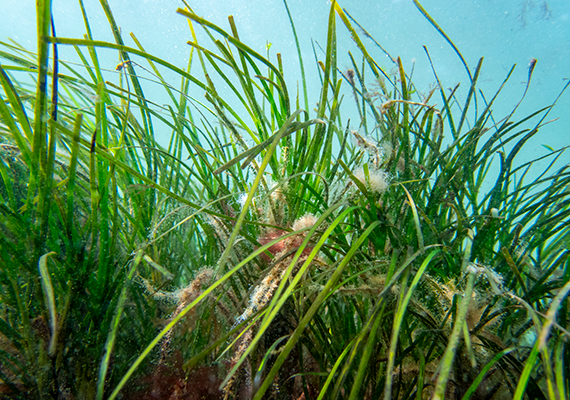
‘These seagrasses are important marine ecosystems, helping to protect our coastlines from erosion and acting as vital nursery habitat for fish,’ says Callahan.
With seeds collected from different sites across distinct geographical areas, genetic diversity can be maintained for the future in the face of ongoing environmental declines.
A living library for future generations
Similar to the infamous Svalbard Global Seed Vault found in Norway’s arctic archipelagos, marine biobanks create a secure environment for the storage of genetic material, ensuring conservation and diversity for years to come.
With climate change, pollution, and disease triggering species and habitat loss in marine ecosystems, biobanks are critical in bringing organisms into a secure environment to breed before eventually returning them to the wild.
Restoration, once it’s successful and on a large scale, will help deliver habitats that we’ll all be able to enjoy for generations to come
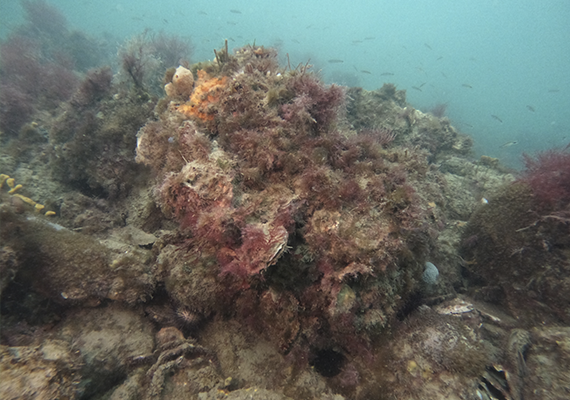
Discover the Deakin Marine living library
Dive in to learn more about the dedicated biobank being built to restore marine ecosystems.
This work was recently highlighted by the Guardian: 'Living library': inside the marine biobanks racing to protect ocean species from extinction