What is graduate employability?
Get excited, graduates – your future is ready and waiting. Graduation gives you the chance to turn your years of study and your degree into professional success and personal satisfaction.
Graduation can mark the start of a long career or be a stepping stone to exploring all the opportunities your degree can offer. Whatever your plans after graduation, one quality will help you succeed: graduate employability.
But what exactly do we mean by 'graduate employability'? And how can you make sure you’re prepared when you graduate? We spoke to Deakin experts Associate Professor Lauren Hansen, Director of Graduate Employability, and Liza Marsh, Operations Lead for Graduate Employability, to break it down for you.
What is graduate employability and why it matters
Graduate employment is exactly what it sounds like: securing a job after you graduate from university.
Graduate employability goes a little deeper.
'Graduate employability refers to a graduate’s ability to find and maintain meaningful work after completing their studies,' says Hansen.
'It encompasses work readiness, strong disciplinary knowledge and the skills and attributes needed to perform effectively in professional settings, along with career management abilities such as exploring career options, gaining relevant experience and communicating that experience to employers.'
As Marsh explains, employability is about more than passing exams or landing your first role – it's about being ready to succeed.
'At its core, graduate employability involves developing a professional sense of self, in which graduates view themselves as capable and adaptable professionals who can apply their knowledge, continue learning, and contribute responsibly and ethically within their chosen fields and to society more broadly,' Marsh says.
What makes a graduate employable?
We all like to think of ourselves as strong job candidates, but what actually makes you employable?
Having a degree is a strong start, but the most employable graduates also demonstrate relevant experience, transferable skills and workplace-ready personal attributes.
When it comes to experience, Hansen says you don't need to have done the exact job before. However, there are experiences employers particularly value.
'Volunteering in the community can provide evidence of leadership, teamwork or stakeholder management skills,' Hansen says. 'Employers particularly value graduates who are adaptable, willing to learn and open to developing new skills on the job.'
Highly employable graduates can clearly articulate their professional goals, the contributions they can make and how they like to work.
Director of Graduate Employability
How do graduate employability rankings work?
Graduate employability rankings can help you understand how universities support career outcomes. Rankings such as The Quality Indicators for Learning and Teaching Graduate Outcomes Survey assess Australian universities based on employment type, median salary and how well graduates feel prepared for work.
According to Marsh, these university rankings can be useful, but they don't tell the full story.
'The survey is conducted only four months after graduation, which may not give graduates enough time to secure relevant employment,’ Marsh says.
'Response rates are also relatively low, meaning the results may not reflect the experiences of all graduates. In addition, outcomes vary significantly across different disciplines, so it is important to look closely at results for the specific field you are interested in.'
For this reason, Marsh encourages you to treat graduate rankings as one source of information and consider them alongside others, such as open days, alumni insights and professional accrediting bodies.
Unbeatable employability
Deakin offers a comprehensive, career-focused education experience. Nine out of ten Deakin graduates get a job within four to six months.
How do universities improve graduate employability?
While graduate employability rankings aren’t everything, they raise an important question: how do universities help you prepare for life after graduation?
'Universities provide multiple opportunities to enhance graduate employability by helping students develop both discipline-specific skills, knowledge and attributes, and their work readiness,' says Hansen.
Generally, you’ll gain knowledge and field-specific skills through your coursework – like understanding strategic uses of AI as part of a Bachelor of Information Technology degree. As Marsh explains, job readiness can also be strengthened through hands-on experiences built into your courses.
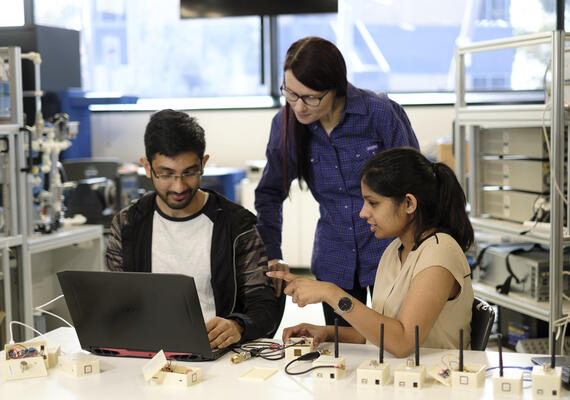
‘Work readiness is further developed through work-integrated learning (WIL) experiences, such as practicums, placements, internships, industry-based projects, simulations and case studies, which allow students to connect their academic learning with the world of work,’ Marsh says.
University support to prepare you for work
Through WIL and career services, Deakin gives you the chance to gain practical experience, build professional skills and grow confidence for the workplace. These opportunities are designed to help you apply your learning in real-world settings, while career services provide guidance on job search, career planning and recruitment – supporting your transition from study to work.
Graduate employability at Deakin
At Deakin, graduate employability is embedded into every degree through work-integrated learning and career development learning (CDL).
WIL opportunities are exciting, hands-on experiences within your chosen field – such as internships, study tours and industry placements. As Marsh explains, there’s one WIL opportunity in particular that you can really benefit from.
‘The DeakinTALENT FreelancingHUB is one of our signature WIL experiences,’ Marsh says. ‘Students work as part of a multidisciplinary team to deliver a real project for a not-for-profit, social enterprise, community or government organisation. This allows students not only to develop their work readiness but also to gain a greater understanding of the challenges our community faces and how they can contribute to it.’
CDL helps you plan your future careers by taking advantage of opportunities both within and beyond your degree. As Hansen explains, CDL and WIL work together to boost your graduate employability.
‘CDL helps students research career options, articulate their experiences to employers and plan next steps, so that WIL is not just an isolated activity but part of your broader, ongoing career journey.'
What can you do to improve graduate employability?
Graduate employability develops over time. While it would be ideal to step straight into a dream role after graduation (graduate CEO, perhaps?), building a career often happens gradually.
One of the most effective ways to improve employability is to work while you study, even if the role doesn’t seem directly related to your long-term goals.
'Through paid work, students can build work readiness, apply their disciplinary knowledge and skills, and develop their emerging professional selves,' Marsh explains.
'For example, a nutrition student might start in a casual role at Target, move into a retail position at Nutrition Warehouse and then use that experience to gain a nutrition assistant role in a hospital. We call this a "stepping stone" role, and it helps students not just earn while they learn, but learn while they earn.’
Whether through paid work, volunteering, internships or industry projects, every experience contributes to your employability when you know how to reflect on it and communicate its value.
Ready to build your employability with confidence? Explore Deakin’s careers and employability support and take the next step towards your future.