Growing the next generation of Indigenous researchers
For Troy Walker, Indigenous health and research is deeply personal. The proud Yorta Yorta man and co-founder of Deakin University’s Murnong Health Research Mob traces his journey into health research to his grandfather and an experience that sparked a deeper commitment to helping his community.
‘He was an Aboriginal Yorta Yorta man born on the Cummeragunja Mission in the late 1920s,’ says Walker. ‘Pop had a fall in 2018 and went into hospital and unfortunately didn't really ever come out. I was already doing little bits and pieces in nutrition and dietetic spaces with research, but pop was really the catalyst for me to want to deep dive into research and to help our mob.’
Now a senior research fellow at Deakin, Walker is passionate about growing health outcomes for First Nations people in culturally responsive ways and paving the way for the next generation of Indigenous researchers.
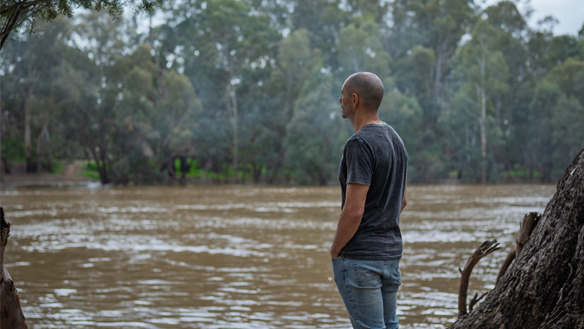
Mentoring the next generation of Indigenous researchers
Troy Walker shares his journey into health research and why creating stronger pathways for the next generation is so important.
Troy Walker on creating pathways for Indigenous researchers
Without support and dedicated pathways, the road to research can be challenging for Indigenous Australians – and Walker knows that firsthand. That’s why he is committed to helping the next generation of First Nations researchers find their footing.
‘I've got a real passion for bringing our younger ones up to adopt a research mindset,’ Walker says. ‘If they enjoy it and if they're keen on it, to maybe make the process less difficult than when I was coming up. I didn't know where to start, and I was just fortunate to have a couple of good people around that brought me into the fray to be able to do research.’
Walker believes that Indigenous mentorship is essential in growing Indigenous research capacity and supporting future researchers. He credits his own mentors – Deakin’s chair in race relations, Professor Yin Paradies, and Associate Professor Jennifer Browne – with helping shape his research career. Their guidance showed him the importance of creating the same opportunities for emerging Indigenous researchers.
‘That's been really, really important for me and an ongoing lesson that it's a two-way exchange all the time,’ he says. ‘It's usually not one directional. I've done plenty of mentoring and still do plenty of mentoring as a clinician. I've worked in young men's alcohol and other drug work with young Aboriginal men for years as well.’
How can universities support Indigenous researchers?
Universities can offer support for Indigenous researchers in direct, tangible ways, such as through scholarships like Deakin’s First Nations graduate research scholarship or the creation of education centres like Deakin’s National Indigenous Knowledges Education Research Innovation Institute (NIKERI), which offers culturally responsive teaching, learning and research opportunities.
But beyond these initiatives, Walker sees another important role for universities: creating space for Indigenous researchers to shape research in their own voices and on their own terms. That means inviting all ideas and perspectives – no matter how uncomfortable or unexplored they may be.
‘I'm really big on the idea of universities and academic institutions honouring academic freedoms,’ Walker says. ‘I think that's really important. I'd never want us to go away from that. I'd never want us to be banned or stopped from having potentially contrarian ideas or ideas that might not be in a current epoch’s idea of what's normal and what's not normal. I think that's a disservice to academia and research, particularly in our mob.’
Walker says it’s also important for universities to facilitate Indigenous research to address past issues of accuracy, and to ensure First Nations communities have greater influence in how research is designed, conducted and shared.
‘There have been years and years of distrust and years and years of concern around data that reflects Aboriginal and Torres Strait Islander people accurately, and also the framing in which that's been reflected,’ he says. ‘So, the hope is that we can work together to seek the truth and represent people involved as honestly and accurately as possible.’
How Indigenous-led research strengthens communities
For Walker and his team, Indigenous-led research starts with listening to communities and recognising that no one person can speak for every Aboriginal and Torres Strait Islander experience. As he explains, though, meaningful engagement requires more than just good intentions; it must go deeper, in order to be culturally responsive and appropriate to the specific First Nations communities involved.
‘Sometimes it is frustrating because for all the expertise that we have in our team in public health and similar areas, sometimes you might not have the appropriate knowledge holder in our group that can honour what that community member wants,’ he says. ‘So, you have to almost do a lot more work again to build relationships and seek out the right Aboriginal and Torres Strait Islander people to help honour.’
Walker has seen firsthand the importance of culturally responsive research and action in providing health care, even within his own Yorta Yorta community.
‘Even in Yorta Yorta country, we've got eight different clan groups, each with their own different respective processes and protocols, even though there's a lot of overlap,’ he says.
‘So there needs to be that understanding of how important this idea of cultural responsiveness and reflexivity can be.’
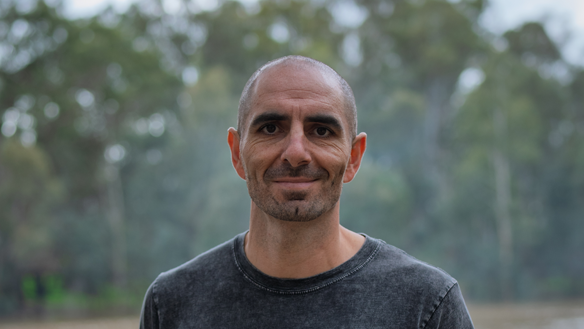
I've got a real passion for bringing our younger ones up to adopt a research mindset.
Senior research fellow
How Indigenous self-determination shapes research
The Murnong Health Research Mob is a powerful example of Indigenous self-determination in research. Led by and for First Nations people, the Mob is creating space for Indigenous researchers to investigate health challenges, influence health systems and drive change on their own terms.
‘Where the Murnong Health Research Mob really shines is that we're taking a very strong public health social, cultural and commercial determinant lens, and so we're looking at the systems, practices and pathways to best attain that health and equity for people,’ Walker says. ‘I think that we need to zoom out a little bit more and we need to look at all these little drivers and, in many cases big drivers, that might be leading to better or worse health outcomes in our people.’
For Walker, this idea of self-determination in research is important because too often contemporary research often focuses on deficits rather than strengths. As Walker explains, it’s important for Indigenous researchers to approach these issues through a positive lens.
‘The framing of Aboriginal people and the ABS data, or whatever data you might want to pick from, are always placing a bit of a bleak shadow over Aboriginal and Torres Strait Islander people and the research conducted,’ he says. ‘We need to acknowledge that there are disparities there and we need to work on improving those health outcomes – but also, we need to think about the framing of that, because data anywhere you pick it up is just data.’
Walker advocates for a strengths-based and positive approach to self-determined research to drive better health for Indigenous people.
‘I think if you use aspects of positivity and framing, if all those things are done with a form of positivity and optimism and passion, then I'm just convinced you're going to get better health outcomes by default,’ he says.
How Deakin is supporting its Indigenous researchers
Walker is deeply passionate and optimistic about Indigenous research and healthcare, but he knows there’s plenty of work to be done. His hope is that, with culturally-focused Indigenous mentorship and the right support in place, health research – and ultimately health outcomes – will continue to improve.
‘I take a bit of a step back sometimes and go: if not in my lifetime, maybe in the next, that this work can have some sort of an influence and change for the better in terms of those health outcomes and in terms of what's best for the people,’ Walker says.
‘And I think that if it doesn't happen now, if it doesn't happen in the next 10 years, hopefully it will happen in the next lot of generations to come – which is also why I really like that idea of mentoring the young ones to come through so they can keep that fire alive.’ At Deakin, that future is being supported through initiaives such as scholarship pathways, Indigenous institutes and, of course, research groups like Walker’s Murnong Health Research Mob. Together, they are helping create opportunities for the next generation of Indigenous researchers to build careers, contribute new knowledge and drive positive change in their communities.
‘We are willing to have difficult conversations if we need to in order to try and get the best result possible for First Nations health and research,’ says Walker.