Media manipulation in Australia: Power, trust and accountability
Deakin Professor of Communications Matthew Ricketson is no chef, but he knows when a recipe has gone wrong. That’s why, when the ex-The Age media editor and Time Australia writer describes the Australian media landscape as ‘a fairly bizarre bowl of soup’ that’s making people sick, it’s worth paying attention.
In their new book, Getting Murdoched, Ricketson and co-author Andrew Dodd – a journalist, author and the Director of the Melbourne Public Humanities Initiative at the University of Melbourne – detail the truly poisonous ingredients in the Australian and global media right now. These include issues of influence and power, the rapid rise of new media technologies and media manipulation on a grand scale.
We spoke to Ricketson about how media manipulation, concentrated media power and declining public trust are reshaping Australia’s media landscape.
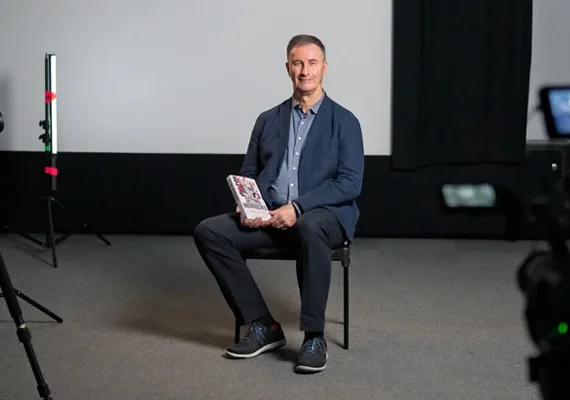
Matthew Ricketson on Getting Murdoched
Ricketson discusses the key concepts of media accountability and reliability explored in his new book, Getting Murdoched, co-authored with Andrew Dodd.
Who controls the media in Australia?
If you’ve ever watched Succession – the TV series partly inspired by the Murdoch family’s media empire – you’ll know what media power concentrated in the hands of a few players can look like.
The show’s patriarch, Logan Roy, has amassed a huge stake in media businesses across the globe, with enormous influence over politics, public opinion and culture. So titanic is Roy's power that his children treat the prospect of his death and their potential succession much like young royals vying for the throne – a theme that has drawn frequent comparisons to Shakespeare’s King Lear.
When it comes to who controls the media in Australia in real life, though, it’s not quite a case of art imitating life – but it’s not far from the truth, either.
‘It would be easy to say Rupert Murdoch, but it's a bit more complicated than that,' Ricketson says. ‘That said, News Corporation in Australia does still own the great majority of metropolitan daily newspapers in this country that have online editions as well.’
Murdoch’s News Corporation Australia – now controlled by his eldest son, Lachlan – still wields considerable influence over Australia’s media landscape, despite the ‘dwindling influence’ of legacy media like newspapers.
Reports like the Global Media and Internet Research Project suggest that traditional media ownership in Australia is highly centralised among the Murdochs and a handful of their competitors – a structure that arguably increases the risk of media manipulation and narrows the diversity of perspectives available to audiences. Meanwhile, internet media and advertising are essentially a duopoly between Alphabet, which owns Google, and Meta, which owns Facebook.
What are the key challenges facing the Australian media industry?
The concentration of media ownership is clearly one concern, but there are several key challenges facing Australian media.
From Ricketson’s perspective, one of the biggest shifts is the rise of social media and the related decline of traditional journalism models. The growing influence of social media run by Meta and Google means that there has been a stark increase in misinformation and disinformation – and that’s a big problem.
‘The amount of misinformation and disinformation pushed out through social media channels, not only by some legacy media outlets, but all sorts of outlets whose origins we don't easily know – that's having a kind of poisoning influence on public discourse in this country for the past decade, and it would seem to be increasing,’ says Ricketson.
According to Ricketson, the decline of traditional media has had an outsized effect on rural and regional news consumption, with the ‘really important diverse voices’ of smaller publications disappearing rapidly. This can be particularly dangerous when big, centralised media organisations are the only ones remaining.
‘Information gaps or information deserts, if they are watered by polluted water, lousy information, misinformation, then it certainly makes sense that this will lead to more uninformed and potentially more extreme views,’ Ricketson says.
‘Sky News Australia operates out of a city, but it has a fair reach into regional and rural Australia. It's producing lots of opinions, most of it pretty similar, most of it leaning in one political direction and strongly expressed and admitting very few other views. I don't think that's good for any person, whether they're in the city or in the country, to get that very loaded media diet.’
There's always been a level of mistrust in the media. Historically, that has been the case, but it’s declining further in recent years.
Professor of Communication
Why has trust in the media declined?
‘There's always been a level of mistrust in the media,’ Ricketson says. ‘Historically, that has been the case, but it’s declining further in recent years.’
So why has trust in the media declined even further? There are plenty of contributing factors – like too much influence, media manipulation and bullying – but as Ricketson notes, some media organisations have been embroiled in high-profile scandals that have shaken the public’s faith in the media.
One particularly notable example is the 2011 phone hacking scandal, which involved journalists in the UK, including many working for News Corp-owned newspapers, illegally accessing voicemail messages in pursuit of stories.
‘Most people in the UK didn't seem to be too bothered about celebrities or the Royal Family having their phones hacked, but they did get very upset, viscerally so, when it was revealed by The Guardian in 2011 that a missing 13-year-old schoolgirl's phone had been hacked,’ Ricketson says.
‘This was the Milly Dowler case. She was later found to have been murdered. Hacking into the phone of a missing 13-year-old schoolgirl, whose parents are obviously on absolute tenterhooks, for the purpose of getting stories that would entertain and drive circulation and so on, is egregious.’
What is media manipulation?
The media doesn’t just report the news of the world – it can influence it, too. Framing, language, repetition and editorial emphasis can all shape how audiences interpret a story, influencing the way people think and feel about particular issues. This is known as media manipulation.
As Ricketson explains, one example of media manipulation has been how Murdoch-owned News Corp publications have promoted anti-climate science views – resulting in a ‘polluting effect on public discourse and on public faith in science at a time when it is urgently needed.’
‘If we look at the issue of climate change and look at climate scientists, there have been a number of studies to show that the way in which News Corp outlets around the world cover climate change as an issue is heavily weighted against the need to take urgent action on climate change, which is what climate scientists have been telling us for decades now’ Ricketson says. ‘A number of them have been harassed and targeted by News Corp both here in Australia, in the UK, and in the US.’
Murdoch media, media manipulation and Australia’s changing media landscape
The media landscape is changing – and not just in Australia. The rise of social media and AI technologies, the decentralisation of reporting and journalism, and the diminution of traditional media outlets all means that the media today is vastly different to what it was in decades past.
But even as the media landscape continues to evolve, it’s clear that titans like the Murdoch media still retain huge power to influence the public – as evidenced in the corporation’s media manipulation in 2020, reporting that Donald Trump had been cheated out of the US election. ‘At that point, News moved out of the journalism business to the extent that they'd been in it and moved into the propaganda business,’ Ricketson says.
So, what’s next for Australia’s media landscape in the wake of such controversy and growing concerns around misinformation, trust and media manipulation? While it’s always hard to predict, Ricketson sees a combination of traditional media and new forms – though the outcome is murky.
‘Historically, legacy media has played a really important role, and it still does,’ he says. ‘It's just that its scope, its range, its resources are diminished, and what's coming up in place of it is far less regulated and far less professionally and ethically healthy in performing that role.’
To dive deeper, pick up a copy of Getting Murdoched, available now through Hardie Grant and other major booksellers.