Research that doesn’t stay in a drawer
At the Deakin Centre for Global Preventive Health and Nutrition, research exists to reach the people and systems it’s meant to change, and for graduate researchers, that shapes the experience from day one.
The gap between research findings and implementation that leads to change can sometimes take decades to close. At the Deakin Centre for Global Preventive Health and Nutrition, this gap is central to the work.
As a WHO Collaborating Centre within the Deakin Institute for Health Transformation, the centre spans food systems, digital marketing, community health, climate and policy, with researchers working directly alongside the governments, advocacy groups and international organisations who can act on what they find.
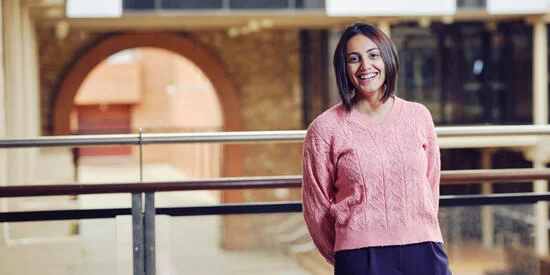
'It’s not necessarily about publication,' says Navoda Liyana Pathirana, who led the #DigitalYouth study, which used AI to detect harmful marketing of food, alcohol and gambling targeting children online. 'It’s about how you make a difference in the real world. The results get translated. They don’t stay in a drawer.'
Navoda has seen this firsthand. The #DigitalYouth study findings were shared directly with policymakers through local organisations such as VicHealth, FARE and internationally through UNICEF and World Health Organization (WHO) partnerships.
Research without borders
Navoda’s work has taken her into UNICEF offices across South Asia and Central Asia and into networking with the WHO Europe office on digital marketing regulation. Research questions come from in-country experts who know what their communities need. 'We work with them directly,' she says.
'Rather than redesigning what is a research problem and then coming up with solutions, they were able to give us ground level information on what these countries need.'
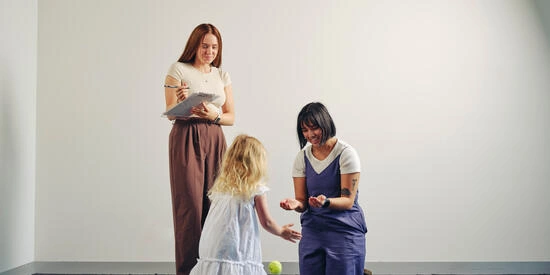
Melanie Lum’s research is closer to home, developing and testing programs that support children’s healthy eating, physical activity and social and emotional learning in early childhood education and care service settings with partners including the Victorian and NSW Departments of Health, Cancer Council Victoria and Nutrition Australia.
'We co-design with our early childhood education and care services,' she says. 'We try to understand what they need and what can support them to deliver what we know from the research will improve outcomes.'
Graduate researchers working within the Deakin Centre for Global Preventive Health and Nutrition have presented findings directly to policy makers, contributed to international research programs and worked alongside in-country experts across the Asia-Pacific.
Access to those networks is part of the experience from early in candidature. The research doesn't stay within the university and neither does the student.
The global culture
The culture within the centre is something Melanie describes as distinct from other research environments she has worked in. 'There’s space for everyone,' she says. 'I’ve never felt the competitiveness that can be common in research.'
Navoda sees it the same way, but points to something more concrete, a progression she calls a ladder. At any stage of candidature, there’s someone just above you who finished recently enough that their experience is still relevant.
'It’s better than asking someone who finished a PhD ten years ago,' she says. 'You can reach out to someone who just graduated, see what happened for them, where they are now. That’s really special.'
PhD students are included in bi-monthly sessions, where researchers from across the centre and external speakers share their work. Conference funding is available. Leadership across the centre, both researchers say, is accessible in a way that’s not guaranteed elsewhere.
'I’ve sent cold emails and asked to meet over coffee, to ask questions or discuss a topic,' Navoda says. 'To this day, no one has ever said no.'
When the results land
Navoda's #DigitalYouth study took seven years from the first question to the results being shared with policy makers. That's not unusual in research. What is unusual is being able to watch the world catch up to work.
'Something we've been waiting seven years to see and now the results are out,' she says. 'The real world is catching up and I can see how much interest there is. That's what I'm most excited about.'
Ready to pursue graduate research that can improve the lives of youth? Find a graduate research supervisor in health and social development or learn how to apply for a research degree.