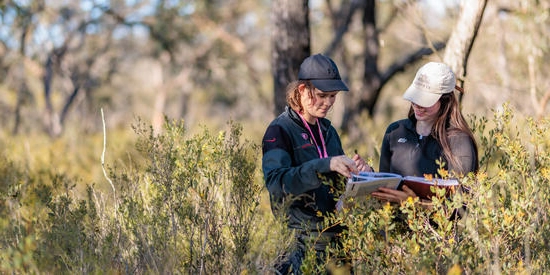
Why an internship should be your next step in international relations
A university internship can launch your career in international relations in ways a classroom never can. It boosts your employability, expands your professional network and gives you hands-on experience.
Just ask Elijah White, whose internship revealed career opportunities he hadn’t even imagined.
Discover the unexpected with a university internship
Elijah, a Master of International Relations student at Deakin, describes his internship as transformative.
Associate Professor David Hundt approached him with an opportunity to pilot a new internship. What followed was an experience that expanded his understanding of the sector and helped him identify career pathways.
The placement was with the Institute for Regional Security, a Canberra-based think tank working across public policy and strategic analysis. For Elijah, this internship was a chance to explore an area where ideas, data and diplomacy intersect.
'I had not considered the Institute before, but it opened my eyes to a whole different side of the sector,' Elijah says.
Why internships matter for your career
Internships accelerate your professional development like nothing else.
Professor Hundt explains: 'Stepping into a real policy or research environment accelerates a student's development more than anything else. You see how decisions are made, how evidence is tested and where your skills can make a genuine contribution.'

Applying international relations theory to industry questions showed me how relevant my coursework is. Suddenly, concepts I'd studied at Deakin became tools I was using every day.
Master of International Relations
Turn your knowledge into practical impact
Although Elijah's internship was designed to be remote, he spent his first week on-site in Canberra, which shaped his placement.
Working closely with CEO Chris Gardiner, Elijah contributed to the Institute's flagship Indo-Pacific Profile. His role combined research, analysis and strategic thinking, including updating security and risk metrics, introducing new indicators such as water security and determining which states to include in the region.
'It was structured independent work. Chris would outline a problem and trust me to develop a solution. It gave me a realistic sense of what this kind of career looks like,' Elijah explains.
'Applying international relations theory to industry questions showed me how relevant my coursework is. Suddenly, concepts I'd studied at Deakin became tools I was using every day.'
Challenge yourself professionally and personally
Midway through the placement, Elijah and Chris proposed the creation of an annual capstone seminar linking the Institute with Deakin's Polis Network, a dynamic research centre for politics and international studies students and staff. The first Polis Institute for Regional Security National Power Seminar was delivered in September 2025. Elijah helped design the event, chaired it and delivered a keynote address.
'It was not just public speaking. It was creating something from the ground up,' he says. 'Delivering the opening address and facilitating the discussion pushed me out of my comfort zone in the best way.'
Explore new career pathways
Internships often reveal career opportunities you hadn’t considered.
'I used to think there were only two directions: public service or the NGO sector,' Elijah says. 'The internship showed me there is something in between. My understanding of Australia’s security landscape has broadened. Learning about organisations like the Office of National Intelligence completely shifted my career ambitions.'
He explains how his strengths in data and conceptual thinking align with the work of the Office of National Intelligence, and that it is now a future career possibility.
Six reasons a Deakin internship will advance your career
- Discover pathways you didn’t know existed: Internships reveal a wide range of careers, helping you identify where your interests and strengths align. Through his placement, Elijah explored new organisations, roles and sectors in international relations.
- Build professional capability: You’ll have a chance to demonstrate initiative and learn on the job while developing the judgement employers look for in graduate roles. Working on industry projects allowed Elijah to strengthen his skills in research, data analysis and problem-solving.
- Grow your industry network: Internships help you build connections that support career growth. Working directly with CEO Chris Gardner and collaborating with senior academics connected Elijah with people who shape Australia’s policy landscape.
- Turn theory into practical insight: See how your studies translate into meaningful work. From updating the Indo-Pacific Profile to designing and chairing the National Power Seminar, Elijah applied international relations concepts he learned at Deakin to real challenges.
- Develop confidence about your future: You’ll have a chance to figure out what you want your future career to look like. Living and working independently in Canberra helped Elijah gain a stronger sense of direction. Exposure to organisations like the Office of National Intelligence showed him where his skills could have real impact.
- Be supported by Deakin: You can design your own internship or choose from over 600 employers, with guidance to make sure you get the most from the experience.
'Internships like Elijah's give international relations students something the classroom cannot,' Professor Hundt explains. 'They show you how ideas, data and policy collide in real time and what it actually takes to contribute to meaningful national and regional conversations.'
Build lasting relationships and opportunities
What began as a pilot internship has grown into an ongoing partnership. The National Power Seminar is now an annual event, giving more students the chance to contribute to the field.
For Elijah, the experience has already had a lasting impact. 'It was a growth opportunity. It helped me see where I can go and the kind of work I want to contribute to.'
Explore internship opportunities in the Faculty of Arts and Education at Deakin, or find out more about studying the Master of International Relations.