
The text of this article is licensed under the Creative Commons Attribution (CC BY) 4.0 International license. We'd love for you to share it, so feel free. Images, videos, graphics and logos are not covered by the CC BY license and may not be used without permission from Deakin or the respective copyright holder. For more information on how to share or reuse this content, please contact researchcomms@deakin.edu.au.
Deakin education expert helps assess Australia’s teen social media crackdown
Research news
15 October 2025
Australia’s eSafety commissioner has called upon a Deakin University digital childhood and education expert to help evaluate the roll-out of the world-first teen social media ban and its impacts.
Professor Julian Sefton-Green from the Centre for Research for Educational Impact (REDI) will join 10 international and Australian experts to gather and investigate the intended and unintended consequences of the ban.
‘Participating in this Stanford University led advisory group is a personal privilege and a great opportunity to play a full part in contributing to public debate, and to show how social science is useful and effective for policymakers, families and young people themselves,’ Professor Sefton-Green, who is also a chief investigator at the ARC Centre for Excellence for the Digital Child says.
What is the social media ban?
Under the ban, also referred to as the ‘social media minimum age limit’, all Australian children under the age of 16 will be unable to have social media accounts. Platforms like Facebook, Instagram, Snapchat, TikTok, X and Reddit are included. It’s set to take effect on 10 December this year.
Professor Sefton-Green suggests the ban will reveal how online life can shape childhood experiences.
‘These social media “bans” are an extraordinary test case – both nationally and globally – of whether we can balance living in a digital world with the shared values of what makes a good Australian childhood.’
‘Many concerns about the ban stem from the fact that young people’s rights are being treated differently from others.
‘Social media plays a vital role in how young people connect, learn and find community, especially for those who feel vulnerable or unsafe in their daily lives.
‘It’s crucial that our evaluation captures the full range of these impacts,’ Professor Sefton-Green says.
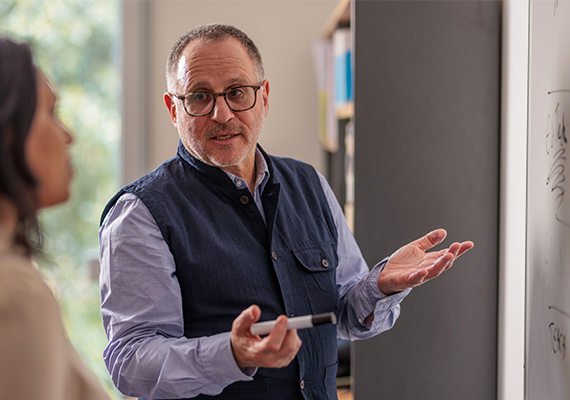
These social media “bans” are an extraordinary test case – both nationally and globally – of whether we can balance living in a digital world with the shared values of what makes a good Australian childhood.
Supporting and teaching young people
Alongside the advisory group, many of which have medical, health and psychology expertise, Professor Sefton-Green hopes to bring his passion for education into the mix.
‘My previous research has allowed me to spend time with individuals, families and schools to understand how digital media fits into everyday life, and how it connects to people’s values, relationships and experiences.
‘I see the ban as not just about protecting children, but as a chance to teach and support them.
‘It’s important to help young people develop their own understanding of what’s happening in their lives, both offline and online. If the ban applies to young people below the age of 16, what changes the day of their 16th birthday?
‘Just like sex education, we need to start these conversations earlier, before problems arise. We also need to build knowledge and strategies that help young people, their families and communities better understand and navigate digital life.’
Challenging public perception
Professor Sefton-Green hopes the evaluation, and how it’s communicated, will help people better understand what it means to be affected by social media.
‘It should offer language and concepts to make sense of how digital platforms are reshaping our lives.
‘One of the most valuable outcomes would be shifting the public conversation. Instead of reacting negatively to how childhood today differs from past generations, we could start to understand how all of us live alongside digital technology.
‘If the evaluation shows changes in wellbeing or mental health, it would be great to explore the deeper causes – helping us understand why life might feel harder for young people today.’
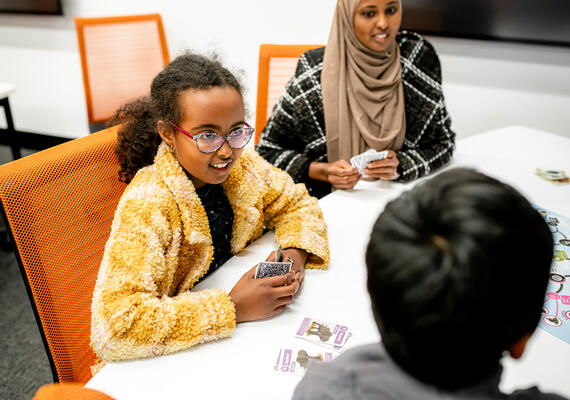
Asking the big questions about education
Professor Julian Sefton-Green's home at Deakin's REDI is delivering educational research with impact to support socially just, inclusive and equitable societies.
What can parents do to navigate the change?
The evaluation will focus closely on how the ban affects families as a social intervention. But what can parents and caregivers do before the results are in?
Having open, balanced and informed conversations is the ideal approach, says Professor Sefton-Green.
‘We know that’s not always easy – every family is different, with unique values, interests, and relationships to social media.
‘What matters most is helping families find the kind of information, evidence and conversations that make sense for them and support their own circumstances.’
Find out more about Deakin's REDI and Professor Julian Sefton-Green’s research.