
The text of this article is licensed under the Creative Commons Attribution (CC BY) 4.0 International license. We'd love for you to share it, so feel free. Images, videos, graphics and logos are not covered by the CC BY license and may not be used without permission from Deakin or the respective copyright holder. For more information on how to share or reuse this content, please contact researchcomms@deakin.edu.au.
Deakin’s graduate researchers shine at 2025 3MT/VYT Grand Final
Research news
13 August 2025
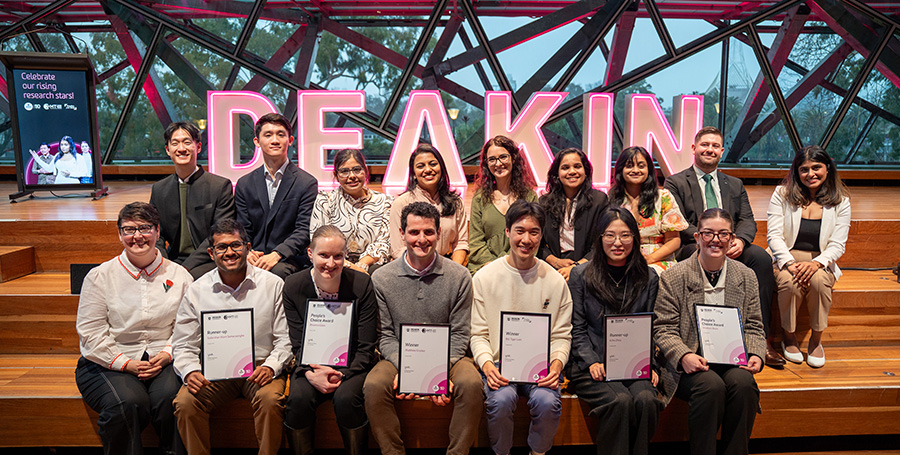
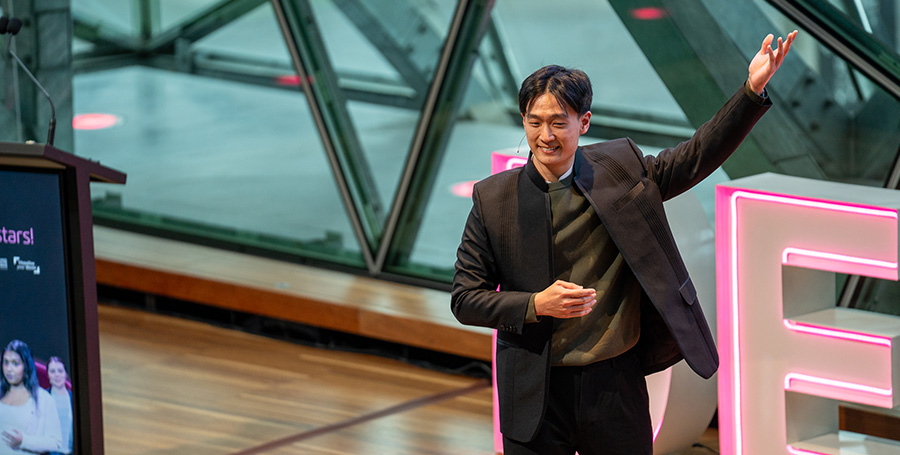
Ever wondered why long-life chocolate milk loses its flavour over time? How your cotton t-shirt decomposes after you’ve thrown it away? Where exactly the government gets its money? All these questions and more were explored by Deakin’s passionate graduate researchers at the Deakin University Three Minute Thesis (3MT®)/Visualise Your Thesis (VYT) 2025 Grand Final on August 12.
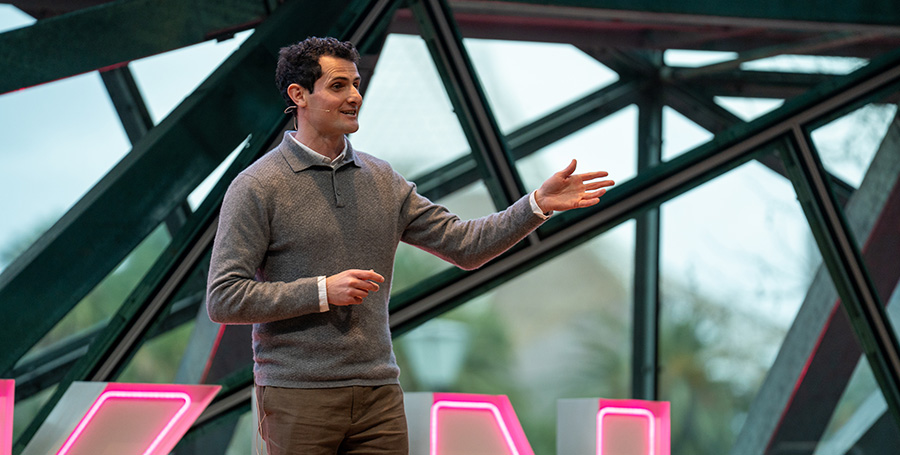
A 3MT® presentation is like a mini TED Talk, where participants have three minutes to share their research and its impact with a live audience, while VYT is a one-minute video similar to a TikTok. When you consider the thousands of hours that go into researching and writing an 80,000-word thesis, it may seem impossible to distil that depth into such brief formats. Deakin’s graduate researchers have risen to the challenge for the sixteenth year in a row to turn their complex ideas into compelling bite-sized presentations.
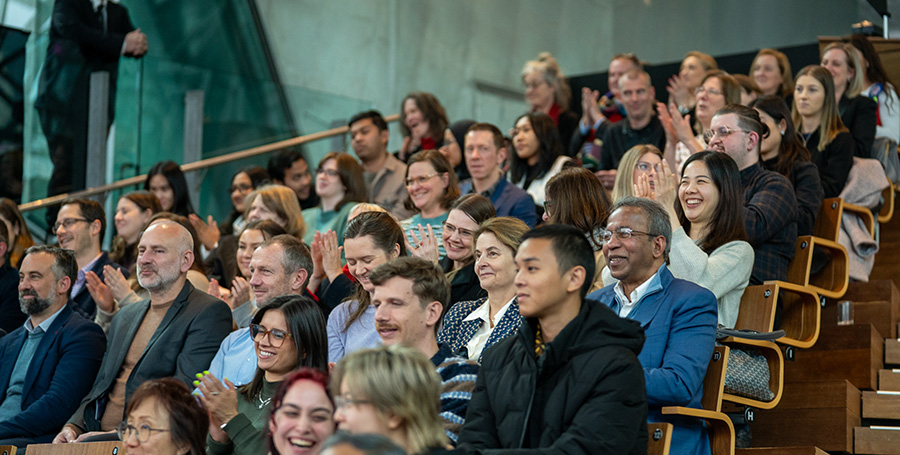
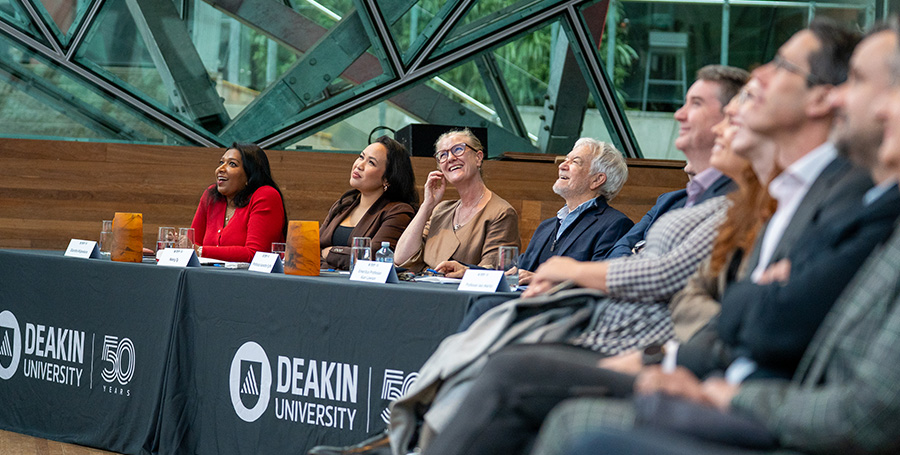
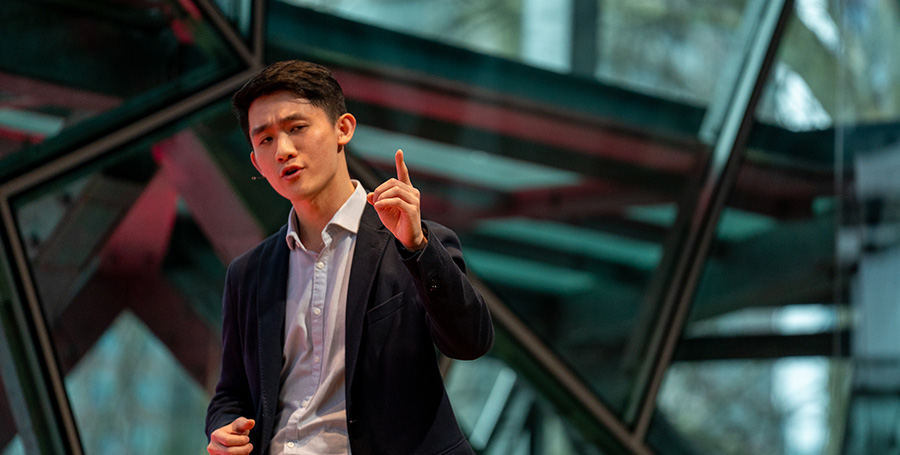
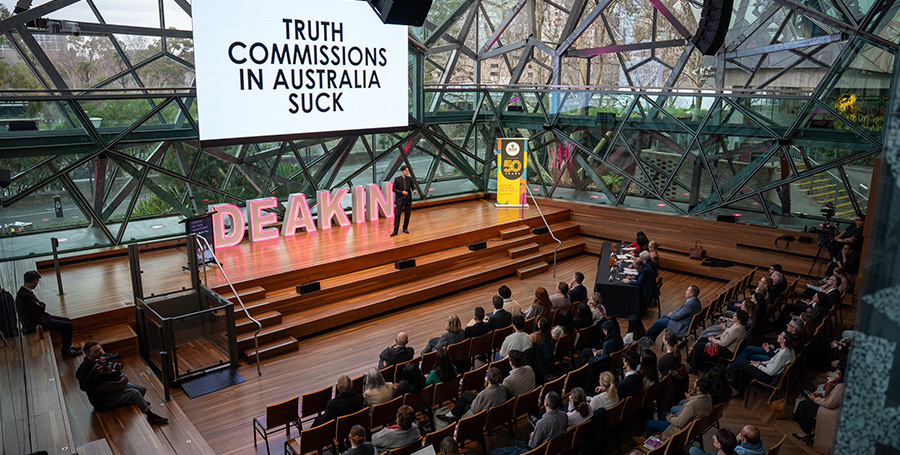
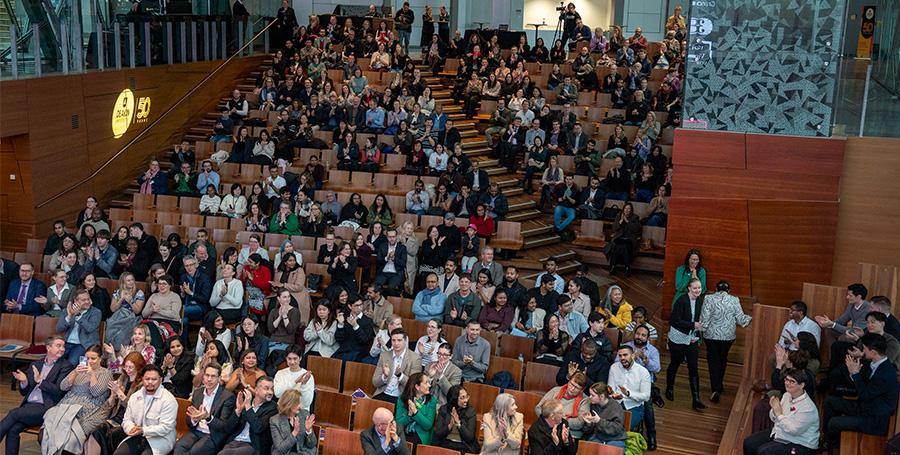
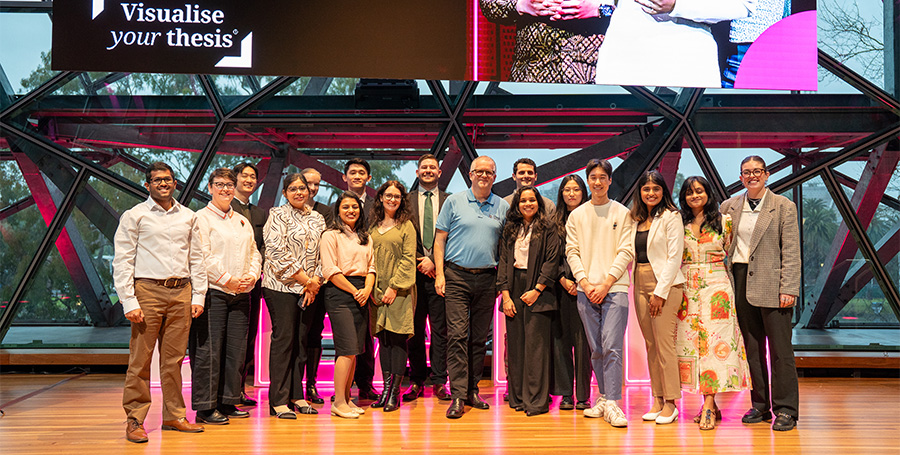
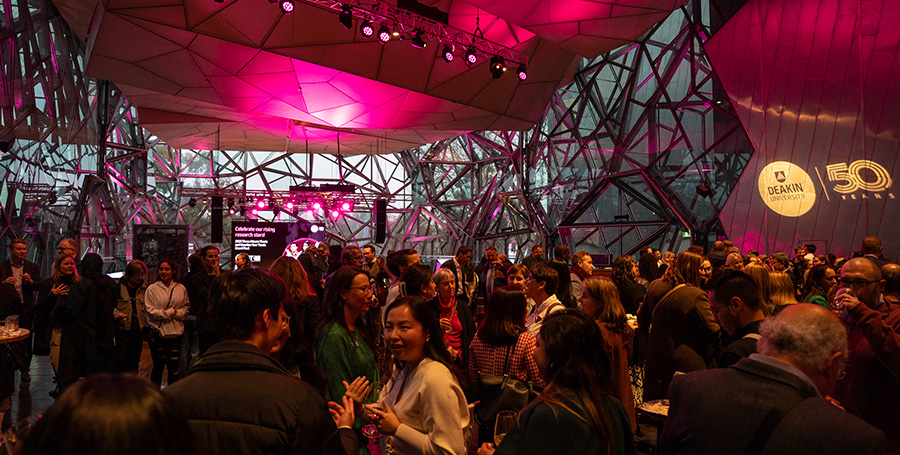
This year, more than 170 graduate researchers took part in the 3MT® and VYT competitions coordinated by the Researcher Development Academy. They have participated in school heats and faculty finals, attended workshops and received one-on-one coaching. All of this culminated in the exciting Grand Final held at The Edge in Federation Square. The sold-out amphitheatre was filled with hundreds of curious minds, eager for an afternoon of engaging and thought-provoking research and Deakin’s 16 finalists delivered brilliantly.
Bridging the gap between discovery and impact
‘Universities play a critical role in generating new ideas, but their value will only be fully realised by reaching and resonating with people beyond our university community,’ said Deakin’s Vice Chancellor, Professor Iain Martin in his opening address.
‘The 3MT®/VYT events are a great opportunity to prepare students to communicate with non-specialist audiences and better connect with those who can use our research to bridge the gap between discovery and impact.
‘Deakin is committed to equipping our graduate researchers with the communications skills they will need throughout their careers to engage with industry, government and other funding partners.
‘That starts here, where they build confidence to articulate the benefits of their research within a very short time limit.’
Deakin 2025 3MT® winner
Matt Crocker, Faculty of Business and Law: 'Where does the Australian government’s money come from? The hidden role of self-financing'
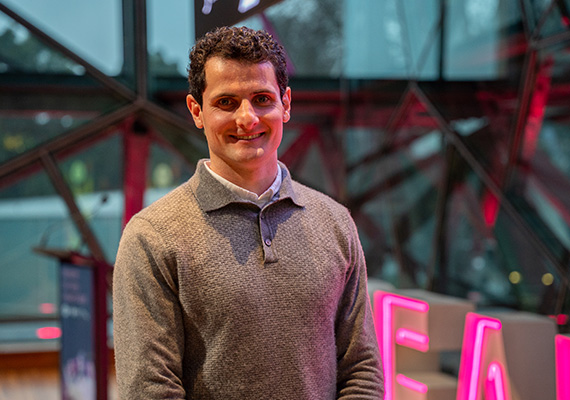
Matt’s research investigates a fundamental yet often misunderstood question: where does the Australian government’s money actually come from? Prompted by the massive spending during COVID-19, Matt began questioning the conventional wisdom that government expenditure is strictly limited by tax revenue or borrowing. Through a detailed analysis of Australia’s monetary laws and institutional frameworks, he discovered that the government creates the money it spends, before it taxes or borrows.
Matt argues that the real constraint on government spending isn’t money, but resources such as labour, infrastructure and expertise. His work aims to shift policy conversations away from budget limitations and toward the actual economic impact of spending, such as inflation and resource allocation.
Matt now advances to the next stage of the international 3MT® competition, where he will represent Deakin in the 2025 Asia-Pacific 3MT® Semi-Final Showcase on 15 October. He will compete against finalists from universities across Australia, New Zealand, Japan, Hong Kong, Malaysia and Singapore.
Deakin 2025 3MT® runner-up
Sudarshan Samarasinghe, Faculty of Science, Engineering and the Built Environment (SEBE), Institute for Intelligent Systems Research and Innovation (IISRI): 'Smart Swarms: Building Resilient Autonomous UAV Teams for Extreme Missions'
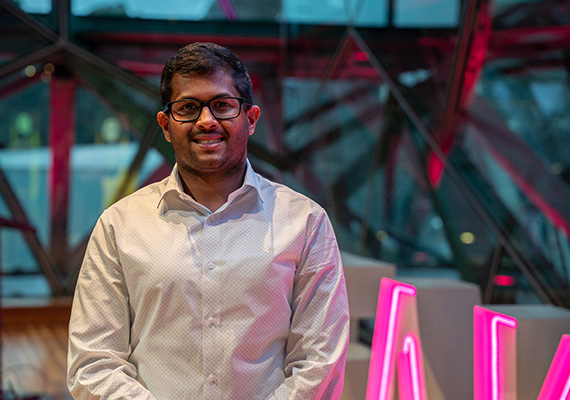
Sudarshan’s research focuses on enabling groups of drones to work together to deliver critical supplies in disaster zones, even when individual drones experience mechanical failures. He has developed a system that allows drones to detect faults, redistribute power and reconfigure their formation to maintain stability.
Sudarshan’s research has the potential to revolutionise drone-assisted rescue operations and ensure that vital supplies reach those in need, even under the harshest conditions.
Deakin 2025 3MT® people’s choice
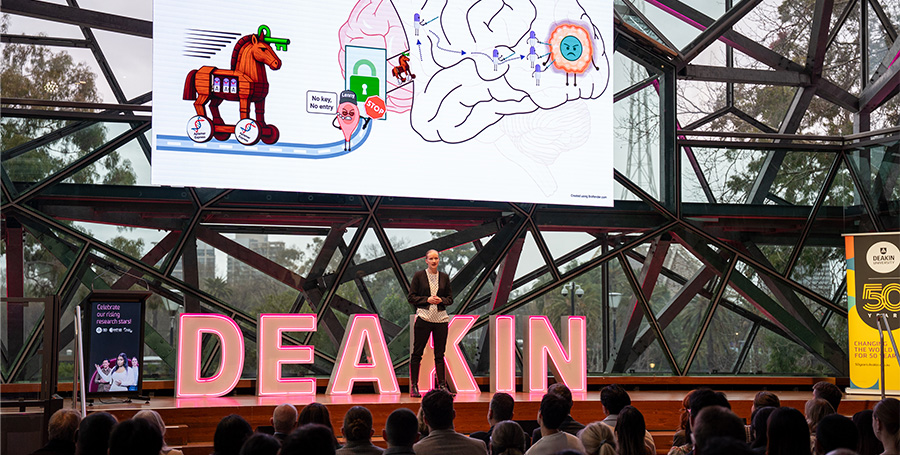
Breanna Giles, Faculty of Health, Deakin Institute for Mental and Physical Health and Clinical Translation (Deakin IMPACT): 'Navigating the Brain's Labyrinth: Delivering Drugs to Destroy Brain Cancer'
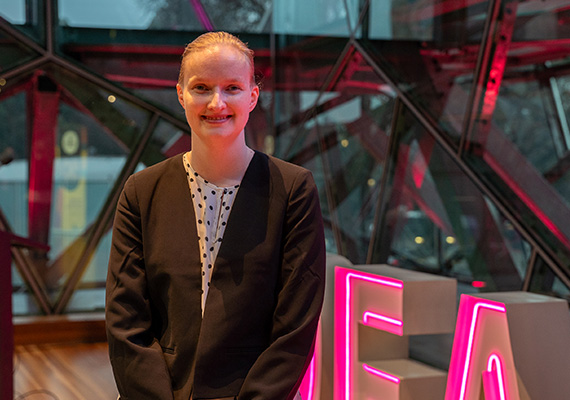
The brain’s natural defence system, while essential for blocking harmful pathogens, also prevents most cancer treatments from reaching their target. Breanna’s solution is a smart drug delivery system she calls the ‘Aptamer Express’. These microscopic, GPS-guided molecules are designed to bypass the brain’s defences and release cancer-killing drugs with precision.
By targeting only cancer cells, this approach promises fewer side effects and more effective treatment. Breanna’s work offers hope for improving survival rates and quality of life for those diagnosed with brain cancer.
Deakin 2025 VYT winner
Bill Lam, Health: 'From Evidence to Practice: Developing an Online Healthy and Sustainable Nutrition Program for Young Adults'
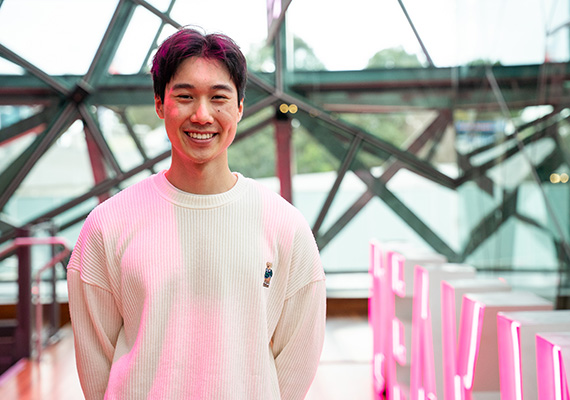
Bill’s PhD is focusing on making healthier and sustainable food choices accessible to young people. His research led to the development of a tailored nutrition program within the Deakin Wellbeing app. After surveying users to identify key concerns, he designed a solution that supports informed decision-making and long-term behaviour change. The next phase involves testing the program’s engagement, scalability and impact.
Bill now advances to the VYT International 2025 programme. Entries from the 21 finalists will be shared on the Visualise Your Thesis Figshare repository and winners will be announced in October.
Deakin 2025 VYT runner-up
Echo Zhou, SEBE: 'AI for Missing Data Recovery'
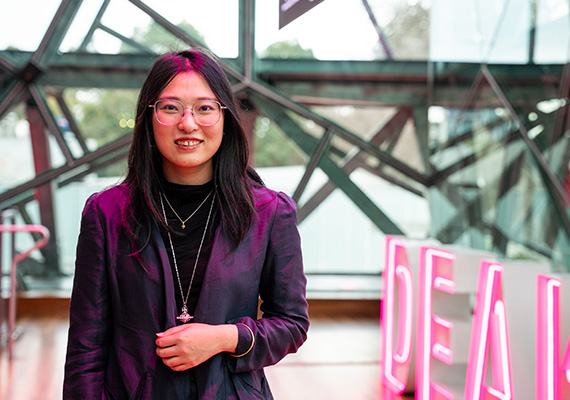
Incomplete data presents challenges across sectors including healthcare, finance, climate science and education. Echo’s research trains generative AI models to learn from existing data and fill in the blanks. This process results in more complete datasets that enhance decision-making and analytical accuracy.
Deakin 2025 VYT people’s choice
Maddy Bone, SEBE: ‘Flystrike: A pain in your rear?’
Flystrike is the condition where sheep are plagued by maggots feeding on their skin. Not all sheep are affected and it is currently unknown which sheep will be affected and why. The flies are attracted to smells, which are created by bacteria. Maddy’s research is determining which smells (and bacteria) are the cause.
Congratulations to our 2025 3MT® and VYT finalists!
Watch the 2025 VYT presentations on Deakin's YouTube channel
Watch the 2025 Deakin 3MT® presentations on Deakin's YouTube channel
Deakin 2025 3MT® finalists
Tjasa Savoric, SEBE: ‘Gamified Virtual Reality: Overcoming Stress and Anxiety in Isolation’
Limna Suja Shaji, Institute for Frontier Materials (IFM): ‘Healing Smiles with Silk: A Sustainable Solution for Dental Restoration’
Suniya Tariq, IFM: ‘The After Life of Dyed Cotton’
Houson Hu, Health: ‘"It is what it is": Cyberbullying & Harassment in Online Games’
Kevin Ghavalas, Health: ‘The Flavour of Chocolate Milk’
Oscar Kee, Faculty of Arts and Education (ArtsEd): ‘Truth and Justice Commissions in Australia’
Hayley Keane, ArtsEd: ‘Learning to be safe at work: a worker perspective’
Deakin 2025 VYT finalists
Kee Gireesh, SEBE: ‘Ionic-Polymeric Mixtures as a Functional Binders for Solid-State Silicon Anodes’
Sinali Kodithuwakkuralalage, Health: ‘Food at school; more than a meal, it’s their future’
Amanda Goonathilaka, SEBE: ‘Integration of Analytical Methods for Comprehensive Analysis of Australian Waste Biomass’