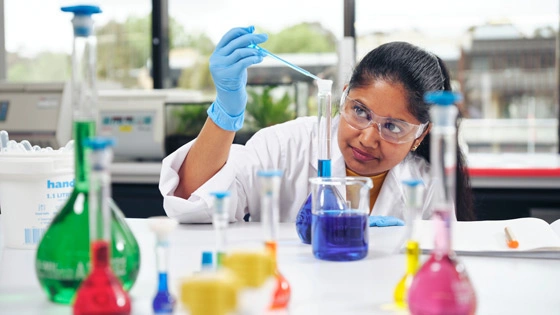
Hungry for change? Study food science at Deakin
Ever wondered how flavoured chips taste exactly like the picture on the packet? Or who decides the best-before date stamped on your crumpets? More importantly, have you thought about who makes sure the food on your plate is safe?
That's the world of food science – a field that blends chemistry, biology and innovation to ensure the food we eat every day is safe, sustainable and delicious.
If you’re curious about how science can shape the future of what we eat, studying a food science major within Deakin’s Bachelor of Science could be your perfect starting point.
What is food science?
At its core, food science is about much more than creating the next Shapes flavour. It’s a broad, multidisciplinary field that combines chemistry, biology, engineering and innovation to improve every stage of the food supply chain – from how food is grown and processed to how it’s packaged, stored and consumed.
What does a food scientist do?
Food scientists are the quiet achievers of our supermarket shelves. They ensure that what we eat is safe, nutritious and, most importantly, delicious.
Choosing food science as your major opens the door to a wide range of careers. You could:
- work as a food chemist, investigating the molecular makeup of what we eat
- become a food microbiologist, researching food spoilage prevention or probiotics
- design packaging, processes or testing methods that keep food safe
- lead product development, creating healthier, tastier and more sustainable foods.
Because food science is evolving rapidly, careers are dynamic and future-proof – giving you the freedom to adapt and grow across industries.
Flexible ways to study food science
One of the best features of Deakin’s Bachelor of Science is flexibility. You can combine a food science major with other disciplines to build a unique skill set. For example, you might:
- pair food science with sustainability to tackle global and environmental challenges
- add mathematical modelling to analyse production and consumption data
- combine with chemistry or human biology to broaden your science expertise.
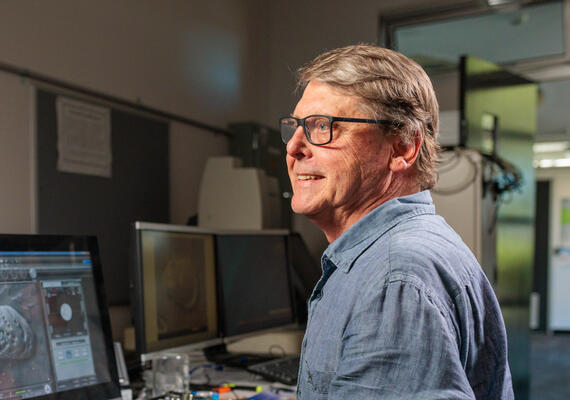
Food science may not always be the first major students consider, but the option to combine it with another area like chemistry makes it a strong pathway into the food processing industry.
Senior Lecturer and Course Director (Bachelor of Science)
Real-world learning in food science
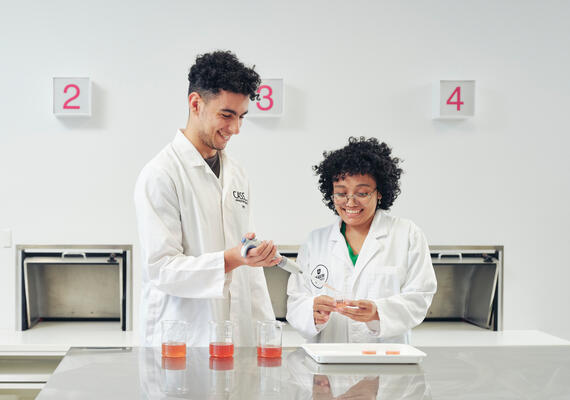
Deakin’s approach is hands-on and connected to industry. Your assignments mirror real industry challenges in food and agriculture – so when you graduate, you’ll already have experience solving practical problems.
A great example? In 2019, students were challenged to design products that reduce food waste. One group freeze-dried discarded cauliflower leaves to turn them into flavoursome and nutritious wraps. Their out-of-the-box thinking won the Most Innovative Product award at the Australian Institute of Food Science and Technology Convention.
This kind of real-world learning shows how a Deakin Bachelor of Science degree prepares you not only to study problems, but to solve them.
Are food scientists in demand?
The need for food scientists is only growing. By 2034, Australia will need around 1,400 new chemists and food and beverage scientists.*
Why? Because the world is demanding smarter solutions to big challenges:
- affordable, safe food despite supply chain disruptions
- reducing contamination and foodborne illness
- sustainable farming, packaging and distribution.
Turn science into impact
A Bachelor of Science at Deakin is more than a degree. It is your chance to step into a field where science meets everyday life, where your work can influence what ends up on millions of plates. If you are hungry for a career that is practical, purposeful and future-focused, food science might just be the perfect recipe.
Find out more about studying a food science major within Deakin’s Bachelor of Science.
Deakin references data from a range of government, higher education and reputable media sources. For more information, visit our University rankings page.
*Jobs and Skills Australia, National Employment Projections 2024 to 2034.