Thinking together through Indigenous knowledge systems
From the islands of the Torres Strait in the north to Tasmania in the south, ancient Indigenous knowledge is embedded in Australia’s landscapes, communities and cultures. While European-based education systems have become dominant throughout Australia’s colonial history, Indigenous knowledge systems continue to thrive, and their relevance to contemporary challenges is becoming ever more apparent.
As Australians move towards a shared future together, respect and understanding of Indigenous knowledge systems is essential. These perspectives offer powerful insights into how we care for people, communities and Country, and through the dedication and passion of First Nations academics like Joshua Waters, the benefits of sharing, respecting and learning from Indigenous knowledge are becoming increasingly clear.
Implementing Indigenous knowledge
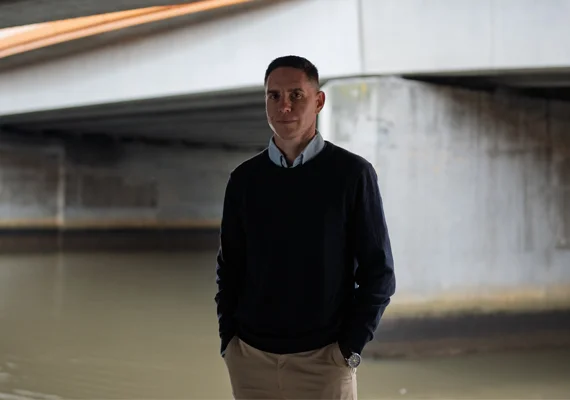
Joshua Waters reflects on how the Indigenous Research Strategy is creating more pathways for Indigenous researchers and more space for Indigenous knowledge.
What are Indigenous knowledge systems?
What exactly do we mean when we talk about Indigenous knowledge systems?
As Waters explains, Indigenous knowledge is a ‘living system of intelligence that's been used on the Australian landscape for more than 65,000 years.’
‘It is something that has sustained and continues to sustain the original people of this continent,’ he says. ‘And it's also part of the Australian story that every person who resides here now should be active participants in.’
It’s called a knowledge ‘system’ because Indigenous knowledge doesn’t exist in isolation, but rather through ongoing connections that have been maintained over generations.
‘There are many intricate moving and constantly evolving parts of that which are subject to time but also subject to traditional, ongoing, unbroken connections to practices, processes and protocols that are interwoven throughout that body of knowledge,’ Waters says.
‘Aboriginal and Torres Strait Islander people are the holders of that knowledge, and they are the custodians of those processes, practices and protocols. For all people to be brought into that system, they have to have connections to it.’
Joshua Waters and learning from Country
A Gamilaraay man, Waters has drawn profound lessons from time spent on Country in northwest New South Wales – especially along ‘galala’, his local river.
‘I found later in life that having spent so much time at the river as a child exposed me to different forms of knowledge, diversity, processes and different ways of being that were sometimes good and sometimes joyful, but also sometimes painful,’ Waters says. ‘If you got a cactus stuck in the side of your leg, you would learn something from that experience.’
For Waters, these experiences on Country, both in childhood and as an adult, were an early introduction to Indigenous knowledge systems and the inspiration for his work in bringing that knowledge into higher education.
‘What I was observing on Country was a form of intelligence that I now refer to as Indigenous knowledge,’ he says. ‘I see my role in that as someone who is a carrier of that knowledge and those processes, and I partly see it as my responsibility as a researcher to reintroduce the world to those processes and help people come back into relation with them so that they can apply and practise them in contemporary systems.’
How to incorporate Indigenous knowledge in teaching
While completing his Master’s degree, Waters found that institutions didn’t always have a strong grasp of Indigenous knowledge systems. That can be a big issue when it comes to incorporating Indigenous knowledge in teaching.
‘Part of my study at the time was trying to understand what they meant when they used those words,’ Waters says. ‘What I found most often was that the Indigenous knowledge was typically a series of artefacts that were locked behind a glass cabinet or artworks lining the walls, or murals that were painted over on the side of the toilet block.’
To start effectively incorporating Indigenous knowledge systems in education, Waters believes that institutions first need to provide space for what he calls the ‘carriers’ of those systems: humans and understand that it is a dynamic process, rather than a static artefact.
‘With Indigenous scholars in Australian universities, the more people that we have in those spaces, the more that those institutions can encounter and learn from those scholars and those systems and those dynamic processes,’ Waters says.
‘And the benefits of that are wide-ranging because there's so many disciplines, there's so many courses, there's so many tenets of research where Indigenous knowledge can be included, but it has to be on the terms of Indigenous researchers and the Indigenous community.’
How can Indigenous knowledge be used to solve problems?
While Indigenous knowledge systems shouldn’t be reduced to problem-solving tools for Western challenges, as Waters explains, there are wide-ranging benefits across a range of disciplines when institutions engage respectfully with Indigenous researchers, communities and knowledge.
‘If Australian universities can equip themselves with the knowledge and the understanding of how to build and generate those relationships with those Indigenous researchers and their communities, and the systems of knowledge, then there can be mutual and equal benefit for everybody in those processes,’ Waters says. ‘And that can range from health to education, the sciences, engineering, design, medicine, all these things.’
Environmental sustainability is one area where Indigenous knowledge systems can offer important insights. According to Waters, Indigenous knowledge holders have been raising concerns about environmental change for decades, often long before those warnings were widely recognised by Western science.
‘People were using the terms like “the alarm bells are ringing now”, but what Indigenous knowledge holders often say is that the alarm bells were ringing decades ago. Elders knew what was coming,’ Waters says.
‘Then, years later, you start to see the effects of that worsening and hastening and if there was a greater awareness around the seriousness of these risks being present at that time, we could have prevented some of these things from happening.’
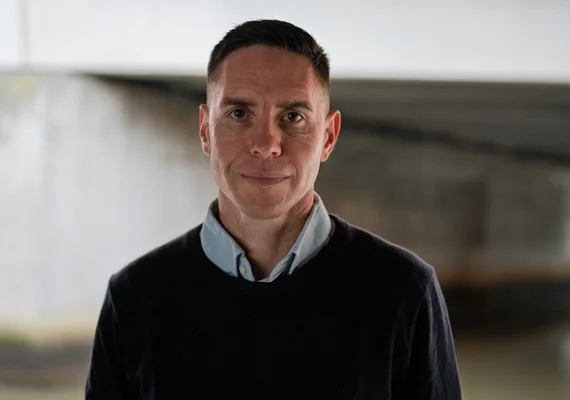
With Indigenous scholars in Australian universities, the more people that we have in those spaces, the more that those institutions can encounter and learn from those scholars and those systems and those dynamic processes.
Senior Research Fellow
What would happen if Indigenous knowledge was not protected?
As interest in Indigenous knowledge systems grows, so too does the need to ensure it is shared and applied in ways that respect Indigenous ownership and custodianship. If Indigenous knowledge isn’t properly protected, there is a risk that it could be appropriated, commercialised or used without benefiting the community from which it originates.
‘You have approaches around Indigenous Cultural Intellectual Property and making sure that the knowledge stays with the community where it comes from,’ Waters says. ‘And if they choose to share it, then there can be specific considerations around how that practice is shared or how those products are processed or how that business is liable to the relationships with the product that they're using, the knowledge that they're borrowing or the people that they're supporting.’
While Waters says that there are laws in place to provide protection to Indigenous knowledge, they aren’t always effective.
‘There are a lot of loopholes and a lot of exploitative practices that are happening in that space as well, where the vast majority of the bush food industry is owned and controlled by non-Indigenous organisations and corporations,’ he says.
How Indigenous knowledge systems are elevated at Deakin
A system of Indigenous knowledge based on 65,000 years of living history has benefits for us all, if respected and understood. Alongside individual academics like Waters, universities like Deakin have an important role to play in bringing these systems to a wider audience.
‘Deakin is demonstrating significant leadership in that process with widely renowned and innovative scholars who are capable of the type of thinking that is required to interface with some of those problems using Indigenous knowledge systems, but also looking at the best of the other knowledges that exist in different spaces, such as systems and complexity within the sciences,’ Waters says. ‘That can be a powerful space if it's cultivated correctly. And I do believe that that space is being cultivated really well at Deakin University.’
One example is the Indigenous Knowledge Systems Lab, founded in 2021 by Dr Tyson Yunkaporta.
‘That's been a remarkable platform for someone like myself to learn from other Indigenous knowledge holders, scholars and educators globally and to promote the type of thinking that is necessary for implementing Indigenous knowledge in real time in contemporary structures,’ Waters says.
These developments from institutions like Deakin give Waters great hope for the future of both Indigenous knowledge systems and Australian education.
‘What I'm seeing is a streamlined process emerging in Australian education institutions that can produce some really powerful results and powerfully equipped people who don't want to keep reproducing the same type of environments and circumstances that are currently present but want something different for themselves, the people around them, and the land beneath them,’ he says.