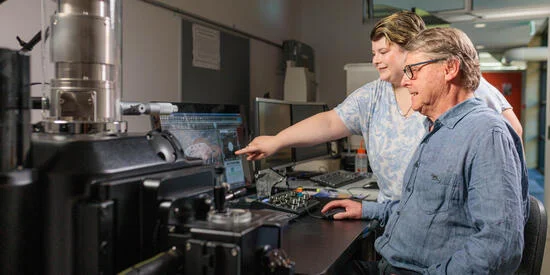
Deakin Institute for Citizenship and Globalisation
Justice and inclusion powered by world-leading research
How we contribute to the global community
The Deakin Institute for Citizenship and Globalisation is Australia's leading social sciences and humanities research institute. We conduct research of local and global significance, motivated by an ambition to improve the lives of people around the world.
Our commitment to addressing the significant challenges of our time is underpinned by a critical mass of leading scholars and a robust interdisciplinary research agenda.
Our work has a proven track record of knowledge creation that enables more inclusive, democratic and sustainable societies. Our researchers create cutting-edge knowledge about citizenship, diversity, inclusion and globalisation that only shapes scholarship and scientific progress but also informs public debate and policy.
Our research streams
Through our research, we create transformational knowledge that can influence public debates and shape policy agendas. Our research tackles major local, national and global challenges around transnational process, social inclusion, diversity and intercultural relations.
People, place and heritage
This stream focuses on the intricate relationships between people, their environments and their cultural heritage. Our interdisciplinary research reveals how heritage shapes identities, communities and social practices.
Mobility, diversity and multiculturalism
This stream examines the dynamic interactions between mobility, diversity and multiculturalism. We use an interdisciplinary approach to understand how these forces shape societies and influence social cohesion.
Governance, development and peace
This stream explores the complex interplay between governance, development and peace. Our interdisciplinary research considers how effective governance and sustainable development can foster lasting peace.
Culture, environment and science
This stream explores the intersections of cultural practices, environmental sustainability and scientific innovation. We take an interdisciplinary approach to address complex global challenges through collaboration.
Help us to create equitable and sustainable social change
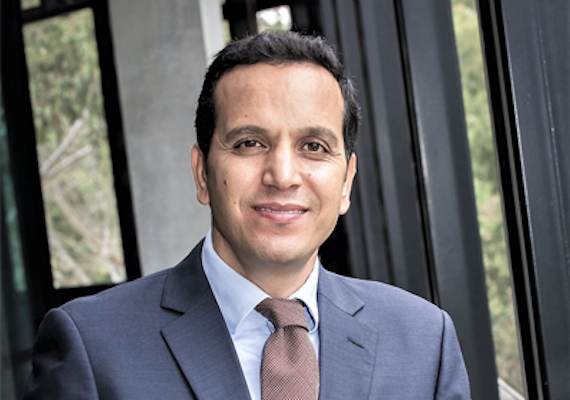
Our researchers come from diverse disciplines and areas of study and work together in a vibrant environment with a shared goal of understanding the complex social issues associated with globalising processes. See our leadership team below.
Our researchers
Our researchers come from diverse disciplines and areas of study, and work together in a vibrant environment with a shared goal of understanding the complex social issues associated with globalising processes. See our leadership team below.
Associate Professor Yamini Narayanan is an ARC Future Fellow and Deputy Director, Partnerships, Impact and Engagement at the Deakin Institute for Citizenship and Globalisation. Yamini's research intersects animal, political and environmental geography, multispecies ethnography, South Asian studies, animal labour, and animals and geopolitics.
Professor Ihsan Yilmaz is a leading scholar on authoritarianism, transnationalism, civilisational populism, digital authoritarianism and political Islam. His recent research explores the diffusion of authoritarian practices, weaponisation of civilisational narratives and the emotional and cognitive impact of disinformation in democratic and hybrid regimes.
Feature projects
We are committed to leading an impactful and collaborative research agenda. As such, we conduct research partnerships and consultancies with government agencies, industry, civil society organisations, the not-for-profit sector and universities both in Australia and around the world.
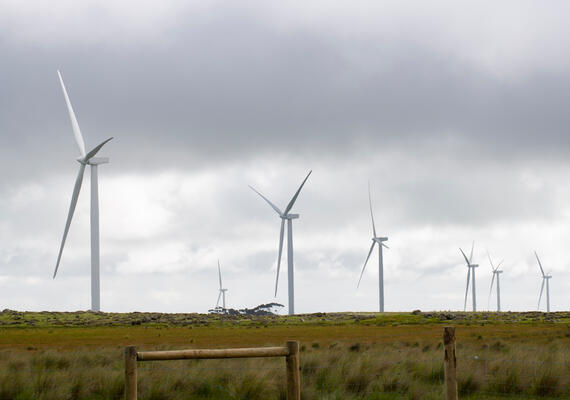
Embedding net zero carbon emissions in Northern Australia
The project investigates how communities in Northern Australia perceive the value of large net zero carbon emissions initiatives, aiming to understand how local social dynamics influence the integration of climate policy through industrial infrastructure, while identifying challenges and opportunities to improve future planning and implementation.

Everyday Peace and Rohingya Refugees – Plan International and Australian Humanitarian Programme
This project aims to improve relations between Rohingya refugees and host communities in Cox’s Bazar, Bangladesh by applying a peacebuilding framework to reduce tensions and support social cohesion amid the challenges of displacement, poverty, and strained local resources.
Contact us
Got a question? Get in touch with our team or sign up to our newsletter for the latest news and events.
+61 3 522 72793
Email the team
Visit the website