Deakin Institute for Frontier Materials
If your passion is in chemistry, metallurgy, textile science, engineering or molecular modelling, join our world-class materials science research institute.

Create innovative engineering solutions that transform the future alongside world-renowned supervisors and long-standing industry partners. At Deakin, you'll have access to state-of-the-art engineering facilities including our high voltage, renewable energy, structural engineering, and additive manufacturing labs. Become an expert in your field with unique research training that equips you for diverse career that makes a meaningful impact.
Advance the frontier of engineering in a diverse range of specialised research areas, including:
#1 university in Victoria for higher degree research overall satisfaction
#5 university in Australia for research quality
#3 university in Australia for interdisciplinary science research
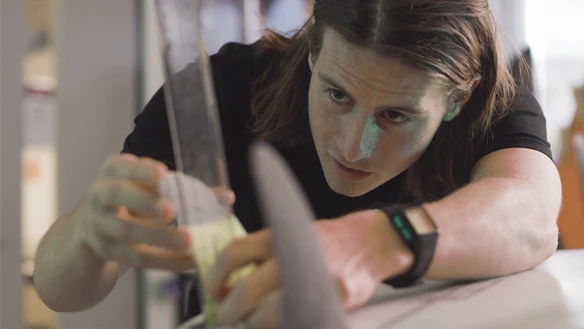
Sam combined his passion for surfing with his background in materials engineering to pursue a PhD with real-world impact – for surfers.
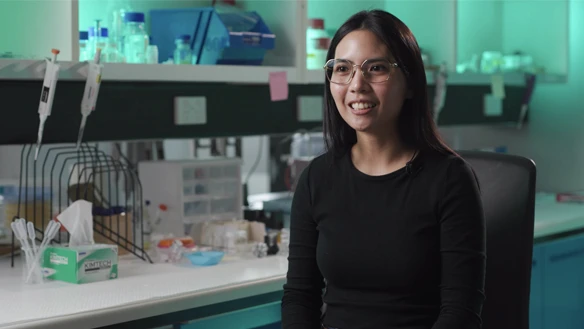
Mia is a graduate researcher at Deakin’s Institute for Frontier Materials, exploring a new class of nanomaterials helping shape the future of advanced materials and devices.
Finding the right supervisor will help to unlock your research potential. There are more than 130 world-class researchers across Deakin’s School of Engineering, Institute for Frontier Materials, and Institute for Intelligent Systems available to supervise your research degree or PhD.
Search our directory by name, research area or keyword.
Check their potential supervisor profile for availability, research strengths and even current PhD students.
Contact them to express interest in their research or specific project.
Research in the School of Engineering takes place in large centres and institutes, and bespoke subject-oriented labs.
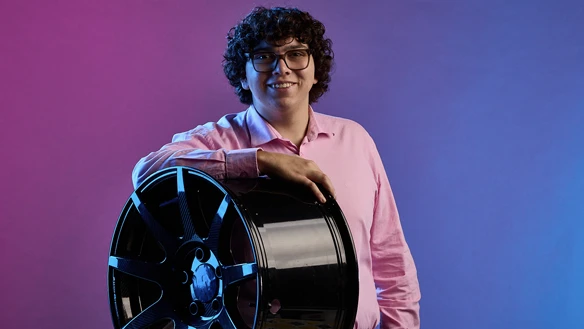
If your passion is in chemistry, metallurgy, textile science, engineering or molecular modelling, join our world-class materials science research institute.
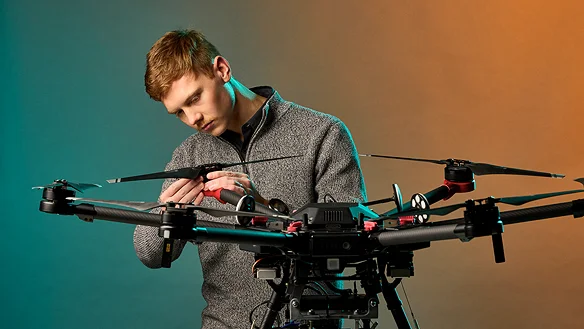
If you’re interested in robotics, haptics, autonomous systems, visualisation, machine learning or human-computer interfaces, join Australia's largest research team in systems modelling and simulation.
Big ideas need backing, not barriers. PhD scholarships cover tuition and a tax-free stipend of at least $37,450 per year (indexed annually). Many also offer extra funding, travel, and relocation support.
The Faculty of Science, Engineering and Built Environment has more than 100 scholarships available for 2027, including government- and Deakin-funded scholarships, and those attached to specific projects and partners. Eligibility criteria and application dates vary.
Ready to change the world? If you’ve locked in a supervisor, found a suitable scholarship and satisfied the entry requirements, it’s time to start your research proposal, and apply online through the ResearchPoint portal.
Don’t delay: applications for 2027 PhD projects close on 27 October 2026. Scholarship applications close even sooner.
Wonderful stories of what’s possible with a research degree from Deakin.
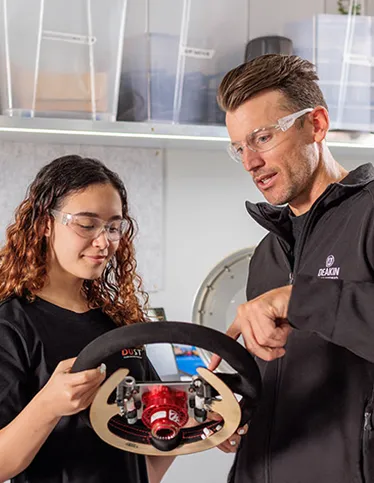
Graduate research can be a seriously exciting opportunity, but it all starts with finding the right supervisor to guide your journey.
Learn more
Scholarships provide vital support to you need to focus everything you’ve experienced on a topic you’re passionate about.
Learn more
Limna is exploring how advanced biomaterials can be translated into healthcare solutions. She shares what the PhD experience really looks like.
Learn more
How advanced research facilities helped Asher turn ideas into impact
Learn more
Deakin researchers at the Institute of Frontier Materials are scaling up tiny nanotubes with huge potential to transform manufacturing, materials and future technologies.
Learn more
A Deakin-designed filter cartridge could help deliver safer drinking water with less waste, lower pressure and long-lasting performance.
Learn more
What does a day in the life of a PhD student or graduate researcher look like?
Learn moreA good supervisor challenges your thinking, provides constructive feedback, listens carefully and helps you develop as a researcher. Look for supervisors who are engaged, responsive and committed to guiding your progress.
Yes. At Deakin, you’ll be supported by at least two supervisors throughout your PhD candidature. Depending on your project, your supervisory team may include academics from multiple disciplines, and sometimes other universities.
Applicants are assessed on their current knowledge, academic achievements, relevant research experience, prior study such as honours, or other equivalent qualifications.
Relevant honours qualifications, prior learning, professional experience or recent high-quality publications may support your application or be considered for recognition of prior learning, depending on the degree and eligibility criteria.
A PhD takes approximately three years full time, including research, coursework, training, development and thesis writing. Most research scholarships include an annual stipend for three years.
Yes. Graduate researchers are entitled to 20 days of annual leave, arranged with their supervisor. Many scholarship holders may also be eligible for paid personal, sick or parental leave, subject to scholarship terms and approval requirements.
Many graduate researchers undertake paid work during candidature, provided it does not affect their research progress. Conditions vary depending on whether you are a domestic or international student, and whether you study full time or part time. International candidates must also meet visa requirements. Some graduate researchers also take on lecturing roles during their candidature.
If you’re an Australian citizen, New Zealand citizen or Australian permanent visa holder, you do not need to pay tuition fees.
If you hold a PhD scholarship, your tuition fees are typically covered for up to four years.
International applicants should check the relevant course pages for detailed fee information:
Doctor of Philosophy (Engineering)
Doctor of Philosophy (Engineering) Institute for Frontier Materials
Doctor of Philosophy (Engineering) Institute for Intelligent Systems
Want to know more about a research degree in Deakin’s School of Engineering, Institute Frontier Materials or Institute for Intelligent Systems? Get in touch with the faculty research services team, and we’ll direct you to the relevant graduate research coordinator or subject matter expert.