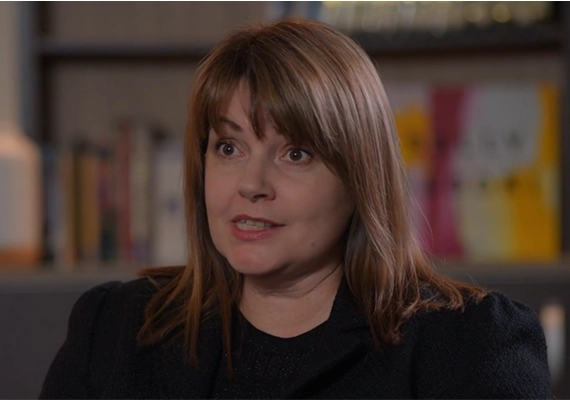
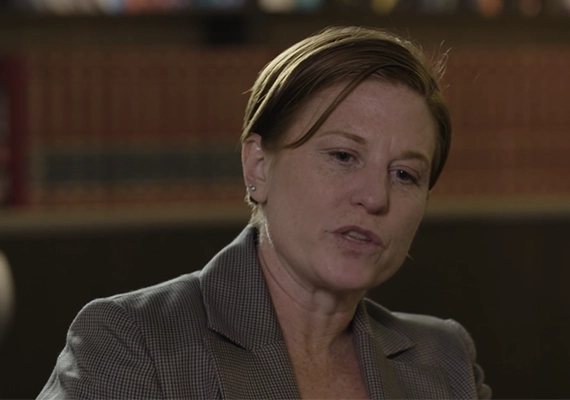
Our team is here to answer your questions and help you learn more about the Cancer Carer Hub.
Resources
Our evidence-based video resources are designed to support the seamless integration of carers into cancer treatment and care.
How our resources better integrate carers into cancer care
Carers are often the unseen but critical members of a patient’s cancer care team, providing unpaid financial, emotional and physical support to their loved one during an incredibly difficult time. However, it’s easy for clinicians focused on the patient’s health and wellbeing to overlook carers during early care planning discussions and at various treatment touchpoints.
Our evidenced-based video resource library is designed to help guide discussions at all stages of treatment – helping healthcare professionals to navigate complex conversations and seamlessly integrate carers into cancer care. Get started by downloading the toolkit and exploring the videos.
Download the cancer carer communication toolkit (PDF, 1.1MB)
Scenario-based videos
By observing interactions showing effective and ineffective communication for integrating carers into cancer care, healthcare professionals and carers can learn how to navigate communications and better integrate carers into conversations.
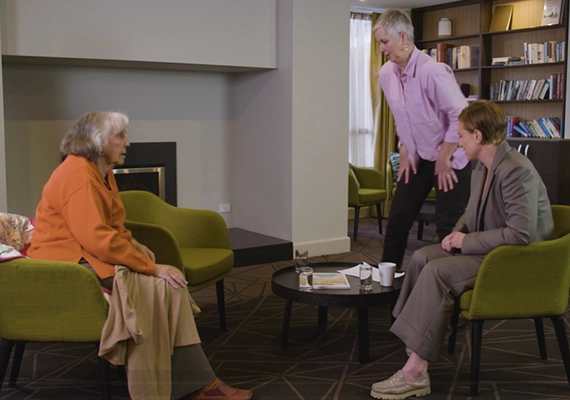
Scene 1: Starting the consultation – effective communication
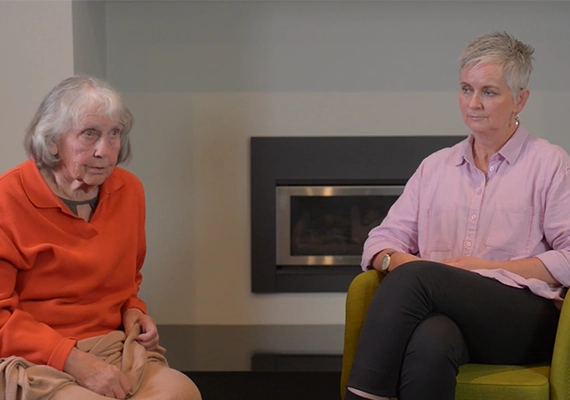
The simulated consultation starts with palliative care specialist Dr Sadie Dunn meeting Sarah for the first time, with Emily present. She introduces herself, checks Sarah is comfortable with Emily in the room, and clearly explains how the palliative care team will work alongside the oncology team.
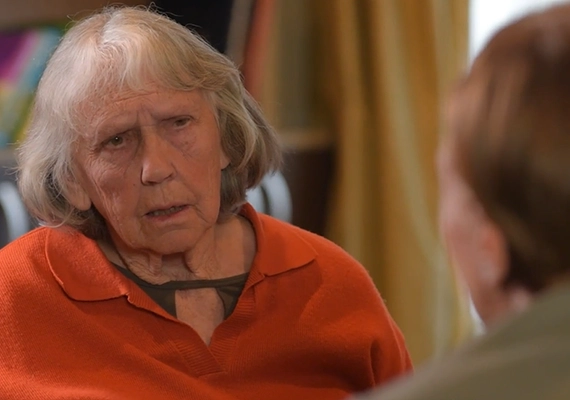
Play video
-
In this alternative opening section of the simulated consultation, notice how the carer was not well integrated. Pay particular attention to the body language demonstrated.
Play video
-
Sadie opens by inviting Sarah to describe how tingling in her feet and legs, and increasing fatigue, are affecting her daily life. As Sarah reflects on her fear of losing her independence, Emily, her carer, also begins to share her own concerns. The consultation moves from information gathering toward collaborative action planning, with the clinician working to balance Sarah's autonomy against her safety in partnership with both women.
Play video
-
Sadie seeks Sarah's consent before turning their attention to Emily. The scene demonstrates how to create space for a carer's own experience within a consultation – exploring Emily's wellbeing, validating the challenges of her role, responding to cues about financial strain, and connecting her with appropriate carer support services. The clinician reframes carer wellbeing as integral to the patient's own care.
Play video
-
Sadie explains the risk of neutropenia as a consequence of chemotherapy, delivering safety netting information to Sarah and Emily. Warning signs are introduced using chunking and checking, with Emily actively included in the monitoring plan. The clinician offers a written list to support recall, shares the reasoning behind the safety plan, and closes by confirming shared understanding. The scene shows how safety netting can be delivered as a collaborative, carer-inclusive process rather than a one-way information transfer. If there is one skill that could improve this interaction, it would be the explicit use of ‘teach-back’ at the end.
Play video
Scene 2: Starting the consultation – Ineffective communication
In this alternative opening section of the simulated consultation, notice how the carer was not well integrated. Pay particular attention to the body language demonstrated.
Play video
Ready to build your skills?
Get the most from this video series with our companion PDF toolkit. It includes key observation points, reflection prompts and practical guidance to help you confidently integrate carers into cancer care.
Download the cancer carer communication toolkit (PDF, 1.1MB)
Expert interviews
By exploring expert reflections on real-world cancer care scenarios, healthcare professionals can deepen their understanding of carer-inclusive communication and apply evidence-informed approaches in their own practice.
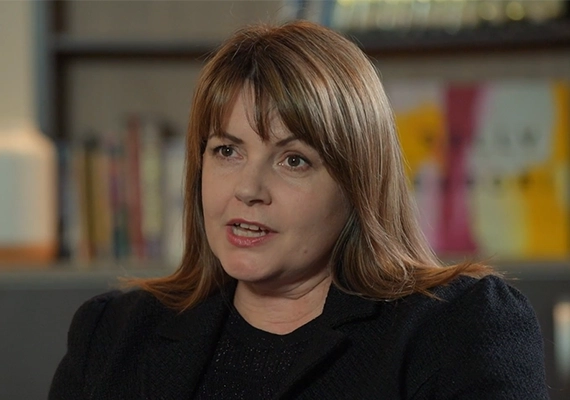
-
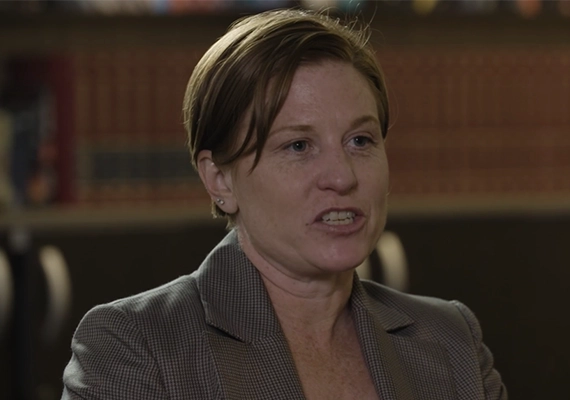
In this interview with Dr Sadie Dunn, the deputy director of palliative care at Peter MacCallum Cancer Centre and an experienced educator, about integrating carers into clinical consultations.
Play video
-
This interview covers the rationale for integrating carers and the importance of early rapport-building.
Play video
-
This interview focuses on the challenges and opportunities of working with multiple carers and family members, strategies for protecting the patient's voice, managing family meetings, and navigating different information needs.
Play video
-
This interview explores practical strategies for carer inclusion, balancing patient voice with carer involvement, and managing time and sensitive conversations.
Play video
Reflection 1: Integrating carers into clinical consultations
In this interview with Dr Sadie Dunn, the deputy director of palliative care at Peter MacCallum Cancer Centre and an experienced educator, about integrating carers into clinical consultations.
Play video
-
This expert interview focuses on gathering information from patients and carers in cancer consultations. The clinician discusses what to listen for beyond medical details, three practical strategies for bringing the carer's voice into information gathering, and how to help carers open up when they are trying to protect their loved one.
Play video
-
This is a condensed chapter from the full interview with Dr Sadie Dunn on integrating carers into clinical consultations. It focuses on practical strategies for helping patients and carers recall information, managing emotion in consultations, the carer's role in aiding recall, and effective safety netting.
Play video
-
This is the closing chapter from the full interview with Dr Sadie Dunn on integrating carers into clinical consultations. Drawing on her years of experience, Dr Dunn reflects on what keeps consultations truly person-centred, how to balance efficiency with connection, the value of carers as partners, and what she would change tomorrow.
Play video
Reflection 5: Gathering information
This expert interview focuses on gathering information from patients and carers in cancer consultations. The clinician discusses what to listen for beyond medical details, three practical strategies for bringing the carer's voice into information gathering, and how to help carers open up when they are trying to protect their loved one.
Play video
Contact us
Discover more
We use cookies to improve your experience. You consent to the use of our cookies if you proceed. Visit our Privacy policy for more information.