
About IISRI
The Institute for Intelligent Systems Research and Innovation (IISRI) is home to Australia's largest research team in systems modelling and simulation, providing practical solutions and commercial-ready products for aerospace, rail, automotive, defence, security and health sectors.

IISRI’s specialised engineering researchers have been successful in the delivery of numerous industry-based research projects with major national and international organisations.
Our partnerships
Backed with this high-level of expertise, we have a proven track record of delivering hundreds of industry-based research projects and have worked with more than 300 national and international organisations and government bodies, including:
- Department of Defence
- Ford Australia
- Telstra
- Quick Step
- Queensland Police
- New South Wales Police
- Australian Electoral Commission
- Carbon Revolution
Research, development, commercial ready.
IISRI has a proven track record of achieving outstanding results in its three key pillars of Research, Development, and Commercial Ready. We work closely with companies, government and community to deliver products and services that are agile, adaptive and applicable in dynamic, real-world environments.
Our research areas
Autonomous systems and robotics
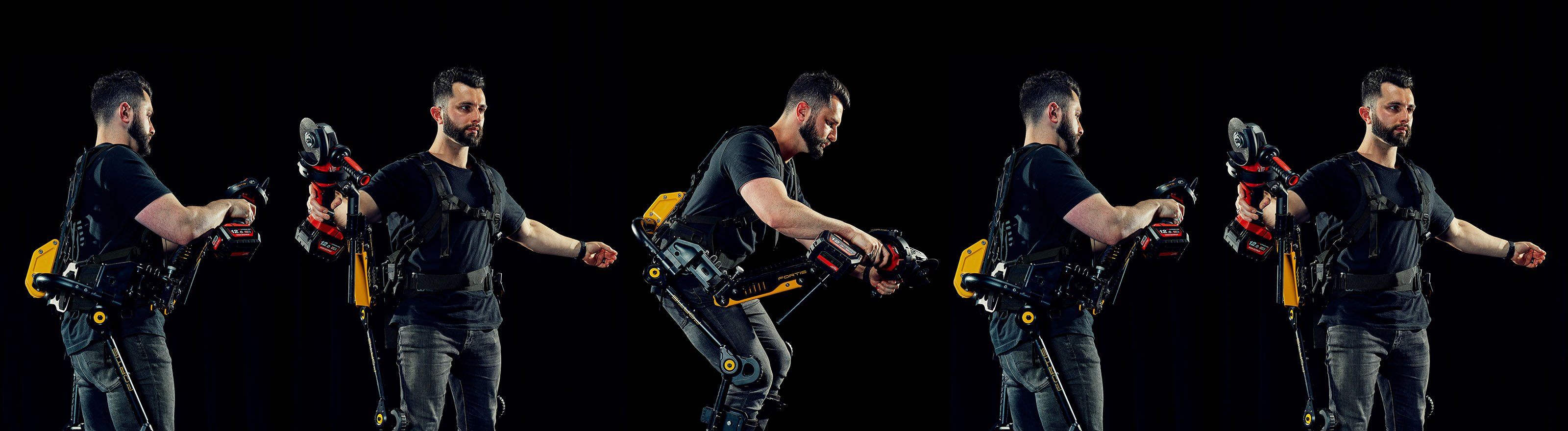
Autonomous systems and robotics allow companies to tackle challenges in personnel safety, work efficiency and evolving security risks in a safe and reliable way. IISRI is at the forefront of autonomous systems and robotics research – designing, engineering and building smarter technologies for defence, security and medical environments.
Systems Modelling and Simulation
Ease and efficiency are important to many companies and government bodies. Systems Modelling and Simulation can enable the quick analysis of complex data and simulate different scenarios and outcomes to help you improve your results.
Human performance and cognition
IISRI are global innovators in human performance and cognition monitoring systems – developing intelligent systems that respond and interact with our minds and bodies to tackle tasks with efficiency and precision.
Motion simulators and simulation training
IISRI’s world-class Motion Simulation Lab is home to a range of mobile and industrial robots, including the world’s first haptically enabled Universal Motion Simulator (UMS), which was designed and built in IISRI.
Research opportunities in IISRI
Deepen your knowledge with a research degree supported by a supervisor from IISRI.
Our facilities
Motion Simulators
ISRII is home to more than $40 million of infrastructure, including seven cutting-edge motion simulators.
Our Genesis Simulator is demonstrating how we can use motion simulation to improve automotive design and fast-track transport prototyping to get new cars on the road more efficiently. The Simulator, which uses Model S3 from Ansible Motion, is the first of its kind in Australia, and the only one in the world based in a research institute.
The Genesis Simulator expands our motion simulation research beyond our current automotive partners and to new opportunities in shipping, helicopters, fixed wing aircraft, urban air mobility fleets and road safety.
Learn more about the Genesis Simulator
CYCLONE centrifuge
CYCLONE is Australia’s first high-G centrifuge motion system that was designed, built, and tested at IISRI and put Australia at the forefront of aviation and space training technologies.
CYCLONE allows aircrews and astronauts to experience training and emergency scenarios in a safe environment, putting people out of harm’s way and saving costs. It also serves as a cost-effective tool for virtual prototyping and testing of new land and vehicle designs.
Contact us
If you'd like to study with us, work or collaborate with us, or learn more about our research, we'd love to hear from you.
Institute for Intelligent Systems Research and Innovation (IISRI)
General enquiries
+61 3 5227 1352
Email IISRI