


Top 125 worldwide for engineering

#1 in Melbourne for engineering facilities

5 engineering pathway options
Why choose Deakin
Strong technical expertise alone is not enough in today’s engineering industry – communication, project management and business strategy are just as critical. Take the next step in your engineering career with Deakin’s Master of Engineering Management (Professional), a degree designed to build the leadership and management skills needed to succeed.
Develop and awareness of engineering practice through continuing professional development opportunities aimed at providing contextual experience of the Australian Engineering Sector. Develop your engineering expertise while building the capability to lead teams and manage complex projects. You will refine your technical skills in a chosen engineering discipline while strengthening your knowledge of project management, communication and leadership. As a graduate, you will be primed to take on greater responsibility in engineering environments.
-
Skills employers want
Engineering roles are in high demand, with around 100,000 engineers needed in Australia by 2030.
-
Practical experience built into your degree
Complete professional placement (30–60 days) or career-focused development as part of your degree.
-
Learn what industry expects
Build skills in project management, leadership and engineering decision-making through industry-informed learning.
-
Grow your expertise
Focus your studies in a chosen engineering discipline, building technical depth alongside management capability.


Connected to industry
Deakin’s strong industry connections help shape your learning. Build practical experience in real workplace contexts through work-integrated learning, mentoring and networking opportunities. Industry advisory boards also help shape our degrees, which means what you study is current, relevant and aligned to what your future employers need.

Deakin puts employability first
Career outcomes
Advance your engineering career by combining technical expertise with leadership and management capability. Strengthen your ability to oversee projects, lead diverse teams and make informed engineering decisions with confidence.
Engineering manager
Lead engineering teams to plan, direct and supervise the successful delivery of technical, civil engineering and construction projects, combining engineering expertise with broad managerial skills.
- $185K
Typical annual salary in Australia
- 11.7%
Projected job growth in 5 years
- 4/5
Job satisfaction


Project manager
Plan, coordinate and deliver engineering projects from concept to completion, managing people, resources, budgets and timelines while working with diverse stakeholders.
- $145K
Typical annual salary in Australia
- 9.3%
Projected job growth in 5 years
- 4.1/5
Job satisfaction
Professional areas
- Manufacturing
- Construction
- Technology
- Energy
- Healthcare
- Consulting

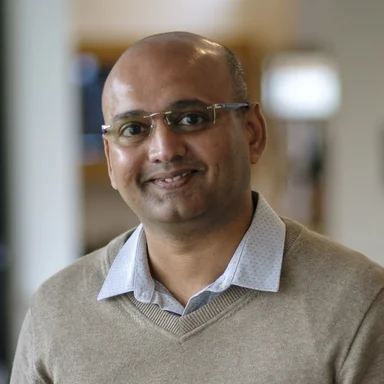

“This degree is your gateway to becoming a dynamic leader in today’s tech-driven world. The cutting-edge program blends advanced technical training with essential business and leadership skills empowering you to manage complex projects, lead high-performing teams and make project decisions with confidence.”
Siva KrishnanAssociate Head of School, School of Engineering
FAQs
In Master of Engineering Management (Professional), you study management, leadership, engineering project delivery and professional practice. The course structure may include specialisations, electives or project work, helping international students build globally relevant skills while studying in Australia.
Master of Engineering Management (Professional) focuses on engineering management, project leadership, systems thinking and professional practice. It builds management, leadership, engineering project delivery and professional practice, helping international students gain globally relevant skills with support for studying in Australia.
Master of Engineering Management (Professional) focuses on engineering management, project leadership, systems thinking and professional practice. It builds management, leadership, engineering project delivery and professional practice, helping international students gain globally relevant skills with support for studying in Australia.
The cost of Master of Engineering Management (Professional) depends on international tuition fees, study load and any credit you receive. Check the fees and scholarships section of the course page to help you plan your studies in Australia.
Related courses



*Deakin references data from a range of government, higher education and reputable media sources. Learn more about our achievements on our University rankings page, or explore our sources page for supporting references.
What will I study in the Master of Engineering Management (Professional)?
Build the skills to lead engineering projects from concept to completion, combining technical expertise with management, research and professional practice.

Build your engineering management foundation
Learn how to approach complex problems
Form your ability to investigate engineering challenges, analyse evidence and develop practical, well-informed solutions.
Understand sustainable engineering systems
Explore how infrastructure and engineering decisions influence environmental, social and economic outcomes over time.
Gain management and analytical capability
Develop skills in areas such as leadership, decision-making and data-informed thinking through a range of optional study areas.
Develop expertise to manage engineering projects
Deliver projects from plan to outcome
Manage engineering projects through implementation and evaluation, working with stakeholders and responding to complex challenges.
Specialise in an engineering discipline
Build advanced knowledge in your chosen area, developing the technical depth to complement your management expertise.
Gain experience and career readiness
Undertake professional practice or career-focused development activities that strengthen your confidence, employability and leadership capability.
Course structure
To complete the Master of Engineering Management (Professional), you must pass 8, 12 or 16 credit points. The number of credit points required may vary, depending on your entry point or how much credit you receive as recognition of prior learning (RPL) based on your professional experience and previous qualifications.
Most units are equal to one credit point. As a full-time student you will study four credit points per trimester and usually undertake two trimesters per year.
Are you a current student? For course information that applies to the year you started your degree, visit the handbook.
All students are required to meet the University's academic progress and conduct requirements
Units
~It is recommended students undertake SEN710 and SEN720 in consecutive trimesters
* available at the Burwood campus from 2027
plus
One (1) credit point of professional learning units:
plus
Four (4) credit point from one of the pathway groupings
Environmental Engineering - Burwood, Waurn Ponds
Smart Manufacturing - Burwood, Waurn Ponds
* available at the Burwood campus from 2027
^ available from 2027
5 Management themed course electives (5 credit points) from:
* available at the Burwood campus from 2027

What to expect while studying
You may be able to study available units in the optional third trimester to fast-track your degree, however your course duration may be extended if there are delays in meeting course requirements, such as completing a placement.
Any unit which contains work integrated learning, a community placement or interaction with the community may require a police check, Working with Children Check or other check.
You can expect to participate in a range of teaching activities each week. This could include lectures, seminars, studios, laboratories and online interaction. You can refer to the individual unit details in the course structure for more information. You will also need to study and complete assessment tasks in your own time.
Students commencing their course in Trimester 3 will be required to complete units in Trimester 3.
Placement can occur at any time, including during standard holiday breaks. Learn about key dates at Deakin.
Elective units may be selected that include compulsory placements, work-based training, community-based learning or collaborative research training arrangements.
At Deakin, we're committed to ensuring an inclusive environment that supports all students to belong, thrive and succeed. We work closely with students, where needed, to identify potential barriers to participation and where possible, provide tailored support so students can engage with learning and assessment activities.
If you are neurodivergent, have a disability, health condition or mental health condition that may impact your study or participation in university life, and want to know how Deakin could support you, contact our Domestic students (opens in a new window) or International students (opens in a new window) or Disability Resource Centre (opens email client) teams for a collaborative and confidential discussion. This discussion is to support you to make plans for your studies and future career and will not have any bearing on your application to the course.
When can I start?
When you study depends on your course, location and available intakes. Check the table to see when you can start and how study is offered throughout the year.
Students should note the following as units are being phased in at the Burwood campus:
- Students commencing in 2027 will be able to choose the Electrical and Renewable Energy Engineering and Smart Manufacturing pathways which will be available on campus at Burwood. All other pathways will require students to travel to Waurn Ponds.
Recognition for Prior Learning (RPL)
- Students wishing to complete the Electrical and Renewable Energy Engineering pathway at Burwood with RPL may need to study part-time as second year units will not be available at Burwood until 2028. Students will need to be assessed on an individual basis.
Your course learning outcomes describe the knowledge, skills and capabilities you’ll develop and be able to demonstrate by the time you graduate. Built into your course through your units and assessments, they provide a clear picture of what you’ll be equipped to know, understand and do – preparing you to apply your learning with confidence beyond university.
| Course Learning Outcomes |
|---|
| Apply knowledge of engineering principles and techniques, and use research, project design and management skills and approaches to systematically investigate, interpret, analyse and generate solutions for complex problems and issues. Manage engineering solutions, projects and programs, and ensure reliable functioning of all materials, components, sub-systems and technologies as well as all interactions between the technical system and the context within which it functions to form a complete, sustainable and self- consistent system that optimises social, environmental and economic outcomes over its full lifetime. Advocate engineering ideas and make engineering decisions from conception through to implementation by properly evaluating and integrating technical and non-technical considerations as desirable outcomes of engineering projects and practice. |
| Prepare high quality documents including project plans, budget reports and present information including in a variety of oral, written and/or visual forms appropriate to the context, in a professional manner. Use reasoning skills to critically and fairly analyse the viewpoints of stakeholders and specialists, and consult in a professional manner when presenting an engineering or management viewpoint, arguments, justifications or solutions to engage technical and non-technical audience in discussions, debate and negotiations. |
| Use a wide range of digital tools and techniques to locate, critically assess information and methodically and systematically differentiate between assertion, opinion and evidence for engineering decision- making. Demonstrate the ability to independently and systematically locate and share information, standards and regulations that pertain engineering work. |
| Identify, discern, and characterise salient issues, determine and analyse causes and effects, justify and apply appropriate assumptions, predict performance and behaviour, conceptualise engineering and management approaches to synthesise solution strategies for complex technical and non-technical engineering problems and evaluate outcomes achieved. |
| Apply knowledge of engineering skills and techniques to identify and define complex problems in a variety of contexts. Evaluate and use specialist engineering methods to identify potential solutions to independently and collaboratively resolve complex, real-world problems and realise solutions. Demonstrate innovative and creative approaches and solutions to engineering problems that are constrained by local, national, global and contemporary issues and show capacity for planning, designing, executing and managing a range of engineering projects. |
| Evaluate own knowledge and skills, professionalism and ethical development using frameworks of reflection and take responsibility for learning and performance. Work responsibly and safely in engineering environments to demonstrate professionalism. |
| Undertake various team roles, work effectively in multidisciplinary teams, and utilise effective teamwork skills in order to achieve team objectives. Apply interpersonal skills to interact and collaborate to enhance and optimise engineering outcomes through shared knowledge and creative capacity. |
| Engage with global traditions and current trends in engineering practice in order to appreciate diversity, seek equity in outcomes and adopt ethical and professional standards to evaluate engineering impacts in the society. |
- Award granted
- Master of Engineering Management (Professional)
- Year
2027 course information
- Deakin code
- S787
- CRICOS code?Commonwealth Register of Institutions and Courses for Overseas Students
- 117807M Burwood (Melbourne)
- Level
- Higher Degree Coursework (Masters and Doctorates)
- Australian Qualifications Framework (AQF) recognition
The award conferred upon completion is recognised in the Australian Qualifications Framework at Level 9
Apply now

Apply directly to Deakin
Apply directly through StudyLink Connect. Depending on your location, you may need to apply through a Deakin Authorised Agent, who can support and submit your application.
See our guide to applying to Deakin for application steps and requirements.
Recognition of prior learning
We value your previous study and experience. Recognition of prior learning enables you to get credit for what you've already achieved. When you apply, we'll consider your previous study and experience for recognition of prior learning.