Choosing an early childhood education or primary teaching course
If teaching has always felt like your calling, the next step is choosing the degree that will bring that dream to life.
Do you see yourself inspiring little learners in early childhood or guiding curious minds in primary school? Are you aiming to step into leadership down the track? How much time do you want to invest in study before you start teaching?
We asked Dr Natalie Robertson, the Associate Head of School for Teaching and Learning in the School of Education for some advice on how to decide between studying early childhood or primary school teaching.
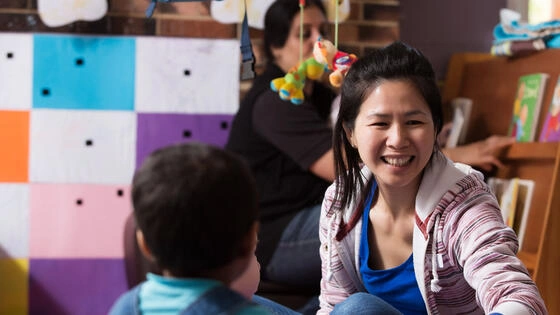
Bachelor of Early Childhood Education
This degree’s singular focus is on early childhood teaching and learning, predominantly with children between birth and five years old. During the degree, you undertake work placements in a variety of settings including long day care or sessional kindergarten.
Dr Robertson says the course is a popular option for early childhood educators who have a Diploma of Early Childhood Education and want to upgrade their qualifications.
‘This course provides you with greater career opportunities, more pay and more agency. You’re also able to fast-track your studies and complete your course in 18 months because you get recognition of prior learning.’
You are able to fit your studies in around your work in the industry, either studying the degree part-time or working part-time.
Graduates of this course usually become kindergarten teachers. However, you could also go on to become an educational leader or a director of an early childhood service such a long-daycare centre.
Find out more about Deakin’s Bachelor of Early Childhood Education.
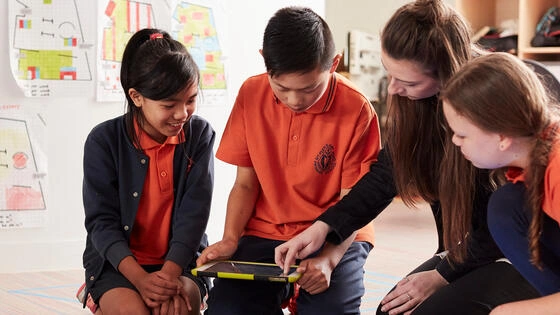
Bachelor of Education (Primary)
Wondering how to become a primary school teacher?
Deakin’s four-year degree gives you the teacher qualifications required to work in government, Catholic or independent primary schools. You can fast-track your studies with Deakin’s accelerated learning option, the only three-year Bachelor of Education (Primary) in Australia. By taking selected units in Trimester 3, you’ll earn a four-year equivalent qualification in just three years.
‘There’s no early childhood element to this course and graduates would be able to teach from foundation (prep) to grade 6,’ Dr Robertson says.
However, you may also find work in other fields including community services, government agencies and not-for-profit organisations.
In this course, you focus on primary teaching and curriculum and discover what it takes to teach and lead young people.
Aside from developing solid teaching skills, you will also learn how to teach a wide range of subjects and specialisations – from maths to science, and arts to literacy.
One of the highlights of this degree is putting what you’ve learnt at uni into practice in the classroom during Deakin’s Professional Experience Program. If you’re interested in travel, you can get a wider perspective on teaching by participating in our Global Education Program. Whether you choose to immerse yourself in an Indigenous community or take your teaching skills abroad, the program develops your skills in intercultural education and gives your teaching application a distinct edge.
You’ll also get the option to combine your personal interests with a range of curriculum areas.
Upon graduating, you’ll have the confidence and ability to be ready to step into the classroom and make a difference to students.
Find out more about Deakin’s Bachelor of Education (Primary).
Which undergraduate course should I choose?
Are you wondering which course is right for you?
‘If you want to have lots of agency and autonomy over your teaching practice and curriculum, early childhood teaching really allows that to happen. I definitely suggest anyone who enjoys creativity would be best suited for early childhood,’ Dr Robertson says.
‘Primary teachers have the experience of working across multiple age groups – they can learn a lot about themselves and learn a lot about who children are at different stages of life.’
It’s also worth noting that we are the only university to embed the Berry Street Education Model into all of our initial teaching degrees. So whether you choose early childhood or primary studies you’ll graduate equipped with practical, trauma-informed strategies to support every learner. You’ll know how to manage safe, healthier and more engaging learning environments and build positive classroom relationships to promote academic success – giving you and your employer confidence.
Postgraduate study options
If you’re looking to make a meaningful career change or to pursue further studies, we also offer the Master of Teaching (Early Childhood) and Master of Teaching (Primary).
The Master of Teaching (Early Childhood) allows you to choose a specialisation in early childhood inquiry stream, trauma responsive practice or Research pathways, the latter of which may be used as a pathway to further study in a PhD.
The Master of Teaching (Primary) focuses on dynamic skills and communication, you will graduate classroom-ready, a finely tuned educator and leader with a set of adaptable techniques. Both degrees offer at least 60-days of professional experience placements.
Financial assistance for placements
There is also financial assistance available for when you’re on work placements. The Victorian Government has grants of $100 - $200 per day to support pre-service teachers completing a teaching placement in an eligible regional, remote or specialist Victorian government school. The Commonwealth Prac Payment (CPP) assists eligible students with costs related to mandatory placements.
Victorian Government scholarships for early childhood
One other thing to keep in mind: if you’re leaning towards early childhood, your wallet may thank you, with the Victorian Government offering a range of attractive financial incentives and scholarships to address shortages in the sector.
Find more about early childhood education and primary teaching at Deakin.