


#13 worldwide for education

Teaching placements can be arranged by Deakin

Trauma-informed practice built into the degree
Why choose teaching (early childhood) at Deakin
Study a Master of Teaching (Early Childhood) and learn how to help young children develop key skills like empathy and self-confidence through play. With 60+ days professional placement built-in, you will graduate prepared to shape the next generation. The course also combines online and on-campus learning, giving you the flexibility to balance work and study.
Ranked #3 in Australia and #13 worldwide for education and educational research, Deakin is also the only university to embed the Berry Street Education Model, using trauma-informed strategies in all our initial teaching degrees. You can choose to specialise in early childhood inquiry, trauma responsive practice or research pathways. You may also be able to fast track this two-year masters degree, graduating sooner and ready to manage safe, healthy and engaging learning environments that promote academic success. This course is approved by ACECQA as an early childhood teaching qualification in Australia.
-
Leading internationally
Deakin is ranked #13 globally for education and educational research, reflecting our leading academics, supportive environment and world-class facilities.
-
Placement built in
Complete 60+ days of professional placement and one-on-one mentorship in our network of 1,400 schools, plus a Teaching Performance Assessment benchmarked to national standards.
-
Accredited course
Graduate with an ACECQA-approved qualification, a recognised Berry Street Education Model certificate, plus eligibility to register with the Victorian Institute of Teaching.
-
Achieve work-life balance
Deakin’s blend of online and on-campus learning means you can balance work, study and personal development.

Connected to industry
Build classroom-ready skills through professional placements across our network of more than 1,400 schools and 500 early childhood centres. With industry-shaped, trauma-informed, accredited courses, you will graduate ready to support all learners.


Deakin puts employability first
Career outcomes
Prepare to teach young children in early childhood settings or explore opportunities in service management, policy, consultancy, research and community or government organisations.
Early childhood teacher
Create play-based learning experiences that support young children’s development, wellbeing and confidence. Work with children, usually aged two to five, families and colleagues across kindergartens and early learning settings.
- $93k
Typical annual salary in Australia
- 3,639
Jobs advertised


Childcare centre manager
Lead an early learning service, supervise educators and coordinate programs, safety, compliance, resources and communication with children’s families.
- $110K
Typical annual salary in Australia
- 3,241
Jobs advertised
Other jobs
- Policy officer
- Education consultant
- Early childhood researcher
- Community organisation roles
- Government education roles
- NGO education roles



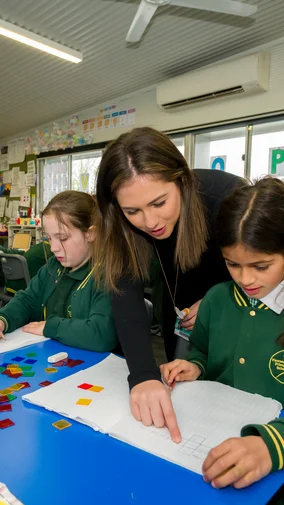
“Placements are honestly one of the most rewarding parts of the course as you get to put all of your classroom work and study into practice. Deakin also really supports its students whilst on placement.”
EmilyMaster of Teaching graduate
Stories that start here
Key dates

Direct applications
Trimester 1 2027 applications close 7 February 2027

Download a course guide
Study at Deakin and be rewarded with new skills that will give you an edge in the job market
FAQs
Scholarships may be available for students applying to Master of Teaching (Early Childhood), depending on eligibility and intake. Start with Deakin’s scholarships information and check any course-specific opportunities linked to your study area.
The Master of Teaching (Early Childhood) takes two years full time, however, you may be able to study some units in the optional third trimester to fast-track your degree. Your exact timeframe can change with part-time study, trimester choices or recognition of prior learning, so check the course structure before planning your enrolment.
To become an early childhood teacher in Victoria, you must complete an accredited initial teacher education qualification and meet registration requirements through the Victorian Institute of Teaching. Deakin's Master of Teaching (Early Childhood) is typically completed in two years of full-time study.
Related courses




*Deakin references data from a range of government, higher education and reputable media sources. Learn more about our achievements on our University rankings page, or explore our sources page for supporting references.
What will I study in the Master of Teaching (Early Childhood)?
Begin this two-year course with core early childhood foundations, then move into advanced practice, professional experience and a chosen specialisation pathway.
Build your foundations
Learn child context
Explore child development, learning and wellbeing through family, community and social contexts – know the whole child, not just the lesson plan.
Develop curriculum confidence
Build practical approaches to literacy, numeracy, creative learning and integrated curriculum in ways that reflect how young children learn through play.
Think like a teacher
Strengthen your understanding of pedagogy, professional responsibility and early childhood education’s broader purpose.

Extend practice and specialisation
Teach across complex settings
Refine how you plan, adapt and lead learning in diverse environments, including work with infants and toddlers, and culturally responsive practice.
Deepen your focus
Use your specialisation to build depth in a professional focus, whether you want stronger inquiry, research or practice capabilities.
Work in classrooms
Complete supervised professional experience and the final teaching performance assessment, bringing together evidence, reflection and confident professional judgement.
Course structure
To complete the Master of Teaching (Early Childhood), you must pass 16 credit points.
Most units are equal to one credit point. As a full-time student you will study four credit points per trimester and usually undertake two trimesters per year.
Are you a current student? For course information that applies to the year you started your degree, visit the handbook.
All students are required to meet the University's academic progress and conduct requirements
Units
Compulsory 0-credit point units
To be completed in the first trimester of study:
To be completed in the first year of study:
Units
Students complete the remaining four credit points from one of following specialisations:
Professional recognition
This program is approved by the Australian Children’s Education and Care Quality Authority (ACECQA) as an early childhood teaching qualification in Australia. Graduates of this course will be eligible to register with the Victorian Institute of Teaching (VIT). Graduates who are intending to apply for registration interstate may be required to provide further information. Interstate applicants are advised to check the registration requirements in their state or territory carefully.

What to expect while studying
You may be able to study available units in the optional third trimester to fast-track your degree, however your course duration may be extended if there are delays in meeting course requirements, such as completing a placement.
Students will be required to hold a valid Working with Children (WWC) Check prior to undertaking professional placements as part of this course. Learn more about Working with Children Checks.
Interstate applicants must check the requirements and meet all conditions for undertaking professional experience in schools for their state or territory before undertaking professional experience placements as part of this course.
Inherent requirements
It is expected that all students will be able to abide by, and ensure their behaviour is in accordance with the Deakin University initial teacher education inherent requirements.
Immunisations
Immunisation and/or vaccination requirements will be communicated by the Professional Experience Office in line with the Department of Education and Training's directions at the time of placement.
For further information contact the School of Education, Professional Experience Office.
Professional Experience Placements are a compulsory component of the course and a requirement for registration as a graduate teacher. Placement can occur at any time, including during standard holiday breaks. Learn about key dates at Deakin.
This course includes 60-days of supervised professional experience.
This is a graduate entry teaching course that introduces research-based practice throughout the core professional studies units (a total of six credit points), which includes demonstrating their application of knowledge and skills through their 70-days of professional practice in education-based contexts e.g. early childhood settings. As part of the series of core professional studies units, students are also required to complete a capstone assessment in the final year (2 credit point unit) to demonstrate their evidence-based professional practice informed by data analysis and scholarship of teaching and learning.
At Deakin, we're committed to ensuring an inclusive environment that supports all students to belong, thrive and succeed. We work closely with students, where needed, to identify potential barriers to participation and where possible, provide tailored support so students can engage with learning and assessment activities.
If you are neurodivergent, have a disability, health condition or mental health condition that may impact your study or participation in university life, and want to know how Deakin could support you, contact our Domestic students (opens in a new window) or International students (opens in a new window) or Disability Resource Centre (opens email client) teams for a collaborative and confidential discussion. This discussion is to support you to make plans for your studies and future career and will not have any bearing on your application to the course.
When can I start?
When you study depends on your course, location and available intakes. Check the table to see when you can start and how study is offered throughout the year.
Become an Early Childhood Teacher. This course is approved by ACECQA as an early childhood teaching qualification in Australia and graduates are eligible to register with the VIT.
*This course is accredited with the Australian Children's Education and Care Quality Authority (ACECQA) and recognised as an early childhood teaching qualification in Australia. Graduates are eligible to register with the Victorian Institute of Teaching (VIT) as an early childhood teacher. Other states and territories may also require early childhood teachers to hold teacher registration or accreditation. Prospective students are strongly advised to check with teacher registration and accreditation authorities as to the requirement and eligibility to register and work as early childhood teachers in other states, territories or internationally with a Master of Teaching (Early Childhood) birth to five qualification.
Your course learning outcomes describe the knowledge, skills and capabilities you’ll develop and be able to demonstrate by the time you graduate. Built into your course through your units and assessments, they provide a clear picture of what you’ll be equipped to know, understand and do – preparing you to apply your learning with confidence beyond university.
| Course Learning Outcomes |
|---|
| Research, interpret, critically evaluate, and synthesise advanced knowledge, theory, principles and practices relevant to curriculum, ethical conduct, policy and regulations in early childhood education. Advanced ability to transfer specialised theoretical and practical knowledge into practice. |
| Critically evaluate and use highly skilled communication strategies (oral, written, digital and nonverbal) to professionally transfer specialised knowledge, complex ideas and advanced theoretical concepts with diverse individuals and groups (such as children, families, parents and caregivers, colleagues and other professionals, community organisations). |
| Research, critically evaluate and apply a range of technologies to collect, analyse, synthesise, evaluate, generate and transmit information for the purposes of advanced and ethically responsible teaching and learning practices in a rapidly changing global environment. |
| Apply advanced knowledge to research, critically analyse and reflect on complex and contemporary issues, policies and concepts in educational and societal contexts to generate and transmit independent evidence-informed judgements that are ethical to complex situations relating to teaching and learning in early childhood education. |
| Apply analytical and practical skills to complex professional situations and ideas to make independent judgements related to teaching and learning. Generate and transmit creative, innovative and authentic solutions to real-life and complex problems encountered when working with diverse individuals and groups (such as children, families, parents and caregivers, colleagues and other professionals, community organisations). |
| Use initiative and agency to apply advanced evaluative and analytic knowledge and skills to demonstrate responsibility for own learning and professional practice (and in collaboration with others). |
| Actively and collaboratively participate in, and/or lead learning communities, involving learners, families, community members, colleagues and the broader profession to deepen knowledge and practice to optimise teaching for child learning and wellbeing. |
| Apply culturally responsive, critically reflective and embodied self-knowledge of decolonial praxis in the design, delivery and evaluation of teaching and learning that honours and respects the educational expectations of Aboriginal and Torres Strait Islander students and diverse learners, families and communities. |
Approved at Faculty Board 2025
- Award granted
- Master of Teaching (Early Childhood)
- Year
2027 course information
- Deakin code
- E761
- Level
- Higher Degree Coursework (Masters and Doctorates)
- Australian Qualifications Framework (AQF) recognition
The award conferred upon completion is recognised in the Australian Qualifications Framework at Level 9
Fees
Estimated tuition fee
$4,908
for 1 yr full-time - Commonwealth Supported Place (CSP)
The estimated tuition (student contribution) fee above is based on a typical first-year full-time enrolment of 8 credit points and is provided as a guide only. Your student contribution is determined by the units you enrol in and will vary depending on the units you choose, your study load, the course duration, and any approved recognition of prior learning. You may also be eligible for a HECS-HELP loan to defer payment of all or part of your student contribution.
Check your eligibility or learn more about CSP or HECS-HELP.

Scholarships
A Deakin scholarship can open the door to new opportunities. Whether you have something unique to offer or simply need a bit of extra support to reach your goals, we’re here to help. Scholarships can assist with course fees, living costs and study materials – so you can focus on achieving your best.
Victorian Government scholarship
You may be eligible to receive up to $18,000 as part of the support provided by the Victorian Government to become an early childhood teacher. You need to enrol in this Deakin course before applying for the scholarship.
If you're eligible, the Commonwealth Prac Payment (CPP) can help with the costs of completing a mandatory placement as part of your course. To find out if you're eligible and learn how to apply, visit Deakin’s Commonwealth Prac Payment (CPP) website.
Applications for 2027 are open
Ready to take the next step? Apply now to start your journey at Deakin and get ready for what’s next.
Key dates
Direct applications
Trimester 1 2027 applications close 7 February 2027
Apply now

Apply directly to Deakin
For information on the application process and closing dates, visit how to apply. Please note that closing dates may vary for individual courses.
Recognition of prior learning
We value your previous study and experience. Recognition of prior learning enables you to get credit for what you've already achieved. When you apply, we'll consider your previous study and experience for recognition of prior learning.
Recognition of prior learning in the Master of Teaching (Early Childhood) is restricted by the professional accreditation structures of the course. Students are encouraged to apply for credit for comparable curriculum discipline units completed at postgraduate level. Recognition is not available for any work experience whether paid or unpaid, qualified or unqualified teacher or teacher aide against the academic professional experience units. You can also refer to the recognition of prior learning (RPL) system which outlines the credit that may be granted towards a Deakin University degree and how to apply for credit.