Key facts
Duration
1 year full-time
Locations
Course overview
Study Deakin’s Bachelor of Forensic Science (Honours) to deepen your understanding of a chosen discipline within the field, while building key research and soft skills that enhance your employment options and prepare you for further study.
Honours is an optional year of specialised study that allows you to build on the theory and practical skills gained throughout your undergraduate degree. It is an opportunity to develop your expertise in a field you are passionate about and gain invaluable research and life skills that will stay with you throughout your career.
You have worked hard for your undergraduate degree. Why not take the next step with an honours degree that launches your career forward?
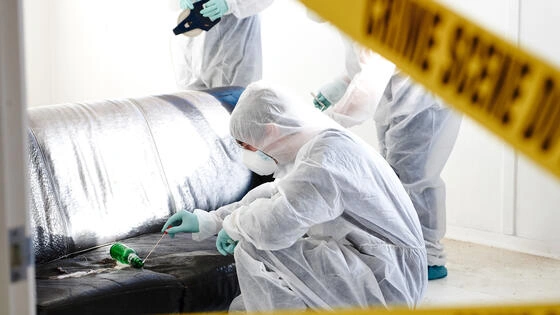
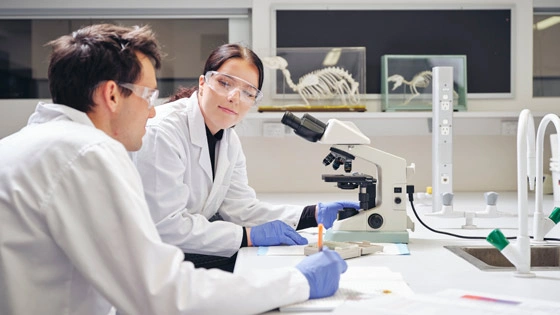
You will be guided every step of the way by teachers and research staff who are experts in their respective fields, with international links and broad industry experience. You’ll be able to leverage Deakin’s industry connections to work alongside professional forensic scientists. Through research, coursework and formal training, you will develop the skills and techniques needed for modern forensic science, including the examination and presentation of scientific evidence to inform investigations.
Deakin's research in forensic science is conducted in partnership with government departments, private agencies and leading international scientists, and is funded by national and international grants. This means that the work you complete during your honours program may contribute to producing research of global importance.
You’ll have a distinct advantage when applying for roles in forensic research, research science and insurance investigations. You'll also be well placed to pursue further study and research training, including masters and PhD programs.
Current Deakin students
To access your official course details for the year you started your degree, please visit the handbook
- Award granted
- Bachelor of Forensic Science (Honours)
- Year
2026 course information
- Deakin code
- S401
- CRICOS code?Commonwealth Register of Institutions and Courses for Overseas Students
- 060342C Waurn Ponds (Geelong)
- Level
- Undergraduate
- Australian Qualifications Framework (AQF) recognition
The award conferred upon completion is recognised in the Australian Qualifications Framework at Level 8
#1 Victorian uni for graduate employment
Choose a Deakin degree for vital industry experience on placements, hands-on learning in world-class facilities and guidance from industry-expert academics. We offer lifetime career support and are the #1 Victorian university for graduate employment.
Course structure
To complete the Bachelor of Forensic Science (Honours), you must pass 8 credit points. This includes:
- DAI001 Academic Integrity and Respect at Deakin (0-credit-point compulsory unit) in your first study period
- 6 credit points from a research specialisation
- 2 credit points of coursework units.
Most units are equal to one credit point. As a full-time student you will study four credit points per semester and usually undertake two semesters per year.
All students are required to meet the University's academic progress and conduct requirements.
Choose one of the following specialisations:
Forensic Biology - unit set code SP-S000078
Forensic Chemistry - unit set code SP-S000079
Intakes by location
The availability of a course varies across locations and intakes. This means that a course offered in Semester 1 may not be offered in the same location for Semester 2. Check each intake for up-to-date information on when and where you can commence your studies.
- Start date: February
- Available at:
- Waurn Ponds (Geelong)
Application closing date: Refer to Key dates section
- Start date: July
- Available at:
- Waurn Ponds (Geelong)
Application closing date: Refer to Key dates section
Deakin splits the academic year into three terms, known as trimesters. Most students usually undertake two trimesters each year (March-June, July-November).
CHOOSE DEAKIN, THE #1 VICTORIAN UNIVERSITY FOR COURSE SATISFACTION
Course duration
You may be able to study available units in the optional third trimester to fast-track your degree, however your course duration may be extended if there are delays in meeting course requirements, such as completing a placement.
Projects and Supervision - additional information
As part of your application for this course, you will be required to first contact potential supervisors and discuss projects. Once you have met with a supervisor and agreed on a project, you will need to complete an application form and submit this via the Deakin applicant portal.
Information on how to apply, important dates and the 2025 Honours projects booklet is available at Honours in Life and Environmental Sciences.
Participation requirements
Reasonable adjustments to participation and other course requirements will be made for students with a disability. More information available at Disability support services.
Entry requirements
Selection is based on a holistic consideration of your academic merit, work experience, likelihood of success, availability of places, participation requirements, regulatory requirements, and individual circumstances. You will need to meet the minimum academic and English language proficiency requirements or higher to be considered for selection, but this does not guarantee admission.
A combination of qualifications and experience may be deemed equivalent to minimum academic requirements.
To be considered for admission to this degree you will need to meet the following criteria:
- completion of a bachelor degree or higher or major in a related discipline with a Weighted Average Mark (WAM) (or equivalent average grade indicator) of at least 65 in third year units, or where relevant, final year units
To meet the English language proficiency requirements of this course, you will need to demonstrate at least one of the following:
- Victorian Certificate of Education (VCE) English Units 3 and 4: a study score of at least 30 in English as an Additional Language (EAL) or at least 25 in English other than EAL
- IELTS overall score of 6.5 with no band less than 6.0 (or equivalent)
- other evidence of English language proficiency (learn more about other ways to satisfy the requirements)
Learn more about Deakin courses and how we compare to other universities when it comes to the quality of our teaching and learning.
Recognition of prior learning
If you have completed previous studies which you believe may reduce the number of units you have to complete at Deakin, indicate in the appropriate section on your application that you wish to be considered for Recognition of prior learning. You will need to provide a certified copy of your previous course details so your credit can be determined. If you are eligible, your offer letter will then contain information about your Recognition of prior learning.
Your Recognition of prior learning is formally approved prior to your enrolment at Deakin during the Enrolment and Orientation Program. You must bring original documents relating to your previous study so that this approval can occur.
You can also refer to the recognition of prior learning (RPL) system which outlines the credit that may be granted towards a Deakin University degree.
Fees and scholarships
Fee information
Estimated tuition fee - full-fee paying place
$42,400 for 1 yr full-time AUD
Learn more about fees and your options for paying.
The tuition fees you pay are determined by the course you are enrolled in. The 'Estimated tuition fee' is provided as a guide only and represents the typical first-year tuition fees for students enrolled in this course. The cost will vary depending on the units you choose, your study load, the length of your course and any approved Recognition of prior learning you have.
Each unit you enrol in has a credit point value. The 'Estimated tuition fee' is calculated by adding together eight credit points of a typical combination of units for this course. Eight credit points is used as it represents a typical full-time enrolment load for a year.
You can find the credit point value of each unit under the Unit Description by searching for the unit in the handbook.
Learn more about international student fees.
Scholarship options
Deakin scholarships recognise your hard work and achievements. Our support can ease the financial pressure of studying in Australia so you stay focused on your success. Numbers are limited, so apply early for the best chance.
Apply now
Apply directly to Deakin
Applications can be made directly to the University through StudyLink Connect - Deakin University's International Student Application Service.
We recommend engaging with a Deakin Authorised Agent who can assist you with the process and submit the application.
Need more information on how to apply?
For information on the application process, including required documents and important dates, visit the How to apply webpage.
If you need assistance, please contact us.
Career outcomes
Graduate with transferable skills that give you a competitive edge in the job market, including data analysis, critical thinking and problem solving.
Your in-depth understanding of your chosen discipline, combined with your highly advanced research skills, will set you up to succeed in further study and open up employment opportunities in areas such as:
- forensics
- insurance investigations
- risk analysis
- research science
- government institutions
- chemical, biological, food and pharmaceutical industries.
Professional recognition
The Bachelor of Forensic Science (Honours) has been professionally accredited by the Chartered Society of Forensic Sciences. Graduates of this course are encouraged to apply for membership of the Australian and New Zealand Forensic Science Society (ANZFSS).
Deakin's graduate learning outcomes describe the knowledge and capabilities graduates can demonstrate at the completion of their course. These outcomes mean that regardless of the Deakin course you undertake, you can rest assured your degree will teach you the skills and professional attributes that employers value. They'll set you up to learn and work effectively in the future.
| Deakin Graduate Learning Outcomes | Course Learning Outcomes |
|---|---|
| Discipline-specific knowledge and capabilities | Graduates will have advanced theoretical and technical knowledge in one of forensic biology or forensic chemistry. |
| Communication | Communicate effectively the design and outcomes of research using a range of verbal, graphical and written forms customised for diverse audiences. |
| Digital literacy | Utilise a range of digital technologies and information sources to discover, select, analyse, employ, evaluate, critique, and disseminate outcomes from the research project. |
| Critical thinking | Use critical and analytical thinking to identify problems and the design of solutions using established theories, models, constructs and practice. |
| Problem solving | Apply theoretical constructs, advanced skills and critical analysis to demonstrate well developed judgement adaptability and evaluation of solutions to research problems. |
| Self-management | Develop and apply knowledge and skills in creative ways to demonstrate advanced levels of autonomy, initiative and ethical and professional behaviour in research. |
| Teamwork | Work independently and/or collaboratively within a research team, receiving advice and guidance from supervisor/s that contributes to achieving the outcomes of the Honours project. |
| Global citizenship | Apply scientific knowledge and skills with a high level of autonomy, judgement, responsibility and accountability in collaboration with stakeholders to articulate the place and importance of scientific inquiry in the local and global context. |
*Deakin references data from a range of government, higher education and reputable media sources. For more information, visit our University rankings page.