


Work on real client cases

Engaging interactive learning in mock parliaments

#1 Victorian university for law course satisfaction
Why choose Deakin
Shape the rules that govern economies and societies with this double degree that creates pathways to law, policy and leadership roles. Study at the #1 university in the state of Victoria for graduate employment and build career-ready skills in legal reasoning, political analysis, economic modelling and ethical decision-making. Learn how power, incentives and values drive the actions of government, business and communities, and prepare for careers that can improve people’s lives.
Academic and practical learning experiences teach the social, economic, environmental and political factors that impact law and policy, and how to apply this knowledge in a professional context. Complete up to 150 hours at the Deakin Law Clinic, resolving real legal matters. Connect with employers through internships, policy projects and work-integrated learning experiences. Graduate ready to play a role in creating public policy, social justice and sustainable futures.
-
Top-ranked law school
Study at a law school ranked in the top 3 in Victoria.
-
See the big picture
Combine disciplines to increase your professional impact, through comprehensive insight into all aspects of policy.
-
Experiential learning
Build experience through internships, volunteer placements, study tours, and industry or community projects, with international options too.
-
Gain policy experience
Complete 150 hours at the Deakin Law Clinic, where you can work on real law-reform submissions in the policy and advocacy practice.


Connected to industry
Deakin’s strong industry connections help shape your learning. Build practical experience in real workplace contexts through work-integrated learning, mentoring and networking opportunities. Industry advisory boards also help shape our degrees, which means what you study is current, relevant and aligned to what your future employers need.

Deakin puts employability first
Career outcomes
Combine legal expertise with political, philosophical and economic insight for careers in legal practice, government, policy, diplomacy, business and public leadership.
Lawyer
Advise clients on legal rights, prepare legal documents, negotiate settlements and represent clients in court. Research legislation and provide practical solutions across a range of legal matters.
- $105k
Typical Australian annual salary
- 11.7%
Projected job growth in 5 years
- 3.6/5
Job satisfaction


Policy officer
Research complex issues, analyse evidence and consult stakeholders to develop policy advice, briefings and recommendations for governments, organisations and communities.
- $113k
Typical Australian annual salary
- 16%
Projected job growth in 5 years
- 4/5
Job satisfaction
Other jobs
- Diplomat
- Economic analyst
- In-house lawyer
- Industrial relations adviser
- Journalist
- Political adviser



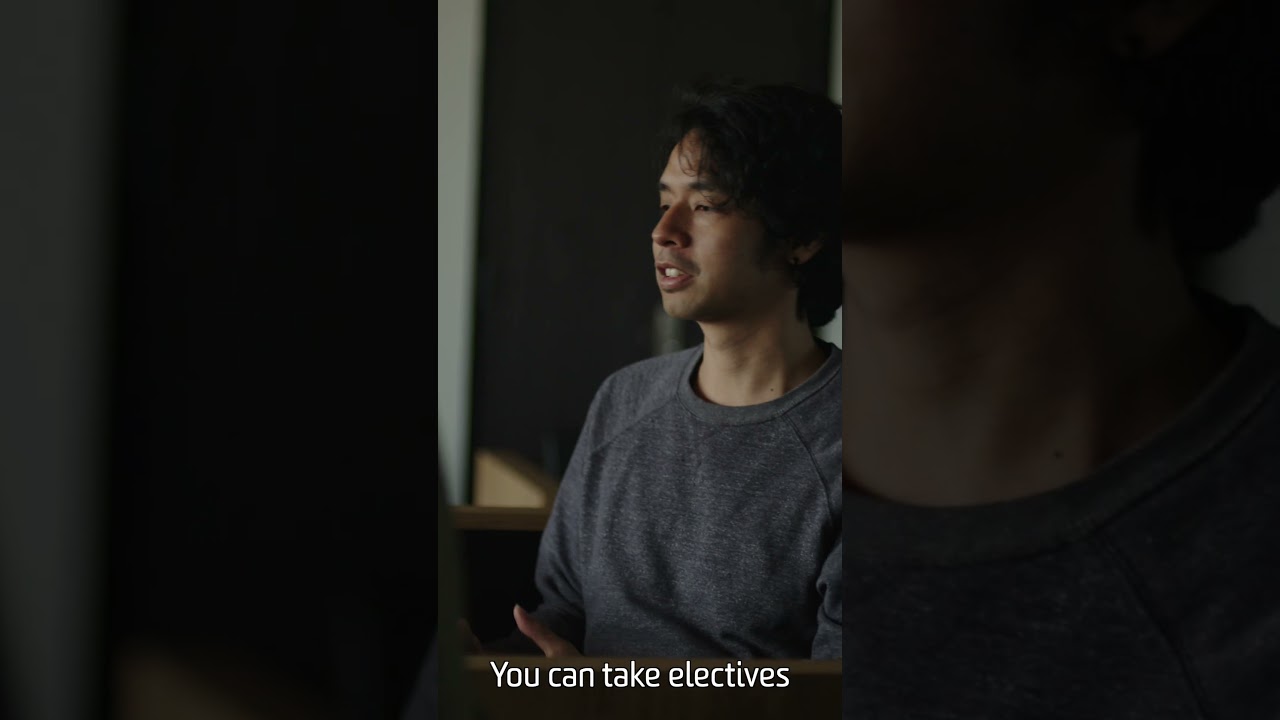
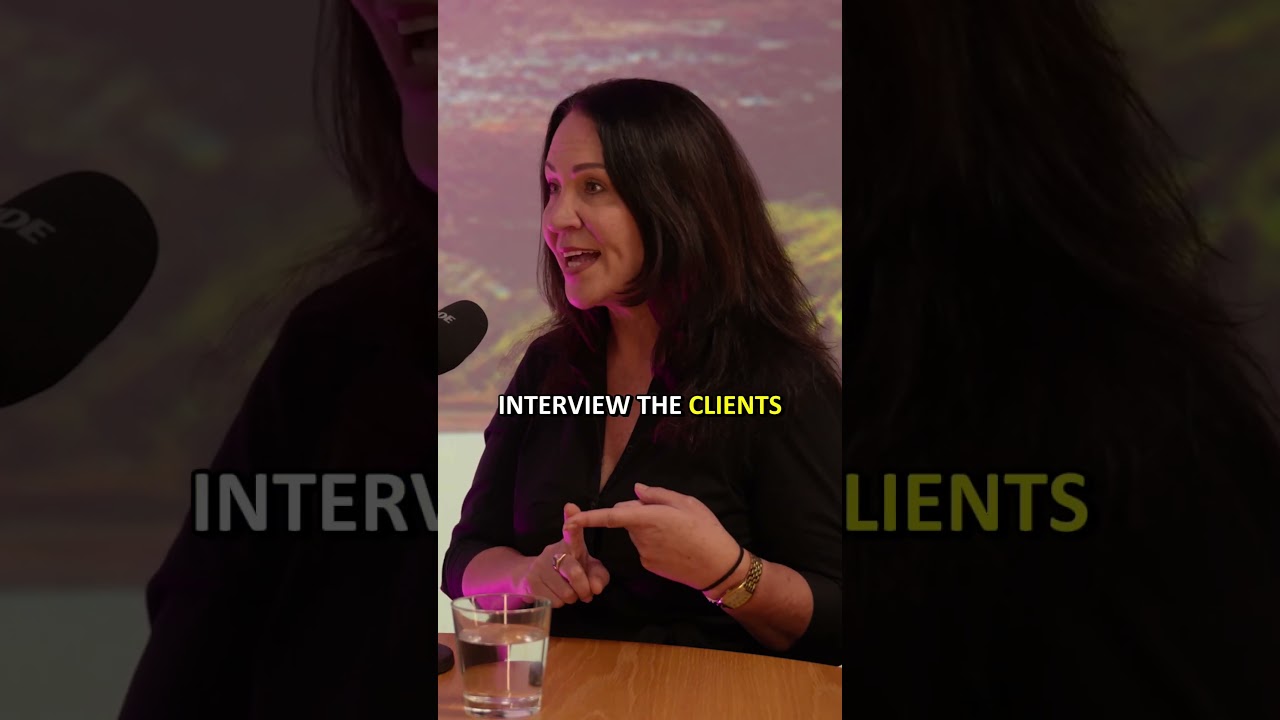
“It helped me learn really important, transferable skills like written and verbal communication, taking initiative and being proactive, leadership and learning to work efficiently and effectively. I wanted to do something that would make a practical tangible difference in people getting justice.”
BrigittaBachelor of Laws
Stories that start here






Key dates

Direct applications
Trimester 1 2027 applications close 7 February 2027

VTAC
FAQs
Yes – every Deakin student can access work-integrated learning (WIL) in their degree. Each year, more than 30,000+ students complete a placement or internship with partners including Microsoft, KPMG, EY and the National Australia Bank. You can access WIL through placements, industry projects, field-based experiences, simulations and global programs, helping you apply your skills and graduate with the experience and confidence employers value.
DeakinTALENT is Deakin's award-winning career service, and you can access it for life – not just while you're studying. From personalised career coaching sessions and AI-enhanced resume support to a jobs and internships board with employment opportunities, it’s designed to give you the career management skills and connections you need to stand out. Every Deakin degree is built with input from employers, so your course is designed around real workplace needs, now and into the future.
Entry requirements and the minimum ATAR vary by degree and are detailed on the degree page, but if your ATAR is below the cut-off, you still have options. Use the pathway finder tool to find the opportunities available to you, including associate degrees and Deakin Guaranteed ATAR, which offers eligible students a guaranteed entry score that's on average 10 points below the lowest selection rank. If you don't have an ATAR, Deakin Uni Ready is a free, supported program designed to build your skills and confidence and open doors to degrees in arts, health, science and business. Access programs and equity schemes are also available.
At Deakin, employability isn't an add-on – it's built in. Our degrees are designed with industry input, so your skills are aligned to what employers actually need. Every Deakin student can access work-integrated learning through opportunities such as placements, internships and industry projects, helping you build your professional network and practical experience before you even graduate. It's an approach that works: nine out of 10 Deakin graduates get a job within four to six months of finishing their degree.
Yes. Most eligible undergraduate students are offered a Commonwealth Supported Place meaning the government subsidises part of your tuition fees. If eligible, you can pay your student contribution using a HECS-HELP loan that you only start repaying once your income is above the repayment threshold. Deakin has scholarships that cater to our diverse student community, ranging from $5,000 per year for high ATAR achievers to $10,000 per year for students facing financial or personal hardship. The University also offers support services including financial counselling, budgeting help and access to short-term, interest-free loans to help you stay on track.
Deakin is the #1 Victorian university for student support and that starts the moment you accept your offer. Orientation is designed to help you feel welcome and get to know your community of classmates and teachers from day one. Across all campuses, there's a vibrant student community with clubs, events and opportunities to build real friendships. Deakin offers a range of services to help students stay healthy and safe, including sport and fitness facilities, free counselling, on-campus medical services and around-the-clock security.
Yes, and it's straightforward. You can transfer to Deakin in a few steps and apply for credit through recognition of prior learning (RPL), so you won't necessarily repeat subjects you've already completed. If you're coming from a TAFE partner, you may get guaranteed entry into second year with guaranteed RPL. Deakin's three-trimester system also means you may be able to start mid-year rather than waiting until March.
Most Deakin courses run across three trimesters per year instead of the traditional two semesters. Trimester 1 begins around March, Trimester 2 around July and Trimester 3 around November, each with roughly 12 weeks of teaching followed by an exam period. This means you can usually start your degree at three different points in the year and have more flexibility to manage your study load. Check the intakes by location section on the course page for details.
*Deakin references data from a range of government, higher education and reputable media sources. Learn more about our achievements on our University rankings page, or explore our sources page for supporting references.
What will I study in the Bachelor of Laws/Bachelor of Politics, Philosophy and Economics?
Over five-years you will combine legal training with analysis of the big ideas that shape society. You will examine how laws interact with political systems, economic forces and ethical reasoning while building strong analytical and advocacy skills.
Foundations of law and public ideas
Build core legal thinking skills
Learn how legal systems operate and how to interpret legislation, analyse cases and communicate legal arguments clearly. These skills underpin all later law study.
Explore power, policy and society
Examine how political institutions, public policy and democratic processes shape the environments in which law operates.
Develop critical reasoning
Study philosophical approaches to justice, ethics and public debate while strengthening analytical and persuasive thinking.
Develop interdisciplinary understanding
Advance your legal foundations
Continue building knowledge across major areas of law while strengthening research, writing and dispute-resolution skills.
Examine economic and policy systems
Explore how economic forces influence policy decisions, regulation and social outcomes.
Expand philosophical perspectives
Investigate theories of justice, equality and ethics that challenge how societies design and apply laws.
Specialise across politics, philosophy and economics (PPE) disciplines
Select disciplinary pathways
Choose areas within politics, philosophy or economics to focus your studies and deepen your understanding of policy and public decision-making.
Connect law with policy challenges
Analyse how legislation and regulation respond to economic inequality, governance and social change.
Develop advanced analytical skills
Strengthen argument construction, ethical reasoning and critical evaluation across both degrees.
Advanced legal study and policy insight
Study advanced areas of law
Examine constitutional powers, property and other specialised legal fields that shape legal practice.
Analyse policy in practice
Evaluate how governments and institutions design and implement policies in response to challenges.
Undertake experiential learning
Participate in employability or professional experience opportunities that connect your studies with legal and policy careers.
Integration and professional readiness
Complete advanced legal subjects
Finalise core legal studies and choose electives to develop sophisticated problem-solving and advocacy capabilities.
Apply interdisciplinary perspectives
Draw on politics, philosophy and economics to analyse complex legal and policy questions.
Prepare for professional pathways
Graduate with the research, reasoning and communication skills needed for careers in law, government, policy and public leadership.
Course structure
To complete the Bachelor of Laws/Bachelor of Politics, Philosophy and Economics, you must pass 40 credit points.
Most units are equal to one credit point. As a full-time student you will study four credit points per trimester and usually undertake two trimesters per year.
Are you a current student? For course information that applies to the year you started your degree, visit the handbook.
All students are required to meet the University's academic progress and conduct requirements
Units
Students must complete 18 credit points of core units from the Bachelor of Laws
*Previously coded MLL110
Note: MLP code denotes Priestley units, which teach the academic areas of knowledge prescribed for admission to legal practice.
Students must complete 7 credit points of core units from the Bachelor of Politics, Philosophy and Economics
Students must complete five of the following law elective units:
*MLI code denotes optional residential version of the unit.
^MLT324 does not count as one of the WIL/Practical course elective units (listed above) required for the Bachelor of Laws.
Note: Not all units will be offered every year. The Law School might from time to time develop new units to strengthen the law elective list.
Students must complete one of the following experiential/practice units as one of their Law course elective units:
Further details can be found at WIL Opportunities for law students
To be completed in the first trimester of study:-
Students must complete 8 credit points of discipline study units comprising of 4 discipline study units chosen from two to the following discipline streams:
Philosophy
- To complete the Philosophy stream, 4 credit points of discipline study units must be chosen including at least 2 credit points at level 3.
ASP224 Freud and Philosophy [No longer available for enrolment]
Politics and Policy Studies
- To complete the Politics and Policy stream, 4 credit points of discipline study units must be chosen including at least 2 credit points at level 3.
AIR348 Activists Beyond Borders no longer available for enrolment [replacement unit: AIR247]
AIP209 The Politics of Asylum in Australia and Asia no longer available for enrolment [replacement unit: AIP303]
Economic Policy
- To complete the Economic Policy stream, 4 credit points of discipline study units must be chosen including at least 2 credit points at level 3.
MAE215 Behavioural Economics for Business and Policy no longer available for enrolment [replacement unit MAE316]
Students must complete one credit point as part of their Politics, Philosophy and Economics course elective from the following employability sequence:
MWL317 no longer available for enrolment
Professional recognition
Deakin's Bachelor of Laws is designed to satisfy the academic requirements necessary for admission to the legal profession set in Victoria by the Victorian Legal Admissions Board (VLAB). In addition to satisfying these academic requirements, a person seeking admission to the legal profession in Victoria is required to have satisfactorily completed practical legal training requirements also specified by VLAB and must be considered a fit and proper person to be admitted to the legal profession.
A person seeking admission in a jurisdiction outside Australia will likely be required to satisfy additional requirements. Please consult the relevant jurisdiction’s legal admissions authority to confirm the required academic requirements, including any restrictions on online study or distance education.

What to expect while studying
You may be able to study available units in the optional third trimester to fast-track your degree, however your course duration may be extended if there are delays in meeting course requirements, such as completing a placement.
Units which contain work integrated learning, a community placement or interaction with the community may require a police check, working with children check or other check. These requirements will be detailed in unit guides upon enrolment.
You can expect to participate in a range of teaching activities each week. This could include lectures, seminars, online interactions, or professional experiences for Work Integrated Learning (WIL) units. You can refer to the individual unit details in the course structure for more information. You will also need to study and complete assessment tasks in your own time.
Units in this course may have participation requirements that include compulsory placements, work-based training, community-based learning or collaborative research training arrangements.
This course provides students the opportunity to complete one or more work integrated learning units.
Explore Business and Law WIL opportunities.
International Students:
This course includes Work Integrated Learning (WIL) formally registered as part of the course on the CRICOS register. The total work integrated learning hours will differ depending on the WIL unit you choose. For more information about WIL hours, please check the unit information in the handbook or the unit guide.
For information about how WIL units may impact student visa holder work rights, please visit Home Affairs. See 8105 Work limitation.
At Deakin, we're committed to ensuring an inclusive environment that supports all students to belong, thrive and succeed. We work closely with students, where needed, to identify potential barriers to participation and where possible, provide tailored support so students can engage with learning and assessment activities.
If you are neurodivergent, have a disability, health condition or mental health condition that may impact your study or participation in university life, and want to know how Deakin could support you, contact our Domestic students (opens in a new window) or International students (opens in a new window) or Disability Resource Centre (opens email client) teams for a collaborative and confidential discussion. This discussion is to support you to make plans for your studies and future career and will not have any bearing on your application to the course.
When can I start?
When you study depends on your course, location and available intakes. Check the table to see when you can start and how study is offered throughout the year.
Your course learning outcomes describe the knowledge, skills and capabilities you’ll develop and be able to demonstrate by the time you graduate. Built into your course through your units and assessments, they provide a clear picture of what you’ll be equipped to know, understand and do – preparing you to apply your learning with confidence beyond university.
| Course Learning Outcomes Bachelor of Laws (M312) | Course Learning Outcomes Bachelor of Politics, Philosophy and Economics (A336) |
|---|---|
| Demonstrate an understanding of the Australian legal system and the fundamental areas of knowledge required for legal practice as situated within international contexts and the broader contexts within which legal issues arise. | Apply a broad and coherent knowledge in the Politics, Philosophy and Economics disciplines in academic and professional settings drawing on depth in the underlying principles and concepts in one or more of PPE disciplines. |
| Communicate legal knowledge effectively to legal and non-legal audiences, both verbally and in writing. | Employ highly developed skills in oral, written and electronic communication to communicate the outcomes of Politics, Philosophy and Economics problem solving and research in academic and professional contexts. |
| Use a range of digitally-based technologies to locate, evaluate and disseminate information. | Utilise a range of digital technologies in both academic and professional settings to research, analyse, synthesise and disseminate information to diverse audiences in the field of Politics, Philosophy and Economics. |
| Exercise critical thinking, judgment and intellectual independence to evaluate, consolidate and synthesise knowledge relevant to legal doctrine and legal practice. | Use critical and analytical thinking and judgement in selecting and applying theories and methodologies to evaluate major political, philosophical and economic issues confronting society. |
| Apply legal reasoning and critical analysis to generate and articulate accurate and relevant responses to legal issues. | Utilise cognitive, technical, and creative skills to generate solutions to real-world political, philosophical and economic problems through drawing on methodologies from multiple disciplines. |
| Exercise responsibility and accountability for own learning, and possess abilities to reflect on own capabilities, performance and feedback to support personal and professional development. | Act with autonomy, responsibility and accountability for personal actions through a commitment to self-directed learning and professional practice that contributes to solving political, philosophical and economic issues in society. |
| Collaborate effectively in a team environment demonstrating constructive engagement and contribution to the team and the ability to draw on strengths of others. | Work and learn collaboratively with colleagues, other professionals and members of the wider community in addressing major political, philosophical and economic issues confronting society. |
| Reflect on the ethical and professional behaviours and responsibilities of legal professionals and demonstrate an understanding of the impact that different social, ethical, global or environmental perspectives have on exercising legal practice in the community. | Engage respectfully with ethical issues, cultural diversity, and social responsibility when engaging in Politics, Philosophy and Economics scholarship and professional roles in the local, national or international community. |
- Award granted
- Bachelor of Laws / Bachelor of Politics, Philosophy and Economics
- Year
2027 course information
- VTAC code
- 1400412131 - Waterfront (Geelong), Commonwealth Supported Place (CSP)
1400512131 - Burwood (Melbourne), Commonwealth Supported Place (CSP)
1400612131 - Online, Commonwealth Supported Place (CSP) - Deakin code
- D334
- Level
- Undergraduate
- Australian Qualifications Framework (AQF) recognition
The award conferred upon completion is recognised in the Australian Qualifications Framework at Level 7
Fees
Estimated tuition fee
$17,846
for 1 yr full-time - Commonwealth Supported Place (CSP)
The estimated tuition (student contribution) fee above is based on a typical first-year full-time enrolment of 8 credit points and is provided as a guide only. Your student contribution is determined by the units you enrol in and will vary depending on the units you choose, your study load, the course duration, and any approved recognition of prior learning. You may also be eligible for a HECS-HELP loan to defer payment of all or part of your student contribution.
Check your eligibility or learn more about CSP or HECS-HELP.

Scholarships
We want to help you excel at Deakin. Our scholarships recognise your dedication and achievements, providing financial support that can ease the cost of living and studying. With less pressure, you'll have more freedom to focus on what matters most – your education and future success.
Applications for 2027 are open
Ready to take the next step? Apply now to start your journey at Deakin and get ready for what’s next.
Key dates
Direct applications
Trimester 1 2027 applications close 7 February 2027
VTAC
Apply now
Apply direct
Simply create an account in the Deakin Application Portal, enter your personal and educational details, upload your supporting documents and submit your application.

Apply through VTAC
Applications are open. Apply through VTAC if you're:
- currently in Year 12 and applying for Trimester 1 or Semester 1
- applying for multiple undergraduate courses
Need help? Follow our step-by-step undergraduate guide to prepare and submit your application.
Recognition of prior learning
We value your previous study and experience. Recognition of prior learning enables you to get credit for what you've already achieved. When you apply, we'll consider your previous study and experience for recognition of prior learning.
If you have completed previous studies which you believe may reduce the number of units you have to complete at Deakin, indicate in the appropriate section on your application that you wish to be considered for Recognition of prior learning. You will need to provide a certified copy of your previous course details so your credit can be determined. If you are eligible, your offer letter will then contain information about your Recognition of prior learning.
Your Recognition of prior learning is formally approved prior to your enrolment at Deakin during the Enrolment and Orientation Program. You must bring original documents relating to your previous study so that this approval can occur.
The University aims to provide students with as much credit as possible for approved prior study or informal learning which exceeds the normal entrance requirements for the course and is within the constraints of the course regulations. Students are required to complete a minimum of one-third of the course at Deakin University, or four credit points, whichever is the greater. In the case of certificates, including graduate certificates, a minimum of two credit points within the course must be completed at Deakin.
- For accreditation purposes, the University normally only considers RPL for core Deakin Bachelor of Laws units, or core Juris Doctor units, based on previous law study that has taken place within five years of the anticipated commencement [Note 1] of the degree at Deakin. Please note that RPL requests for any law unit core to the degree undertaken more than 5 years ago is assessed on a case-by-case basis by the Deakin Law School.
- RPL for any non-core (elective) units will be determined via normal RPL policy rules; however, if the unit would be more than 5 years old at the student's anticipated course commencement date, then the decision needs to be made within the Law School (in order to ensure the currency of the learning that is being recognised).
Note: that the date taken is commencement of studies at Deakin, not the date of the RPL Application.
You can also refer to the recognition of prior learning (RPL) system which outlines the credit that may be granted towards a Deakin University degree and how to apply for credit.
Readmission into law courses
All students seeking readmission into law courses must be readmitted into the latest version of a course. To satisfy admission requirements to the legal profession, you may need to pick up additional units or repeat units where prior studies at Deakin were undertaken more than 5 years ago; or where units were undertaken in a previous course version.