

Beyond Certainty
As part of a year-long project to unpick issues associated with current geopolitical, financial and technological volatility we are looking to host this symposium. We will be asking the impact all of this will have on the relationship between libraries and publishers, and libraries and their users. How we can best meet the needs of our current and future users? The goal for the event is to open an ongoing conversation in the community.
Join us on Wednesday 8th October!
Program
| S.N | Timing | Session | Speakers |
|---|---|---|---|
| 1 | 9.30am – 9.45am | Symposium introduction | |
| 2 | 9.45am – 10.30am | Untrustworthy & Unquestioned Information - What Could go Wrong? |
Dr Leslie McIntosh VP, Research Integrity, Digital ScienceGuest Post: FoSci — The Emerging Field of Forensic Scientometrics |
| 3 | 10.30am – 10.45am | Morning tea | |
| 4 | 10.45am – 12.15pm |
Panel 1 - Influence There are social and technological implications of AI. Who is in charge? No-one knows what is happening inside the box. Where can we have influence - in terms of AI users in discovery and misinformation. Panellists: Dr Luke Heemsbergen - Senior Lecturer, School of Comm & Creative Arts, Deakin University. Danielle Johnson - Director Library Services (Outreach & Scholarly Services), Deakin University. Allan Jones - General Manager, Software Engineering, A2I2 Institute. |
Video contributions from AJ Boston – Scholarly Communication Librarian for Murray State University & Caroline Ball - Academic Librarian for Business, Law, and Social Sciences, University of Derby |
| 5 | 12.15pm – 1.00pm | Lunch | |
| 6 | 1.00pm – 2.30pm |
Panel 2 - Discovery Our research material is now often either open or available through an artificial intelligence overlay. Combined with the proliferation of misinformation, how do we direct users to the information they need? What do we need from our systems to support that? Panellists: Dr Thomas Corbin - Research Fellow, Centre for Research in Assessment and Digital Learning, Deakin University. Ramona Naicker - Project Lead, GenAI Framework Activation Project, Deakin University. Ingrid Mason - Head of Collection Platforms, Growth and Engagement, National Museum of Australia. |
Video contributions from Aaron Tay - Lead, Data Services, Singapore Management University & Frauke Birkhoff - Subject Librarian, ULB Düsseldorf |
| 7 | 2.30pm – 2.45pm | Afternoon tea | |
| 8 | 2.45pm – 3.45pm |
Concluding session “The AI genie is out of the bottle, but has granted you three wishes. What three things would you wish for?" |
A mixture of panel members from both sessions |
Speakers
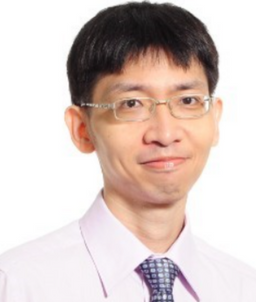
Aaron Tay
Aaron Tay serves as Library Analytics Manager as well as the Research Librarian for the School of Accountancy at Singapore Management University Libraries. A former accountant before switching to librarianship, he has diverse interests in research and Information Science Fields including library trends, analytics, bibliometric analysis and discovery techniques.
He is active on Twitter @aarontay and since 2009 maintains a popular blog on librarianship matters at Aaron Tay's Musings about librarianship.
He was awarded the Karl Lo Award by PRRLA (Pacific Rim Research Library Alliance) in 2019, as well as the Library Professional Service award by the Library Association of Singapore in 2015.
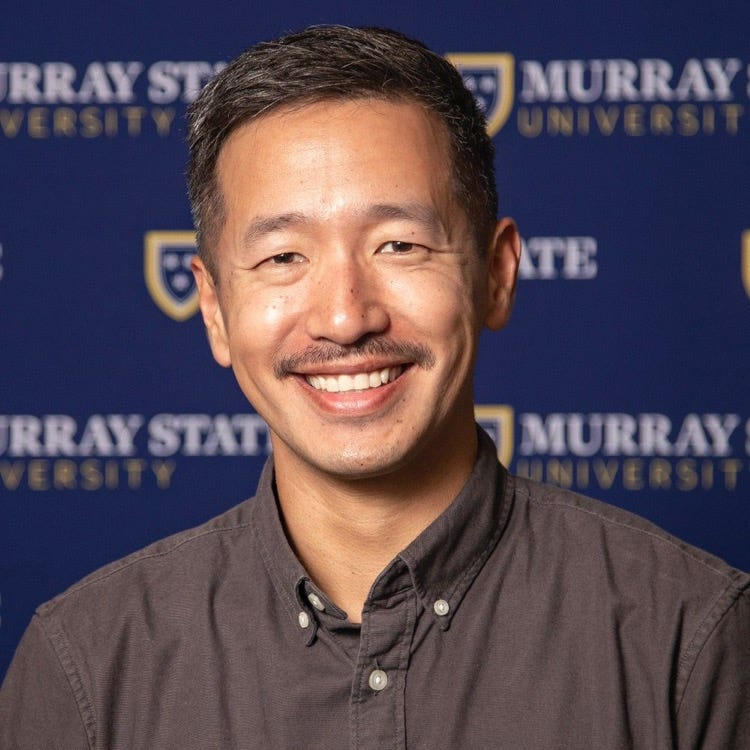
A.J. Boston
Arthur (“AJ”) Boston is an Associate Professor and Scholarly Communication Librarian at Murray State University where he manages the institutional repository, coordinates student grants, and teaches a scholarly communication course. AJ writes and talks about open access, peer review, and books.

Allan Jones
Allan is the General Manager Software Engineering for the Applied Artificial Intelligence Institute (A2I2) at Deakin University, where he and the team focus on translating state-of-the-art research in technology and AI towards impactful innovation, targeting key challenges in industry and society.
Allan’s research and work focus is around harnessing the emerging capabilities of AI towards building ecosystems of intelligence that forefront agency and maximise the potential of human-machine collaboration in better serving the diverse needs of our communities. Within this focus, his work involves the development of systems for synthesis, exchange, and dissemination of data and knowledge, building applications that evolve with user feedback to maximise value realisation, and crafting tools that cultivate data literacy and a greater sense of autonomy.
With over 15 years of experience in technical innovation, Allan’s work has crossed many sectors including defence, education, arts and culture, employment, transport, health and aged care.
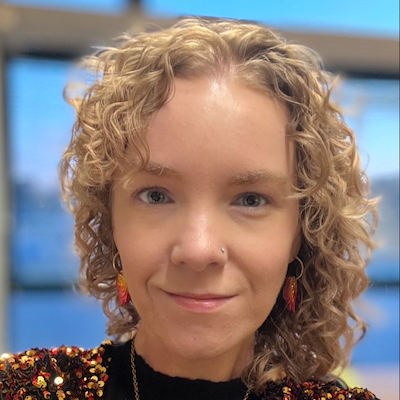
Caroline Ball
Caroline Ball is an academic librarian at the University of Derby, a senior fellow of the Higher Education Academy and has also worked as a copyright and licensing advisor and a lecturer in publishing. Her research interests centre on knowledge equity, information ethics, and democratisation of access to information and learning opportunities, focusing particularly on systemic barriers and biases in dominant knowledge systems. She is also an active Wikipedian, was awarded the UK Wikimedian of the Year award in 2020 and currently serves on the Wikimedia UK board of trustees.
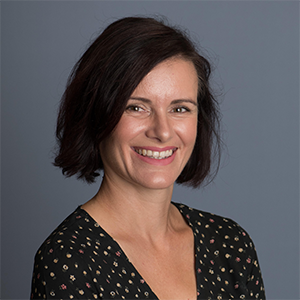
Danielle Johnson
Danielle Johnson is Director, Library Services (Outreach and Scholarly Services) at Deakin University. With a career spanning over two decades across academic library and IT roles, Danielle brings deep expertise in library strategy and service management, experience design, digital content and project management, digital literacy, and emerging technologies. She is a strategic thinker and people leader who thrives in dynamic environments, driving innovation, continuous improvement, and collaborative change.
Danielle has played a pivotal role in positioning Deakin Library as leader and collaborator in the AI space, co-leading the design of Deakin’s GenAI Framework and Principles and contributing to institutional AI planning and initiatives. Her leadership has shaped user-centric library experiences, and she is a passionate advocate for evidence-based, outcome-driven service design. Danielle is also co-convenor of the CAUL Library UX Community of Practice and an active contributor to national conversations on the future of libraries in a rapidly evolving technological landscape.
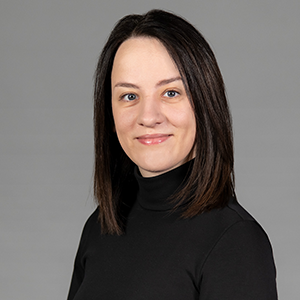
Frauke Birkhoff
Frauke Birkhoff is a social sciences subject librarian and part of the AI-coordination team at University and State Library in Düsseldorf, Germany. She currently co-leads a project to update the library‘s information discovery services aiming to improve its usefulness and usability for patrons. In this project, she and her team are exploring ways to responsibly implement AI-assisted search into existing systems.
As an Information Scientist interested in the evolution of information retrieval and user acceptance of different search tools, she argues that now is the time for librarians to examine the implications, costs and benefits of AI-assisted search modes for research practices, while still improving on existing discovery infrastructures.

Ingrid Mason
Ingrid Mason is a strategist, technologist and data specialist. Ingrid leads practice change associated with digital transformation in the research, collecting and heritage sectors. Her work involves selecting technologies or developing software, informatics, data curation, analytics and preservation, and more recently using machine learning. She is a self-professed metadata nerd and digital curator who has found a workspace that satisfies her interests in people, knowledge, culture and technology. In 2020 Ingrid established the regional chapter of AI4LAM (Artificial Intelligence for Libraries, Archives and Museums) for Australia and Aotearoa New Zealand and co-convened the Fantastic Futures 2024 conference.
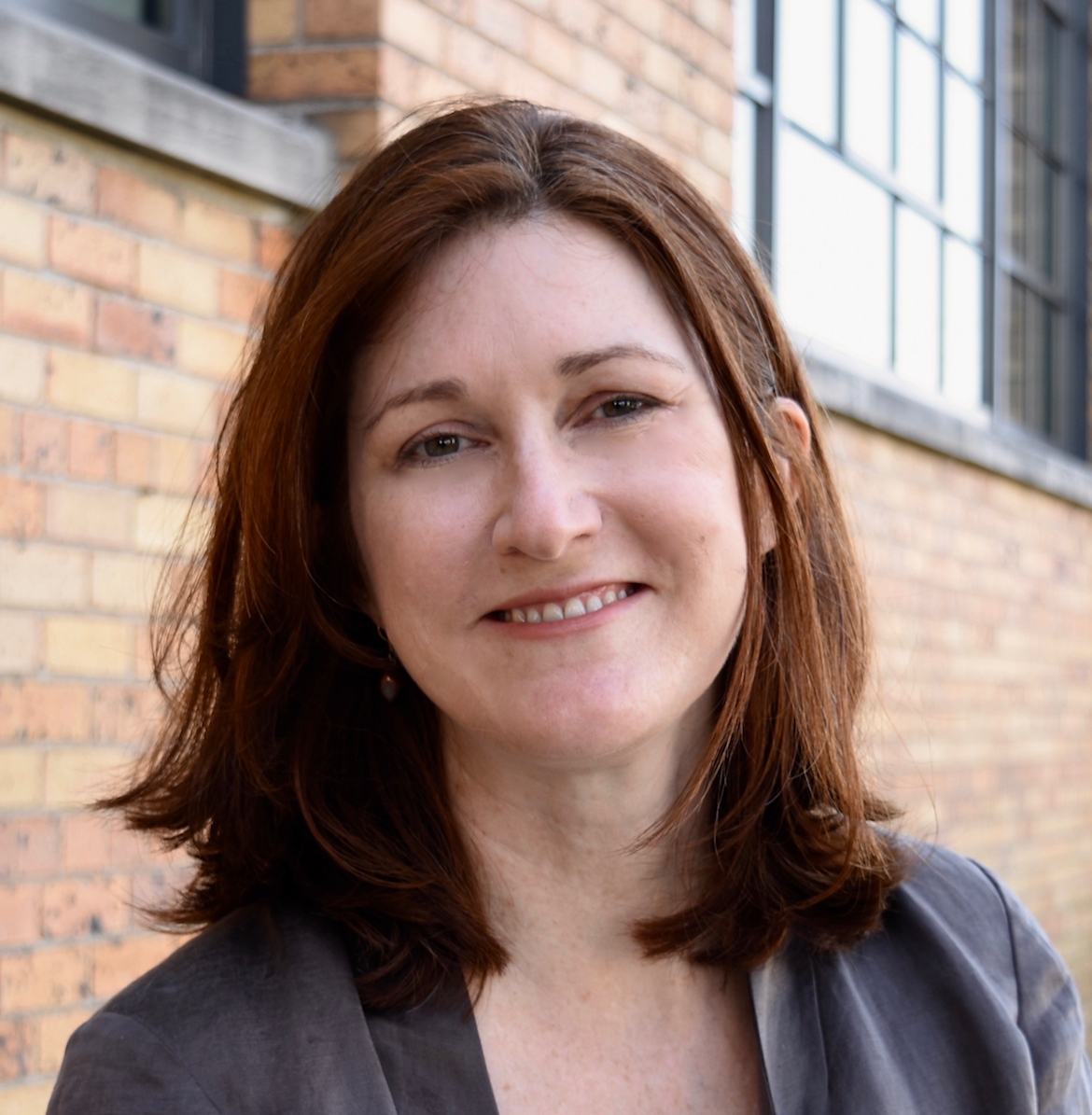
Dr Leslie McIntosh
Leslie D. McIntosh, PhD is the VP of Research Integrity and Security at Digital Science and dedicates her work to improving research, reducing disinformation, and increasing trust in science.
As an academic turned entrepreneur, she founded Ripeta in 2017 to improve research quality and integrity. Now part of Digital Science, the Ripeta algorithms lead in detecting Trust Markers of research manuscripts and nefarious networks in science. She works globally to improve research quality, integrity, and security through developing the forensic scientometrics discipline. She has given hundreds of talks, including to the US-NIH, NASA, and World Congress on Research Integrity, and consulted with governments and institutions across the globe. Dr. McIntosh’s work was the most-read RetractionWatch post of 2022. In 2023, her influential ideas on achieving equity in research were highlighted in the Guardian and Science.
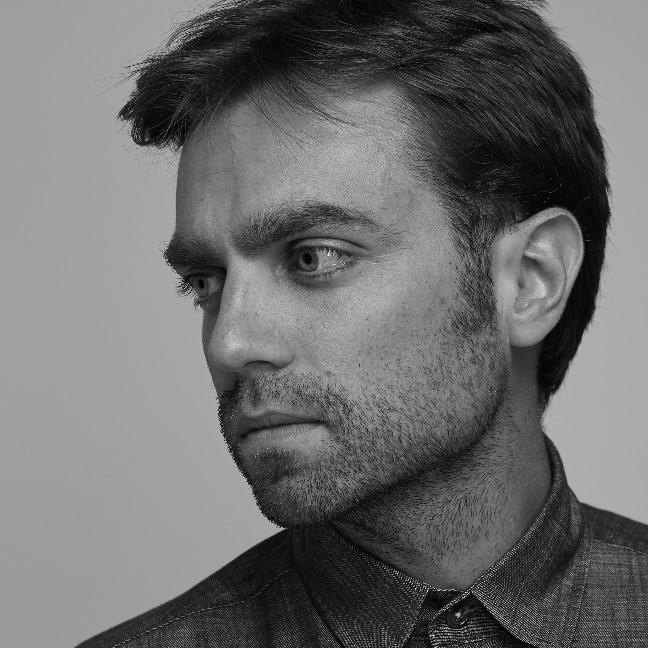
Dr Luke Heemsbergen
Dr. Heemsbergen is a Senior Lecturer at Deakin University (PhD University of Melbourne, Australia). He is interested in how emerging technologies – like 3D printing, AI, and XR – change society and how society can change these technologies. His work is published in diverse media from The New York Times to Nature’s HSSC. Known for his interdisciplinary approach, he co-leads the Critical Digital Infrastructures and Interfaces group at Deakin University, is an AI at the ARC Centre of Excellence for the Digital Child, and a member of the Alfred Deakin Institute. His research draws on experience serving in Canada’s department of Foreign Affairs and expresses a normative desire to move quickly and mend things.
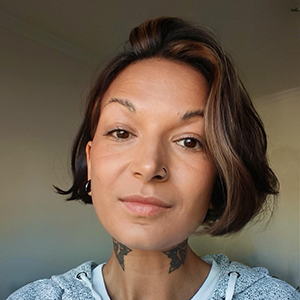
Ramona Naicker
Ramona Naicker leads Deakin’s GenAI Framework Activation Project and is a Scholarly Services Librarian supporting STEMM disciplines. With a background in clinical librarianship, she has worked across academic and health sectors to support students, researchers, and educators in developing advanced literature searching and evidence-based practice skills. Ramona is particularly interested in the biases embedded in research and information discovery, and is always looking for ways to challenge assumptions about how we find, evaluate, and trust information. Her work sits at the intersection of research support, digital capability, and critical engagement with tools and systems shaping knowledge access.
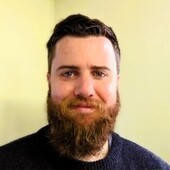
Dr Thomas Corbin
Thomas is a higher education researcher whose work explores the implications of generative artificial intelligence for university teaching, learning, and assessment. Drawing on his background in philosophy, he examines how emerging technologies reshape core educational concepts. His work is oriented around how GenAI impacts the three core areas of assessment, reading, and feedback.