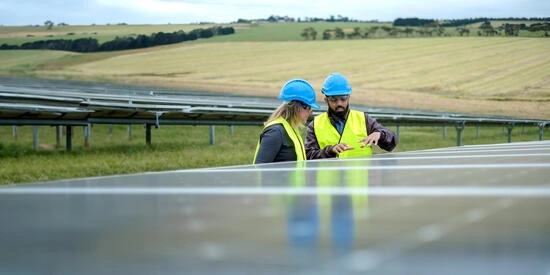
Get in touch with Associate Professor Craig Sherman to learn more about our research programs, media expertise and collaboration.
+61 3 522 71406

Research that shapes the world
We're committed to making a positive difference by finding impactful and sustainable solutions to real-world problems with our high-level research capabilities, specialist equipment and internationally recognised academics.
Our masters and PhD students are attracted to our school for our facilities, partners, world-renowned supervisors and extensive research possibilities.
Enjoy flexible start dates and multiple locations. Our Master of Science (Biology and Chemistry Sciences) and Master of Science (Environmental Science) are 2-year full-time degrees and pathways to a PhD. Involves a written thesis.
Work in a collaborative community; study our Doctor of Philosophy over 3 years full time on a supervised research project covering a range of study areas including Biology and Chemistry, Environment Science, Health. Involves a written thesis and an oral defence.
Our Cotutelle PhD initiative allows candidates to co-enrol at two universities in different countries. Conduct research under a jointly supervised doctoral program with dual awards while being immersed in diverse research.
Get all the information you need to successfully apply for a Deakin research degree or PhD, including key dates, entry requirements, supporting documents and finding a research supervisor. We’re here to support you through the process.
Keen to get started with postgraduate study but need a supervisor? We can help you find someone suitable. Our disciplines cover a broad range of research areas, including environmental science, fisheries and aquaculture, marine and freshwater biology, and much more.

A love of fishing inspired Tom Mock to pursue a career in aquatic science. Discover how Deakin's state-of-the-art aquaculture facilities encouraged Tom to complete his PhD.

Anne Eichholtzer made the career switch from cosmetics to biodiversity conversation. Her PhD is opening doors for her future job prospects.
We have three research themes that drive the direction of our research.
Encompasses ecological, animal and human contributions to the environment and how they impact global issues such as wildlife conservation, evolution, agriculture and climate change. Our research seeks to understand living systems and how they relate to their environment.
Understanding how aquatic systems play a critical role as a productive natural resource, which needs careful scientific management from an environmental and production standpoint. Our research holistically covers freshwater and marine biology and how they intersect with fisheries and aquaculture.
Encompasses assessment of the molecules of life in order to identify how they influence a range of fields across physical, chemistry and molecular sciences. Our research focusses on gaining measurement of the molecule of life in biomedical, forensic, chemistry and biotechnology contexts.
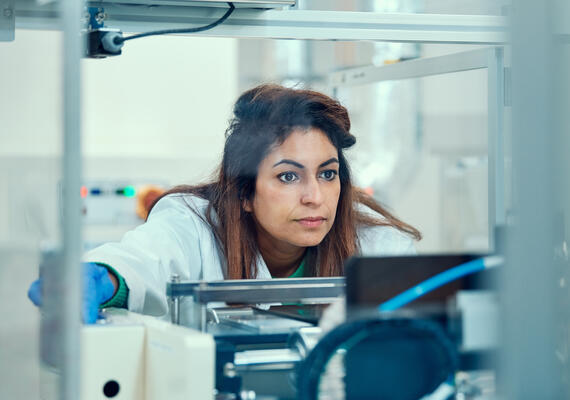
The Deakin Institute for Frontier Materials is a trailblazer in circular-economy materials science. Here, you’ll partner with industry to transform waste into value, re-design materials with extraordinary functionality and power a greener future.

The Deakin Centre for Marine Science is Victoria's leading university-based marine centre. Our unrivalled research breadth and expertise drives transformational outcomes for ocean-based economies and the environment.
Reach your full potential and achieve your career goals with the support of a research degree or PhD scholarship. Our top scholarships recognise and reward students from a range of backgrounds and interest areas.
Our three research themes of life on land, life in water and molecules of life, drive the direction of our research areas.
Our researchers aim to make an immediate difference to the current planning and management of human use of the natural environment and resources.
We examine the function of animals and plants addressing key questions in organismal biology and adaptation to environmental change.
Focusing on a wide range of aquatic areas, we seek to improve local and national industries and communities, and influence the global scientific community.
Our researchers use geological records to understand and answer key questions about evolution, development and extinction on our changing planet.
Our research centres on biological problems that are specifically related to the behaviour, ecology, evolution and ecophysiology of bird, sea and plant life.
We aim to understand the processes that influence the distribution of plants and animals, to improve biodiversity conservation outcomes.
We solve real-world problems via research into pharmaceuticals, natural products, agricultural biotechnology, biomedical detection and materials science.

Access renowned coastlines and environments, as well as science labs with contemporary design and infrastructure. We also have high-quality and specialised technologies and equipment at our Queenscliffe Marine Centre and Crime Scene House.
Get in touch with Associate Professor Craig Sherman to learn more about our research programs, media expertise and collaboration.
+61 3 522 71406