Get in touch if you have any further questions regarding the School of Life and Environmental Sciences.
+61 3 9244 6699

Science plays a key role in providing solutions to world issues, ranging from climate change impacts to stem cell research. Learn the critical science communication skills needed to create resources across multiple formats and for different audiences.
When you study life and environmental sciences at Deakin, you’ll work with expert teaching staff and collaborate with industry on real-world science communication projects. Learn how to effectively communicate your work and findings to industry, government, research institutes, museums and other public interest groups.
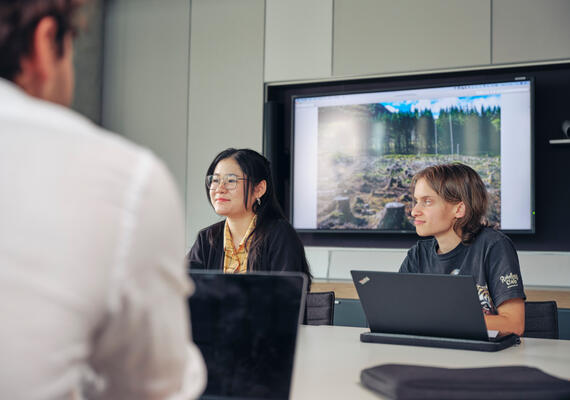
We’ll help you develop the key skills to create and disseminate science communication for various formats, including brochures, posters and mixed media. Plus you’ll learn about public attitudes, political engagement and ethics, and gain an understanding of the importance of science communication in society.

Interested in helping an organisation realise its science communication project? Our community science project unit develops your key collaborative, communicative and practical skills to do just that. You’ll work on a real-world project within a simulated professional environment with a client organisation to deliver a finished product for use by a range of audiences.
The science communication units really demonstrate the powers of science and consequent influence on society. Our project explored a disease that is often forgotten and misunderstood, while the support and feedback that we received from the ME/CFS patient community was overwhelmingly positive and inspiring.
Bachelor of Science student
Below are some examples of how our students have collaborated with our industry and community partners to create valuable science communication resources.
The aim of this project was to improve the current diagnostic criteria for myalgic encephalomyelitis/chronic fatigue syndrome (ME/CFS), as students had found discrepancies in symptoms across different criteria. Simple visuals of scientific concepts and research were posted to social media and received a positive response from the ME/CFS patient community.
The aim of this project was to effectively explain the benefits of how maggot therapy removes dead tissue, secretes substances that disinfect a wound and stimulates new tissue growth. Students created a brochure that explained the therapy, the benefits and advantages and any potential side effects. Each therapy stage was described in a simple visual format with a link to further information.

I briefed the team on a real problem and they worked to provide an array of useful materials. They gave me ownership over the process, allowing me to make key choices as the client, and provided a finished product that is high quality.
Associate Professor
Improve the world around you, and for generations to come. Study science at Deakin to experience hands-on learning, real-world projects, industry collaboration and expert teaching staff. As a graduate, you’ll be well prepared for an exciting future career in science.
Put your science communication skills to use by researching with us. Our research is important for future social, economic and environmental development and the wellbeing of Australia and the rest of the world.
Get in touch if you have any further questions regarding the School of Life and Environmental Sciences.
+61 3 9244 6699