
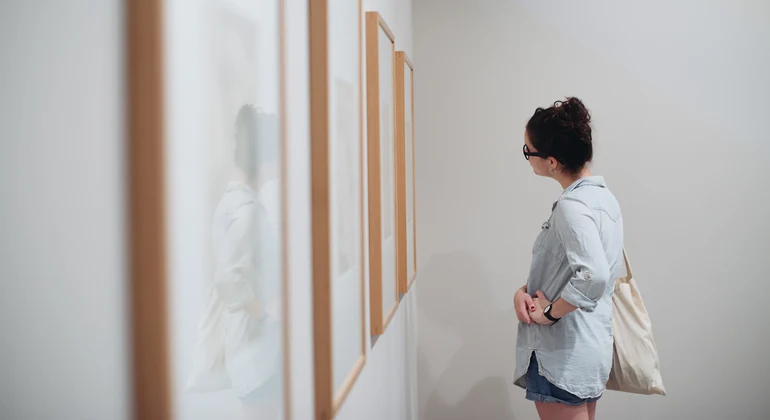

Degree shaped by museum and heritage sector

Learn from leading researchers and field experts

Pathway into a masters degree
Why choose Deakin
Gain the foundational skills and knowledge to begin a career in the cultural heritage and museum sector or prepare for further postgraduate study with Deakin's Graduate Certificate of Cultural Heritage and Museum Studies. You will explore current theory and practice while building practical skills for work across museums, galleries, archives and heritage sites.
As cultural institutions become more accessible, interactive and digitally engaged, you will learn to think creatively, work independently and connect audiences with the past in meaningful ways. You will develop key knowledge in cultural heritage and museum studies, including museums, heritage and society, and museum practice. This degree is a strong starting point whether you are a recent graduate, current volunteer or career changer. It also provides a pathway to Deakin’s Master of Cultural Heritage and Museum Studies.
-
Nationally established expertise
Study in Australia’s largest and longest-running cultural heritage and museum studies program.
-
Degrees shaped by employers
Learn through courses developed with industry, including Melbourne Museum, National Trust and Heritage Victoria.
-
Flexible postgraduate study
Study online or at our Melbourne Burwood Campus, allowing this graduate certificate to fit around work and life.
-
Clear progression pathway
This postgraduate degree provides a direct pathway to Deakin’s Master of Cultural Heritage and Museum Studies.


Connected to industry
Deakin’s strong industry connections help shape your learning. Build practical experience in real workplace contexts through work-integrated learning, mentoring and networking opportunities. Industry advisory boards also help shape our degrees, which means what you study is current, relevant and aligned to what your future employers need.

Deakin puts employability first
Career outcomes
Build foundational skills for careers in museums, galleries, archives and heritage organisations. You may caretake for collections, support public programs or coordinate projects, with a pathway to further postgraduate study.
Curator
Research, interpret and care for collections, contribute to exhibitions and public programs, and help audiences connect with cultural objects, histories and stories.
- $98k
Typical annual salary in Australia
- 17.3%
Projected job growth in 5 years


Project officer
Coordinate museum and heritage projects, manage schedules and documentation, work with stakeholders and support the delivery of exhibitions, programs and collection-based initiatives.
- $100k
Typical annual salary in Australia
- 4.2/5
Job satisfaction

Workplace settings
- Museums
- Heritage institutions
- Government agencies
- Private corporations
- Community organisations
- Private practice

FAQs
The cost of studying at Deakin depends on your degree, units and study load – tuition fees are listed on degree pages under the fees and scholarships tab. Beyond tuition, you will need to budget for Overseas Student Health Cover (OSHC), accommodation, transport, groceries and textbooks. Find out more about the cost of living in Australia, use the Study Australia calculator to estimate living expenses and explore international scholarships which may help to reduce your tuition costs.
Deakin offers a range of merit-based scholarships that can reduce your postgraduate tuition fees by 20%, 25%, 50% or 100% for the duration of your degree. Eligibility varies by scholarship and the degree you choose, but you will automatically be considered for most scholarships when you apply to Deakin. Use the Find a scholarship tool and filter by 'citizenship' to see what is available to you, or explore Australia Awards scholarships if you are from an eligible country.
It depends on the degree and how you study. Graduate certificates typically take six months full time or one year part time. Graduate diplomas usually take one year full time and masters degrees typically take one to two years full time. Recognition of prior learning can reduce your study time. Check the degree page for full details.
Australia is widely regarded as one of the safest and most welcoming countries in the world for students, with strong legal protections, reliable public services and a multicultural community. In fact, Melbourne is ranked the #4 student city in the world! At Deakin, you will be part of a supportive community, with 24/7 help, dedicated campus security and practical tools to help you feel safe, confident and connected. Deakin’s SafeZone app also connects you directly to campus security and support services if you ever need help. Find out more about studying in Australia.
We value your experience and qualifications. That is why every new degree application at Deakin is assessed for recognition of prior learning (RPL). Through RPL, Deakin can assess your previous study and life experience and may award course credit that could reduce your study duration, as well as the cost of your study. Qualifications from universities and private tertiary institutions worldwide are considered, as is informal learning related to your degree. Use the RPL calculator to see how much credit you may be eligible for.
Deakin offers a wide range of support to help you settle in and succeed throughout your studies – we are ranked the #1 university in Melbourne for student support. You can access 1:1 study support, English language support, career planning help, disability services and free counselling, as well as financial assistance if you need it. On campus, the SafeZone app and 24/7 security services mean help is always within reach. You can explore the full range of support services for international students or start an online chat with a student ambassador before you arrive.
To enrol in a postgraduate degree at Deakin, many degrees require a minimum IELTS score of 6.0 (or equivalent). Some degrees require higher scores, so check the entry requirements tab on the degree page for details. You may also meet the requirement through recent secondary or university study completed in English, or by demonstrating five or more years of living and working in an English-speaking country. Eligibility is assessed on a case-by-case basis. If you do not yet meet the requirement, the Deakin University English Language Institute (DUELI) offers pathway programs to help develop your English reading, writing, listening and speaking skills. Completion of DUELI’s English for Academic Purposes can give you the minimum English language requirements for most Deakin degrees.
Deakin’s postgraduate degrees are designed to advance your career, whether you want to deepen expertise in your field, move into a specialist role or shift direction entirely. All our degrees are shaped by industry partners, so what you learn reflects what employers need now and into the future. We’re proud to be the #1 university in Melbourne for international student graduate employment. With flexible study options and financial support available, Deakin helps you gain the skills, recognition and confidence to reach your next professional goal.
Related courses




*Deakin references data from a range of government, higher education and reputable media sources. Learn more about our achievements on our University rankings page, or explore our sources page for supporting references.
What will I study in the Graduate Certificate of Cultural Heritage and Museum Studies?
Build postgraduate foundations in cultural heritage and museum studies. Explore key ideas and sector debates, applying them to managing, interpreting and communicating heritage in contemporary settings.

Professional foundations
Establish core heritage foundations
Explore how heritage is identified, cared for, managed and interpreted across collections, places and traditions, providing a strong base for contemporary professional practice.
Understand museums in society
Examine representation, identity, ethics, access and inclusion. Analyse how museums and heritage institutions shape public understanding of the past.
Tailor your study
Choose two electives to extend your learning in a focused area and, in some cases, add work-integrated learning to connect study with industry.
Course structure
To complete the Graduate Certificate of Cultural Heritage and Museum Studies, you must pass 4 credit points.
Most units are equal to one credit point. As a full-time student you will study four credit points per trimester.
Are you a current student? For course information that applies to the year you started your degree, visit the handbook.
All students are required to meet the University's academic progress and conduct requirements
Units

What to expect while studying
Course duration may be affected by delays in completing course requirements, such as failing of units or accessing or completing placements.
Any unit which contains work integrated learning, a community placement or interaction with the community may require a police check, Working with Children Check or other check.
Elective units may provide the opportunity for Work Integrated Learning experiences.
At Deakin, we're committed to ensuring an inclusive environment that supports all students to belong, thrive and succeed. We work closely with students, where needed, to identify potential barriers to participation and where possible, provide tailored support so students can engage with learning and assessment activities.
If you are neurodivergent, have a disability, health condition or mental health condition that may impact your study or participation in university life, and want to know how Deakin could support you, contact our Domestic students (opens in a new window) or International students (opens in a new window) or Disability Resource Centre (opens email client) teams for a collaborative and confidential discussion. This discussion is to support you to make plans for your studies and future career and will not have any bearing on your application to the course.
When can I start?
When you study depends on your course, location and available intakes. Check the table to see when you can start and how study is offered throughout the year.
Your course learning outcomes describe the knowledge, skills and capabilities you’ll develop and be able to demonstrate by the time you graduate. Built into your course through your units and assessments, they provide a clear picture of what you’ll be equipped to know, understand and do – preparing you to apply your learning with confidence beyond university.
| Course Learning Outcomes |
|---|
| Investigate and evaluate conceptual and practical approaches to the identification, collection, conservation, display, interpretation, management and use of cultural heritage. |
| Effectively communicate key theoretical and practical concerns in cultural heritage and museum studies using oral, written, digital formats to specialist and non-specialist audiences. |
| Use a range of digital technologies and information sources relevant to the museum context to discover, select, analyse, employ, evaluate, and disseminate both technical and non-technical information. |
| Critically analyse key concepts in the identification, collection, conservation, display, interpretation, management of cultural heritage and employ this knowledge in a professional or scholarly context. |
| Apply advanced theoretical knowledge and technical skills in the identification, collection, conservation, display, interpretation, management and use of cultural heritage and develop solutions to real-world problems or issues in professional contexts. |
| Apply relevant professional standards with a high level of responsibility and accountability to colleagues and relevant stakeholders and a consistent commitment to continual professional development. |
| Work effectively and collaboratively, demonstrating advanced level of responsibility and accountability in diverse [museum and cultural heritage multidisciplinary] teams. |
| Analyse and address issues in the field of cultural heritage and museum studies in the domestic, regional and global context as a critically reflexive reflective practitioner, taking into consideration cultural and socio-economic diversity, social and environmental responsibility and the application of the highest ethical standards. |
Approved at Faculty Board 2020
- Award granted
- Graduate Certificate of Cultural Heritage and Museum Studies
- Year
2027 course information
- Deakin code
- A568
- CRICOS code?Commonwealth Register of Institutions and Courses for Overseas Students
- 102880C Burwood (Melbourne)
- Level
- Postgraduate (Graduate Certificate and Graduate Diploma)
- Australian Qualifications Framework (AQF) recognition
The award conferred upon completion is recognised in the Australian Qualifications Framework at Level 8
Apply now

Apply directly to Deakin
Apply directly through StudyLink Connect. Depending on your location, you may need to apply through a Deakin Authorised Agent, who can support and submit your application.
See our guide to applying to Deakin for application steps and requirements.
Recognition of prior learning
We value your previous study and experience. Recognition of prior learning enables you to get credit for what you've already achieved. When you apply, we'll consider your previous study and experience for recognition of prior learning.
Pathways
This course can be a pathway to: