


Top 3 Melbourne university for AI

Deakin sets the standard for employability

#1 public university in Australia for facilities and resources
Why choose artificial intelligence at Deakin
Deakin’s Bachelor of Artificial Intelligence equips you with the knowledge and skills to design, develop, and evolve computational solutions that harness the latest advances in artificial intelligence (AI). Get hands-on experience at a top three university in Victoria for artificial intelligence, where you will build intelligent AI-driven software solutions that go beyond software to include systems, products, and technologies shaping the future with the support of academics who are leaders in this emerging field.
Our world-class research in AI feeds directly into our state-of-the-art facilities, giving you access to fully equipped computer labs with the latest software and technologies. This ensures what you learn is at the cutting edge of industry expectations and capabilities.
As a graduate, you will be ready to thrive in this booming field, equipped with the specialist knowledge to create and operate intelligent software solutions across a wide range of industries.
-
Degrees shaped by employers
The Bachelor of Artificial Intelligence is designed with industry input to reflect current AI tools, systems and ethical practices.
-
Work-integrated learning for every student
Apply your AI skills through professional experience placements or industry projects embedded in your degree.
-
Cutting-edge technical focus
Build expertise in machine learning, data science and intelligent systems using our state-of-the-art facilities to solve complex industry problems.
-
Unbeatable employability
Study at the #1 university in Melbourne for international student graduate employment and build the skills and confidence to succeed in your career.


Connected to industry
Deakin’s strong industry connections help shape your learning. Build practical experience in real workplace contexts through work-integrated learning, mentoring and networking opportunities. Industry advisory boards also help shape our degrees, which means what you study is current, relevant and aligned to what your future employers need.
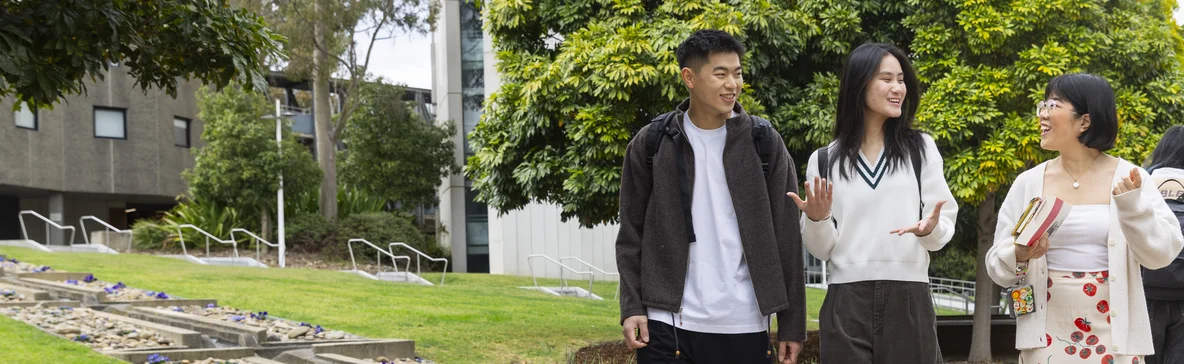
Deakin puts employability first
Career outcomes
Graduate ready to thrive in the booming field of artificial intelligence, equipped with the technical, analytical and ethical skills to design intelligent solutions across a wide range of industries.
AI and machine learning specialist
Develop intelligent systems that learn from data to solve complex problems. You will design, train and optimise machine learning models that power products, services and technologies across a wide range of industries.
- #3
Fastest-growing job globally
- #1
Fastest-growing skills globally


Data engineer
Design, build and maintain the data platforms and pipelines that power AI systems and analytics. Data engineers create the infrastructure that enables organisations to collect, manage and use data at scale.
- $135k
Typical annual salary in Australia
- 4.2/5
Job satisfaction


Other jobs
- Data analyst
- Data scientist
- AI engineer
- AI ethicist
- AI architect

FAQs
Deakin's campuses in Melbourne, Geelong and Warrnambool are set in vibrant, multicultural communities where it is easy to connect and feel at home. As the #1 university in Australia for international student happiness and student satisfaction, you will be supported at every step of your journey. You can join clubs and societies through the Deakin University Student Association (DUSA), attend social events, go on trips and live on campus to meet people from around the world. Each campus has fitness centres, cafes and 24-hour security, as well as prayer rooms and multifaith chaplains.
Deakin offers a range of merit-based scholarships that can reduce your tuition fees by 20%, 25%, 50% or 100% for the duration of your degree. Eligibility varies by scholarship and the degree you choose, but you will automatically be considered for most scholarships when you apply to Deakin. Use the Find a scholarship tool and filter by 'citizenship' to see what is available to you, or explore Australia Awards scholarships if you are from an eligible country.
As an international student at Deakin, you can work part time according to the conditions of your visa. On a Student Visa (Subclass 500), you can work up to 48 hours per fortnight during trimesters. When you are on a trimester break you can work as much as you want. Compulsory work experience that forms part of your degree does not count toward this limit. Find part-time roles and internships through DeakinTALENT and learn more about working in Australia.
Most students studying full time at Deakin need a Student Visa (Subclass 500). You can apply for this visa after you accept your offer and receive your electronic Confirmation of Enrolment (CoE). To apply, you will need a valid passport, your CoE, proof of Overseas Student Health Cover and any other documents required by the Department of Home Affairs. Apply as early as possible, but do not book travel until your visa has been granted. Find out more about student visas.
Australia is widely regarded as one of the safest and most welcoming countries in the world for students, with strong legal protections, reliable public services and a multicultural community. In fact, Melbourne is ranked the #4 student city in the world! At Deakin, you will be part of a supportive community, with 24/7 help, dedicated campus security and practical tools to help you feel safe, confident and connected. Deakin’s SafeZone app also connects you directly to campus security and support services if you ever need help. Find out more about studying in Australia.
Deakin offers a wide range of support to help you settle in and succeed throughout your studies – we are ranked the #1 university in Melbourne for student support. You can access 1:1 study support, English language support, career planning help, disability services and free counselling, as well as financial assistance if you need it. On campus, the SafeZone app and 24/7 security services mean help is always within reach. You can explore the full range of support services for international students or start an online chat with a student ambassador before you arrive.
To enrol in an undergraduate degree at Deakin, many degrees require a minimum IELTS score of 6.0 (or equivalent). Some degrees require higher scores so check the entry requirements tab on the degree page for details. You may also meet the requirement through recent secondary or university study completed in English, or by demonstrating five or more years of living and working in an English-speaking country. Eligibility is assessed on a case-by-case basis. If you do not yet meet the requirement, the Deakin University English Language Institute (DUELI) offers pathway programs to help develop your English reading, writing, listening and speaking skills. Completion of DUELI’s English for Academic Purposes can give you the minimum English language requirements for most Deakin degrees.
Deakin is the #1 university in Melbourne for international student graduate employment. Our degrees are developed with industry insight, so you will gain career-ready skills from the beginning. Each Deakin student can access work-integrated learning through opportunities including placements, internships and projects with well-known industry partners. Our dedicated international student career support program helps you learn about the Australian workforce, make connections and build your network through placements. You will get support with your resume, help looking for an internship or a job after graduation and even advice about your career options overseas.
There is more than one way to study at Deakin. If you do not meet the academic requirements, Deakin College offers a guaranteed pathway to Deakin with small, supportive classes on campus. If you meet the academic requirements but not the English requirements, you can enrol in a Deakin University English Language Institute (DUELI) English pathway program and progress to your chosen Deakin degree upon successful completion. Deakin also has formal pathway agreements with partner institutions in countries like China, India, Vietnam, Sri Lanka and the United States, so you can start your studies locally before transferring to Australia to complete your degree.
Related courses





*Deakin references data from a range of government, higher education and reputable media sources. Learn more about our achievements on our University rankings page, or explore our sources page for supporting references.
What will I study in the Bachelor of Artificial Intelligence?
This degree focuses on core computing foundations before progressing to advanced AI design and application. You will develop the technical depth and ethical awareness needed to create intelligent systems that work in the real world.

Core foundation
Programming and problem solving
Develop confidence in writing code and structuring logical solutions to complex problems. You will learn how algorithms translate ideas into working systems.
Mathematical foundations for AI
Strengthen your skills in areas such as discrete mathematics, statistics and linear algebra that support machine learning and data-driven reasoning.
Computing systems essentials
Explore how software, data and computer systems interact, giving you the technical grounding to understand how intelligent applications are built and deployed.
Choose your electives
Machine learning principles
Study how systems learn from data, including supervised and unsupervised approaches. Examine how models are trained, tested and refined.
Data and representation
Learn how information is structured, processed and interpreted so machines can recognise patterns, language and images.
Ethics and responsible AI
Consider the social and ethical implications of intelligent technologies, building the judgement needed to design fair and accountable systems.
Consolidate and graduate
Advanced intelligent systems
Work with contemporary AI techniques such as deep learning, natural language processing, large language models and optimisation to solve open-ended challenges.
Industry or project experience
Undertake a substantial project or work-integrated learning experience that reflects professional AI practice.
Professional readiness
Strengthen teamwork, communication and project management skills so you graduate industry-ready.
Course structure
To complete the Bachelor of Artificial Intelligence, you must pass 24 credit points.
Most units are equal to one credit point. As a full-time student you will study four credit points per trimester and usually undertake two trimesters per year.
Are you a current student? For course information that applies to the year you started your degree, visit the handbook.
All students are required to meet the University's academic progress and conduct requirements
Units
You are required to complete 17 core units plus three credit points of capstone units (these are essential units for this degree).
In your first trimester you must also complete two 0-credit point units which are compulsory for this degree.
Year 1 - Trimester 1
Year 1 - Trimester 2
Year 2 - Trimester 1
Plus 1 minor or open elective unit (1 credit point)
Year 2 - Trimester 2
Plus 1 minor or open elective unit (1 credit point)
Year 3 - Trimester 1
Plus 1 minor or open elective unit (1 credit point)
Year 3 - Trimester 2
Plus 1 minor or open elective unit (1 credit point)
Plus 2 credit points from the following capstone options:
OR
# Corequisite of STP010 Career Tools for Employability (0- credit point compulsory unit).
^ Offered in Trimester 1, Trimester 2, Trimester 3.
+ Students must have completed STP010 Career Tools for Employability (0-credit point compulsory unit) and SIT223 Professional Practice in Information Technology.
It is important to ensure your course plan meets the course rules detailed above. Students should contact Student Central for assistance with course planning, choosing the right units and understanding course rules.
Refer to the details of each minor sequence for availability.
You can choose four open elective units from within the faculty or other disciplines across the University (subject to meeting unit prerequisites).
It is important to note that some elective units may include compulsory placement, study tours, work-based training or collaborative research training arrangements.
Alternatively, these electives may be used to complete a minor sequence.
Professional recognition
The Bachelor of Artificial Intelligence is professionally accredited with the Australian Computer Society (ACS). This course is recognised internationally for entry to professional practice by other accrediting bodies through the Seoul Accord.

What to expect while studying
The learning experiences and assessment activities within this course require that students have access to a range of technologies beyond a desktop computer or laptop. Students will be required to purchase minor equipment, such as small single board computers, microcontrollers and sensors, which will be used within a range of units in this course. This equipment is also usable by the student beyond their studies. Equipment requirements and details of suppliers will be provided on a per-unit basis. The indicative cost of this equipment for this course is AUD$500.
For information regarding hardware and software requirements, please refer to the Bring your own device (BYOD) guidelines via the School of Information Technology website in addition to the individual unit outlines in the Handbook.
You may be able to study available units in the optional third trimester to fast-track your degree, however your course duration may be extended if there are delays in meeting course requirements, such as completing a placement.
Any unit which contains work integrated learning, a community placement or interaction with the community may require a police check, Working with Children Check or other checks.
You can expect to participate in a range of teaching activities each week. This could include lectures, seminars, practicals and online interaction. You can refer to the individual unit details in the course structure for more information. You will also need to study and complete assessment tasks in your own time.
Placement can occur at any time, including during standard holiday breaks. Learn about key dates at Deakin.
Elective units may be selected that include compulsory placements, work-based training, community-based learning or collaborative research training arrangements.
This course includes a compulsory work placement with an approved host organisation to take your learning beyond the classroom and prepare you to be work and career ready. Work Integrated Learning units offered in this course provide you with the opportunity to develop your professional networks and work practices while completing your degree.
Elective units may also provide additional opportunities for Work Integrated Learning experiences.
For more information visit SEBE Work Integrated Learning.
At Deakin, we're committed to ensuring an inclusive environment that supports all students to belong, thrive and succeed. We work closely with students, where needed, to identify potential barriers to participation and where possible, provide tailored support so students can engage with learning and assessment activities.
If you are neurodivergent, have a disability, health condition or mental health condition that may impact your study or participation in university life, and want to know how Deakin could support you, contact our Domestic students (opens in a new window) or International students (opens in a new window) or Disability Resource Centre (opens email client) teams for a collaborative and confidential discussion. This discussion is to support you to make plans for your studies and future career and will not have any bearing on your application to the course.
When can I start?
When you study depends on your course, location and available intakes. Check the table to see when you can start and how study is offered throughout the year.
Your course learning outcomes describe the knowledge, skills and capabilities you’ll develop and be able to demonstrate by the time you graduate. Built into your course through your units and assessments, they provide a clear picture of what you’ll be equipped to know, understand and do – preparing you to apply your learning with confidence beyond university.
| Course Learning Outcomes |
|---|
| Develop a broad, coherent knowledge of the discipline of artificial intelligence, including deep learning and reinforcement learning, with detailed knowledge of key AI algorithms. Design, develop and implement software solutions that incorporate artificial intelligence Apply knowledge of artificial intelligence to the research and evaluation of AI solutions and provision of specialist advice. |
| Communicate in a professional context to inform, explain and drive sustainable innovation through artificial intelligence, utilising a range of verbal, graphical and written methods, recognising the needs of diverse audiences. |
| Use digital technologies, platforms, frameworks and tools from the field of artificial intelligence to generate, manage, process and share digital resources and solutions. |
| Critically analyse information provided to inform decision making and evaluation of plans and solutions associated with the field of artificial intelligence. |
| Apply cognitive, technical, and creative skills from artificial intelligence to understand requirements and design, implement, and operate solutions to real-world and ill-defined computing problems. |
| Work independently to apply knowledge and skills to new situations in professional practice and/or further learning in the field of artificial intelligence with adaptability, autonomy, responsibility, and personal accountability for actions as a practitioner and a learner. |
| Work independently and collaboratively to achieve team goals, contributing knowledge and skills from artificial intelligence to advance the teams objectives, employing effective teamwork practices and principles, and comprehending distinct workplace roles and their functions. |
| Apply professional and ethical standards and accountability in the field of artificial intelligence and engage openly and respectfully with diverse communities and cultures. |
- Award granted
- Bachelor of Artificial Intelligence
- Year
2027 course information
- VTAC code
- 1400510623 - Burwood (Melbourne), International full-fee paying place
- Deakin code
- S308
- CRICOS code?Commonwealth Register of Institutions and Courses for Overseas Students
- 0100304 Burwood (Melbourne)
- Level
- Undergraduate
- Australian Qualifications Framework (AQF) recognition
The award conferred upon completion is recognised in the Australian Qualifications Framework at Level 7
Apply now

Apply directly to Deakin
Apply directly through StudyLink Connect. Depending on your location, you may need to apply through a Deakin Authorised Agent, who can support and submit your application.
See our guide to applying to Deakin for application steps and requirements.

Apply through VTAC
If you are an international student completing an Australian Year 12 in Australia or overseas, you must submit an application through the Victorian Tertiary Admissions Centre (VTAC). In addition, you may also apply directly to Deakin through StudyLink Connect - Deakin University's international student application service.
Recognition of prior learning
We value your previous study and experience. Recognition of prior learning enables you to get credit for what you've already achieved. When you apply, we'll consider your previous study and experience for recognition of prior learning.