


Accredited by ACA and PACFA

23.4% projected job growth in counselling

200 hours of professional placement experience
Why choose counselling at Deakin
Counsellors are in demand, with job growth projected at 29.1% over the next decade. Deakin’s Master of Counselling helps you build the advanced communication and analytical skills needed to support individuals, couples and groups. You will graduate prepared to work with clients experiencing mild to moderate mental health and developmental challenges.
Build specialist capability in areas of growing demand, including trauma, relationships, family violence, sexuality and grief. Develop a strong professional identity through a program led by practising counsellors and experienced clinicians, with learning grounded in contemporary counselling practice.
From your second year, you will complete 200 hours of placement, working with clients from diverse backgrounds and applying your skills in professional settings. The course is accredited by the Australian Counselling Association and the Psychotherapy and Counselling Federation of Australia, supporting your pathway into the profession.
-
Strong demand for counselling professionals
With job growth projected at 29.1% over the next decade, graduate prepared for roles supporting individuals, couples and communities.
-
Accredited and industry recognised
Study a course accredited by the Australian Counselling Association and the Psychotherapy and Counselling Federation of Australia, supporting your pathway into the profession.
-
Learn from practising counsellors
Build specialist capability in areas such as trauma, relationships, family violence, sexuality and grief, guided by experienced clinicians.
-
Gain practical experience
Complete 200 hours of supervised placement from your second year, with dedicated placement team support to secure and succeed in your placement.

Connected to industry
Deakin’s strong industry connections help shape your learning. Build practical experience in real workplace contexts through work-integrated learning, mentoring and networking opportunities. Industry advisory boards also help shape our degrees, which means what you study is current, relevant and aligned to what your future employers need.

Deakin puts employability first
Career outcomes
Graduate from a course accredited by both the Australian Counselling Association (ACA) and the Psychotherapy and Counselling Federation of Australia (PACFA), preparing you for counselling roles across diverse areas of practice.
Counsellor
Support individuals, couples and families through personal, social and emotional challenges, using counselling approaches to promote mental health and wellbeing.
- 23.4%
Projected job growth in 10 years
- $98k
Typical annual salary in Australia


Areas of specialisation
- Youth and school counselling
- Trauma counselling
- Drug and alcohol counselling
- Grief counselling
- Relationship and family counselling
- Specialist family violence practitioner

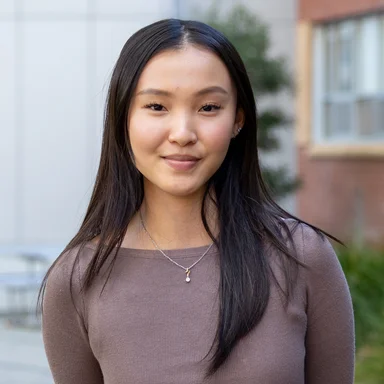

“The freedom and autonomy that my placement provided me helped me create my own unique way of helping clients. Coupled with the support from my clinical supervisor, I was able to make a positive impact on my clients and become open to working with children as a possible career path.”
VanessaMaster of Counselling
Stories that start here
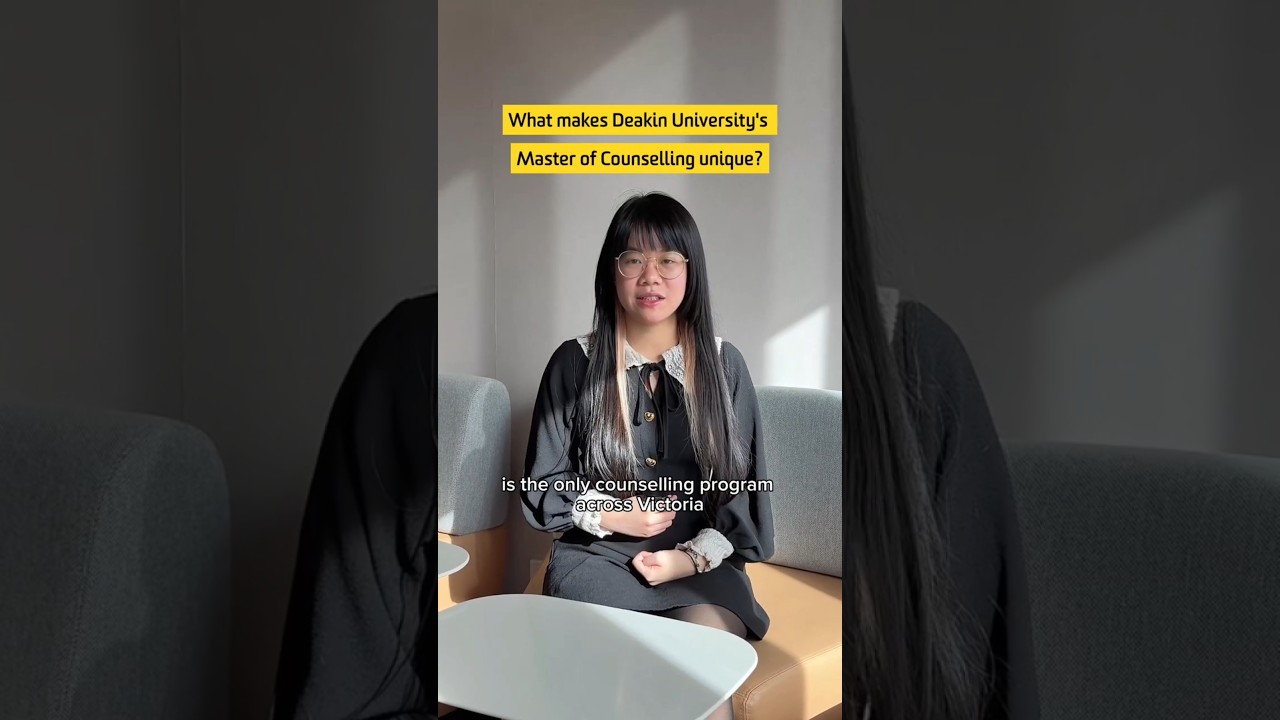


Key dates

Direct applications
Trimester 1 2027 applications close 24 January 2027
FAQs
Psychology and counselling are related but distinct professions that both support mental health and wellbeing. Psychologists complete a six-year sequence of accredited education and training and must be registered with the Psychology Board of Australia. Depending on their role and training, they may undertake psychological assessments, diagnose mental health conditions and provide psychological treatment. Counsellors use therapeutic approaches to support individuals, couples and groups with concerns such as mental health, relationships, grief and life transitions. Unlike psychology, counselling is not currently regulated through Australia’s national registration scheme, although practitioners can seek professional registration through associations such as ACA and PACFA. Deakin’s Master of Counselling is accredited by both organisations, supporting graduates to apply for professional registration with them.
The time it takes to become a counsellor depends on your previous study, professional goals and any membership or registration requirements you want to meet. Deakin’s Master of Counselling develops therapeutic communication, ethics, mental health knowledge and supervised practice, supporting pathways into counselling, wellbeing, case work and community services roles.
A Master of Counselling can lead to roles in counselling, wellbeing support, case work, family support, mental health services and community services. Deakin’s course develops counselling theory, therapeutic skills, ethics and supervised practice, giving graduates a professional pathway into client-centred support roles across health, education, community and workplace settings.
A Master of Counselling is usually structured around counselling theory, therapeutic skills, ethics, mental health knowledge and supervised practice. Deakin’s course connects these areas through applied learning and placement-style experience, helping students build confidence for client work in community, health, education and workplace settings.
A Master of Counselling can support pathways into counselling and therapeutic support roles, but the title ‘therapist’ depends on the professional context, employer and membership requirements. Deakin’s course develops counselling theory, ethics, mental health knowledge, therapeutic skills and supervised practice for client-centred roles.
Related courses



*Deakin references data from a range of government, higher education and reputable media sources. Learn more about our achievements on our University rankings page, or explore our sources page for supporting references.
What will I study in the Master of Counselling?
The Master of Counselling builds advanced knowledge and practical skills in counselling through a structured program combining theory, applied learning and professional practice. You will develop a strong foundation in counselling approaches before progressing to specialised topics and placement experience.
Build foundations in counselling practice
Understand counselling foundations
Learn key counselling theories, mental health concepts and the role of counselling across the lifespan and diverse contexts.
Develop core counselling skills
Build communication and micro-skills, including active listening, rapport building and ethical decision-making in counselling practice.
Explore professional practice and diversity
Examine ethical, legal and cultural considerations, including working with diverse populations and maintaining professional standards.
Apply and extend counselling practice
Build specialist counselling capability
Study areas such as trauma, relationships, grief, family violence and sexuality to respond to complex client needs.
Develop advanced practice skills
Strengthen your ability to assess, plan and deliver counselling interventions using contemporary therapeutic approaches.
Complete professional placement
Undertake 200 hours of placement, including autonomous client contact, supervision and collaboration with other professionals, applying your skills in assessment and intervention.
Course structure
To complete the Master of Counselling, you must pass 16 credit points. The number of credit points required may vary, depending on your entry point or how much credit you receive as recognition of prior learning (RPL) based on your professional experience and previous qualifications.
Most units are equal to one credit point. As a full-time student you will study four credit points per trimester and usually undertake two trimesters per year.
Are you a current student? For course information that applies to the year you started your degree, visit the handbook.
All students are required to meet the University's academic progress and conduct requirements
Units
Year 1 - Trimester 1
Year 1 - Trimester 2
Year 2 - Trimester 1
Year 2 - Trimester 2
* All placement hours must be completed with the placement host and students physically located in Australia.
Professional recognition
The Master of Counselling is accredited by the Australian Counselling Association (ACA) and the Psychotherapy and Counselling Federation of Australia (PACFA).
This qualification has been assessed as being an equivalent qualification for the purposes of the Mandatory Minimum Qualifications policy for employment in specialist family violence practitioner roles in Victoria.
What to expect while studying
The Master of Counselling course contains topics that could be triggering or distressing for some individuals. If you have unresolved trauma or grief, we strongly recommend that you carefully consider whether you are ready to engage with this course at this time. It is important to prioritise your mental health and wellbeing, and seeking support from a mental health professional may be a helpful option. Please be aware that support is available to you throughout your studies, and we encourage you to reach out to the services provided by Wellbeing at Deakin if you need to do so.
In order to undertake placement, students will be required to attain a police check and a Working with Children Check, or equivalent based on their State of residence.
Students undertaking placement in any environment may be required to work with children, or incidentally exposed to children due to the nature of the counselling profession. Hence, the University has an obligation to ensure that students are suitable for placement and the children they work with are safe.
If a student has a disclosable outcome/s on their national police check, agencies have the right to refuse to provide a placement. If an alternative placement cannot be obtained, the student will be unable to meet the requirements of the placement units and completion of the course will therefore not be possible.
To gain professional accreditation with the Australian Counselling Association and the Psychotherapy and Counselling Federation of Australia, students are required to disclose and explain any professional misconduct, formal complaints made against them as a counsellor, serious criminal offences, current investigations, or refusal of application to work with children.
As a student in the Faculty of Health you can expect to participate in a range of teaching activities each week. This could include lectures, seminars, practicals, placements and online interaction. You can refer to the individual unit details in the course structure for more information. You will also need to study and complete assessment tasks in your own time. Teaching, placements and assessment tasks may take place outside of Deakin University teaching periods.
On-campus attendance requirements
To meet industry accreditation requirements, all students must participate in a compulsory on-campus intensive (of either two- or three-days duration) for certain units. Please note that some units are entirely online, some are offer a choice of on-campus or online, whilst others have a blended delivery of online and one face-to-face on-campus intensive. Please refer to the individual unit details in the online handbook for more information about how each unit is delivered.
Students will be required to complete 200 hours of placement, composed of client contact, supervision and non-contact counselling related activities. All placement hours must be completed with the placement host and students physically located in Australia.
Placement is an essential component of the course, required by both accrediting associations, the Australian Counselling Association and the Psychotherapy and Counselling Federation of Australia. When students complete the course, they may be asked to submit evidence of their placement with a detailed log book of hours attained.
At Deakin, we're committed to ensuring an inclusive environment that supports all students to belong, thrive and succeed. We work closely with students, where needed, to identify potential barriers to participation and where possible, provide tailored support so students can engage with learning and assessment activities.
If you are neurodivergent, have a disability, health condition or mental health condition that may impact your study or participation in university life, and want to know how Deakin could support you, contact our Domestic students (opens in a new window) or International students (opens in a new window) or Disability Resource Centre (opens email client) teams for a collaborative and confidential discussion. This discussion is to support you to make plans for your studies and future career and will not have any bearing on your application to the course.
When can I start?
When you study depends on your course, location and available intakes. Check the table to see when you can start and how study is offered throughout the year.
Your course learning outcomes describe the knowledge, skills and capabilities you’ll develop and be able to demonstrate by the time you graduate. Built into your course through your units and assessments, they provide a clear picture of what you’ll be equipped to know, understand and do – preparing you to apply your learning with confidence beyond university.
| Course Learning Outcomes |
|---|
| Demonstrate specialist knowledge of counselling roles, and knowledge and application of skills, theory, interventions, and ethics across the lifespan to a variety of audiences relevant to professional counselling. |
| Employ clear written and oral communication skills to effect therapeutic change among diverse client groups. Convey complex counselling theories and ideas to a variety of audiences, including clients, colleagues, and other professionals. |
| Use a range of digital tools to locate and disseminate counselling information and client resources. Awareness and use of digital tools to provide counselling. |
| Identify, synthesize, integrate, and critically reflect on research to inform counselling practice. |
| Appraise, select, and apply specialised counselling skills and knowledge to understand and work with. Initiate, plan, and implement tailored counselling interventions that address client issues. |
| Demonstrate high-level self-management and awareness in learning and practice that reinforces the importance of responsibility, accountability, and ethics in professional counselling. |
| Work effectively in supervisory, leadership, and managerial capacities with diverse ethnic and cultural partners and teams to promote professional competence and growth. Communicate and collaborate with other mental health professionals to support clients. |
| Evaluate and apply ethical principles to work productively in the field of counselling within diverse social, cultural and environmental contexts. Collaborate and communicate in a self-reflective and culturally sensitive manner. |
- Award granted
- Master of Counselling
- Year
2027 course information
- Deakin code
- H758
- Level
- Higher Degree Coursework (Masters and Doctorates)
- Australian Qualifications Framework (AQF) recognition
The award conferred upon completion is recognised in the Australian Qualifications Framework at Level 9
Fees
Estimated tuition fee
$32,200
for 1 yr full-time - Full-fee paying place
The estimated tuition fee above is based on a typical first-year full-time enrolment of 8 credit points and is provided as a guide only. Your tuition fees are determined by your course and unit enrolment. Your tuition fees will vary depending on your study load, the course duration, and any approved recognition of prior learning. You may also be eligible for a FEE-HELP loan to defer all or part of your tuition fees.
Save 10% as a Deakin alumni
We love welcoming Deakin alumni back to continue their journey with us. If you're starting a postgraduate award course, you may be eligible for a 10% discount on your enrolment fees, applied per unit. It's our way of supporting your next step.
Scholarships
We want to help you excel at Deakin. Our scholarships recognise your dedication and achievements, providing financial support that can ease the cost of living and studying. With less pressure, you'll have more freedom to focus on what matters most – your education and future success.
Applications for 2027 are open
Ready to take the next step? Apply now to start your journey at Deakin. Places in this course are limited and entry is competitive, so we encourage you to submit your application early.
Key dates
Direct applications
Trimester 1 2027 applications close 24 January 2027
Apply now

Apply direct
Simply create an account in the Deakin Application Portal, enter your personal and educational details, upload your supporting documents and submit your application.
Additional applicant instructions
Please refer to the additional applicant instructions PDF for information regarding inherent requirements for the course including video upload.
Recognition of prior learning
We value your previous study and experience. Recognition of prior learning enables you to get credit for what you've already achieved. When you apply, we'll consider your previous study and experience for recognition of prior learning.
Depending upon prior qualifications and/or experience, you may receive credit for: HPY730 Principles of Counselling and Telehealth HPY731 Mental Health Counselling HPY733 Lifespan and Developmental Counselling HPY734 Ethical and Legal Issues in Counselling HPY732 Professional Counselling Roles HPY735 Counselling Diverse Populations HPY736 Contemporary Counselling Interventions HPY744 Research in Counselling