


#1 university in Melbourne for psychology undergraduate employment

#1 university in Melbourne for psychology facilities

140 hours of industry placement
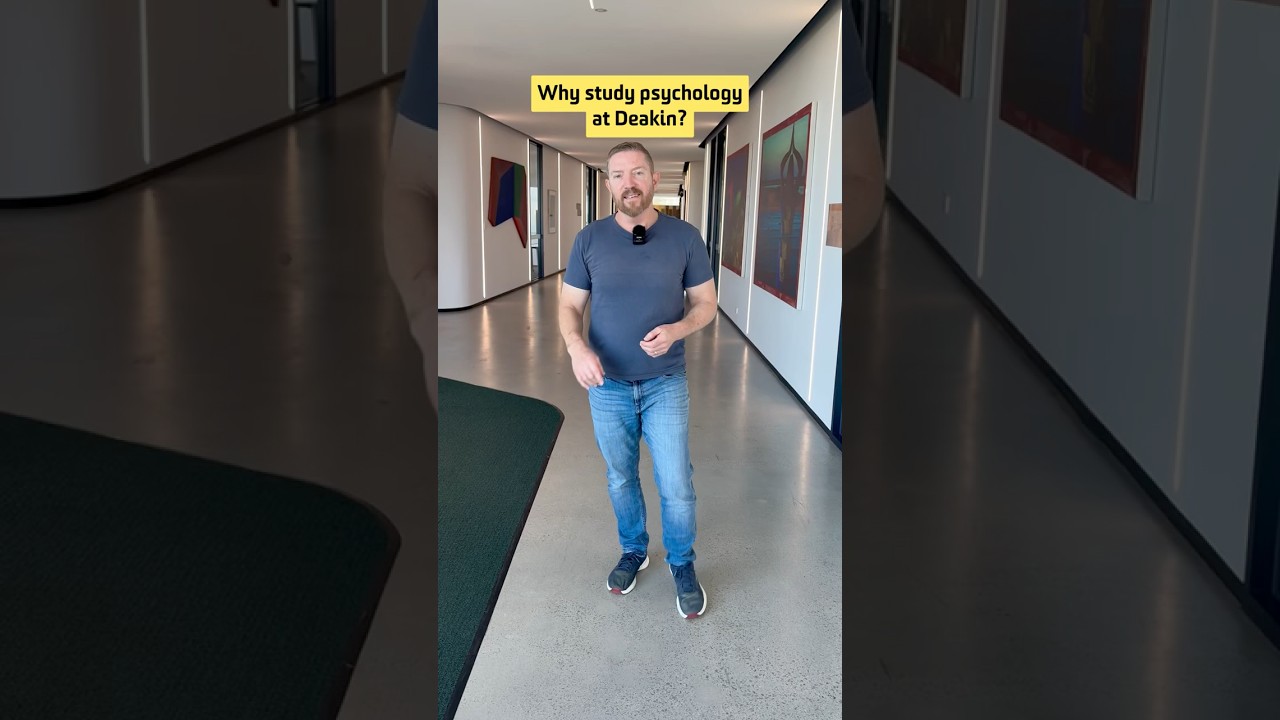
Why choose psychological science at Deakin
Curious about what makes people think, feel and behave the way they do? Deakin's Bachelor of Psychological Science explores human behaviour and personality, giving you a strong foundation in psychology. Accelerate your degree with our trimester system while studying at the #1 university in Victoria for psychology facilities and resources, and undergraduate employment.
Specialise from your first year with the only Victorian university undergraduate psychology degree offering specialist majors in child and family studies, organisational studies and forensic studies. Build practical skills in communication, counselling and professional practice alongside core areas of psychology.
You can also choose to complete 140 hours of industry placement, with support from Deakin's Faculty of Health work-integrated learning team. This course prepares you for diverse careers in health and a pathway to honours and further study towards registration as a psychologist.
-
Study with a leading psychology provider
Study at a university ranked #1 in the state of Victoria for psychology facilities and resources.
-
Specialise from your first year
Deakin is the only university in Victoria to offer specialist psychology majors in an undergraduate psychology degree, including child and family studies, organisational studies and forensic studies.
-
Develop career-ready skills
Build professional communication skills through applied learning. Complete an Australian Psychology Accreditation Council-accredited sequence, providing a pathway to further study towards registration as a psychologist.
-
Gain practical experience
Choose to complete a 140-hour industry placement, with Deakin’s Faculty of Health work-integrated learning team securing and supporting your experience.


Connected to industry
Deakin’s strong industry connections help shape your learning. Build practical experience in real workplace contexts through work-integrated learning, mentoring and networking opportunities. Industry advisory boards also help shape our degrees, which means what you study is current, relevant and aligned to what your future employers need.
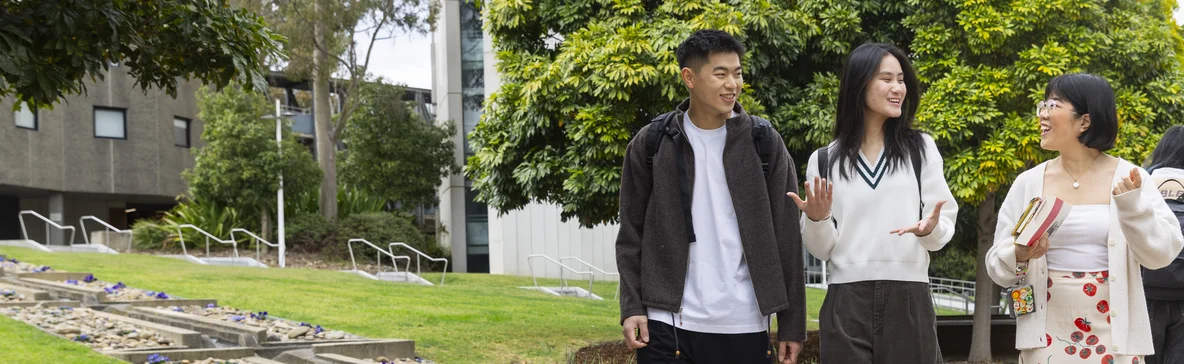
Deakin puts employability first
Career outcomes
Deakin's Bachelor of Psychological Science equips you with an understanding of human behaviour and the research, communication and critical thinking skills employers value. Learn more about the pathway to becoming a psychologist or explore diverse career opportunities available to psychology graduates.
Psychologist
Support individuals, families and communities to improve their mental health and wellbeing. Psychologists assess behaviour, deliver evidence-based interventions and help people navigate emotional, social and behavioural challenges.
- $108k
Typical annual salary in Australia
- 16.8%
Projected job growth in 5 years
- 4.3/5
Job satisfaction


Human resources adviser
Apply your understanding of human behaviour to support recruitment, employee wellbeing and workplace culture. Human resources advisers act as a trusted source of guidance for employees and managers across a range of organisations.
- $100k
Typical annual salary in Australia
- 13.1%
Projected job growth in 5 years
Industries you may work in
- Healthcare
- Education
- Community services
- Government
- Public health
- Human resources



“Deakin’s emphasis on evidence-based practice and its strong network of industry placements are providing me with both the academic background and the real-world experience necessary for a career in clinical psychology.”
NimeeshaBachelor of Psychological Science
Stories that start here





Download a course guide
Study at Deakin and be rewarded with new skills that will give you an edge in the job market
FAQs
To become a registered psychologist in Australia, you'll need to complete an approved psychology sequence followed by further accredited study and training. You can begin with the APAC-accredited three-year Bachelor of Psychological Science, followed by an honours year or fourth year. From there, you can continue through an approved postgraduate pathway, such as a masters or doctorate, or the 5+1 internship pathway, to meet the requirements for general registration. Learn more about Deakin's psychology pathways to registration.
The Bachelor of Psychological Science includes an optional 140-hour industry placement, available through elective units. While placement isn't compulsory, the degree also includes core employability-focused units to help you develop practical skills and graduate work-ready. Supervised placement hours are a key component of postgraduate psychology programs if your aim is to become a registered psychologist.
The three available majors – child and family, organisational studies and forensic studies – are designed to help you follow your passion early on. Think about the career direction you're drawn to: working with children and families, understanding workplace behaviour or exploring the psychology of crime. All three majors sit within the same APAC-accredited degree, so choosing a major shapes your specialisation without limiting your broader career options in psychology.
As a Deakin student, you'll have access to dedicated career support throughout your studies and after you graduate. Deakin offers one-on-one career coaching, resume and job application feedback, interview preparation, networking opportunities, employer events, career workshops and access to an exclusive jobs and internships board. You can also access guidance on career planning, work-integrated learning and building your professional skills to help you transition confidently into employment.
Related courses





*Deakin references data from a range of government, higher education and reputable media sources. Learn more about our achievements on our University rankings page, or explore our sources page for supporting references.
What will I study in the Bachelor of Psychological Science?
Develop knowledge of human behaviour through core psychology study while tailoring your degree with flexible major and elective options. Throughout your studies, you will build research and applied skills and explore areas of psychology aligned to your interests and career goals.

Build foundations in psychology
Understand core areas of psychology
Establish foundational knowledge in human behaviour, development and psychological science, including biological, social and cognitive perspectives.
Shape your study focus early
Choose elective or major units from your first year, with options including child and family studies, organisational studies or forensic studies.
Develop core academic skills
Learn to analyse information, think critically and communicate clearly in a psychology context, while being introduced to professional practice.
Deepen knowledge and applied skills
Explore key psychology disciplines
Examine areas such as cognitive, social and developmental psychology to understand behaviour across different contexts.
Build research capability
Develop skills in research design and data analysis through introductory research methods.
Apply counselling and communication skills
Develop skills through Applied Counselling Skills units, preparing you to work with individuals and groups in professional settings.

Apply psychological knowledge in practice
Apply advanced psychological knowledge
Study areas such as personality, psychopathology and biological psychology to deepen your understanding of behaviour and mental processes.
Advance research and analysis skills
Strengthen your ability to design research, analyse data and interpret findings through intermediate research methods.
Gain practical experience and prepare for further study
Choose to undertake a 140-hour industry placement and apply your skills in professional settings. You will complete an APAC-accredited sequence that supports further study towards registration as a psychologist.
Course structure
To complete the Bachelor of Psychological Science, you must pass 24 credit points.
Most units are equal to one credit point. As a full-time student you will study four credit points per trimester and usually undertake two trimesters per year.
Are you a current student? For course information that applies to the year you started your degree, visit the handbook.
All students are required to meet the University's academic progress and conduct requirements
Units
Course Structure
^ Foundations of Psychology unit
* Psychology in Practice unit
# Psychology Essentials unit
Level 1 - Trimester 1
plus one psychology course elective, elective or psychology major unit
Level 1 - Trimester 2
plus one psychology course elective, elective or psychology major unit
Level 2 - Trimester 1
plus one psychology course elective, elective or psychology major unit
Level 2 - Trimester 2
plus two psychology course electives, electives or psychology major units
Level 3 - Trimester 1
plus two psychology course electives, electives or psychology major units
Level 3 - Trimester 2
plus one psychology course elective, elective or psychology major unit
Note: for Psychology 4th year admission (Honours or equivalent), students are assessed on the WAM of Psychology Essentials
The following majors are available within the Bachelor of Psychological Science
Warrnambool students wishing to undertake these majors must enrol in the online offerings of the units.
Refer to the details of each major sequence for availability.
Psychology Course Electives
Two credit points from:
Trimester 1
Trimester 2
Professional recognition
The Bachelor of Psychological Science, Bachelor of Psychological Science (Child and Family), Bachelor of Psychological Science (Forensic Studies) and Bachelor of Psychological Science (Organisational Studies) are accredited by the Australian Psychology Accreditation Council (APAC)
If you are seeking to become a registered psychologist with the Psychology Board of Australia (PsyBA) as a graduate from these courses you must next apply for a fourth year of study in psychology, such as Deakin's Bachelor of Psychological Science (Honours) or Graduate Diploma of Psychology (Advanced).

What to expect while studying
Registration as a Psychologist
The current requirements for registration as a provisional psychologist include the completion of four years of academic study of psychology that is recognised by the Psychology Board of Australia (PsyBA). The academic program usually consists of an approved undergraduate psychology sequence – such as Deakin’s Bachelor of Psychological Science – followed by an approved fourth year of study (such as Deakin’s Graduate Diploma of Psychology (Advanced) or honours in psychology).
Following successful completion of an approved fourth-year of psychology study, you may apply for provisional registration with the Psychology Board of Australia.
In order to gain full registration, provisional psychologists must then complete further study, which may include Master of Professional Psychology, Master of Psychology (Clinical), Master of Psychology (Organisational), Doctor of Psychology (Clinical)
In addition to the Bachelor of Psychological Science, psychology may be studied as a three-year major sequence in the following degrees: Bachelor of Health Sciences, Bachelor of Arts (Psychology), Bachelor of Marketing (Psychology) or Bachelor of Human Resource Management (Psychology). These sequences are designed as terminal studies in psychology to complement other studies within an award.
The 10 credit point undergraduate psychology sequence prepares students for postgraduate training towards becoming a practicing registered psychologist. To practice as a psychologist students must complete an undergraduate degree with a major sequence in psychology followed by a fourth year of study in psychology (an Honours in Psychology or a Graduate Diploma of Psychology) that are accredited by the Australian Psychology Accreditation Council (APAC).
You may be able to study available units in the optional third trimester to fast-track your degree, however your course duration may be extended if there are delays in meeting course requirements, such as completing a placement.
Any unit which contains work integrated learning, a community placement or interaction with the community may require a Police Record Check, Working With Children Check or other check. Refer to the relevant unit guide.
As a student in the Faculty of Health you can expect to participate in a range of teaching activities each week. This could include lectures, seminars, practicals and online interaction. You can refer to the individual unit details in the course structure for more information. You will also need to study and complete assessment tasks in your own time.
As part of this course you will have the option of undertaking 140 hours of industry placement through elective units, and our core employability-orientated units ensure you graduate work-ready. Applied Counselling Skills core units also allow you to develop your counselling and coaching skills.
Deakin offers many courses which can be studied by distance education overseas.
However, international students living in Australia on a student visa, in each compulsory trimester (that is, Trimesters 1 and 2), must enrol in at least one unit that is offered as a Campus located unit and can, in addition enrol in units offered online. International students may undertake a maximum of up to one third (or equivalent) of their study as online study. Please note enrolment in one face to face unit in compulsory study periods is only allowed if the student is completing their final unit of study and will not exceed maximum one third (or equivalent) online requirement.
At Deakin, we're committed to ensuring an inclusive environment that supports all students to belong, thrive and succeed. We work closely with students, where needed, to identify potential barriers to participation and where possible, provide tailored support so students can engage with learning and assessment activities.
If you are neurodivergent, have a disability, health condition or mental health condition that may impact your study or participation in university life, and want to know how Deakin could support you, contact our Domestic students (opens in a new window) or International students (opens in a new window) or Disability Resource Centre (opens email client) teams for a collaborative and confidential discussion. This discussion is to support you to make plans for your studies and future career and will not have any bearing on your application to the course.
When can I start?
When you study depends on your course, location and available intakes. Check the table to see when you can start and how study is offered throughout the year.
Your course learning outcomes describe the knowledge, skills and capabilities you’ll develop and be able to demonstrate by the time you graduate. Built into your course through your units and assessments, they provide a clear picture of what you’ll be equipped to know, understand and do – preparing you to apply your learning with confidence beyond university.
| Course Learning Outcomes |
|---|
| Integrate theoretical knowledge of the discipline of psychology in relation to: health, social, cognitive, methodology, neuroscience, development, and personality. Demonstrate appropriate communication, counselling, and research methods skills. |
| Communicate psychological knowledge and arguments effectively using the most appropriate means utilising clear, discipline appropriate, coherent and well-developed communication skills. Demonstrate appropriate interpersonal communication and interview skills in situations appropriate to psychological practice. This includes active listening, clarifying and reflecting, effective questioning, summarising and paraphrasing, developing rapport, appropriate cultural responsiveness and empathic responding. |
| Utilise online technologies to interact with others, access research and evaluate empirical evidence; and create and disseminate psychology-relevant content. |
| Identify and critique the factors that contribute to the development of unhealthy mental processes and behaviours, develop arguments, reports, or commentaries based on empirical research and apply the results to affect healthy behaviour change in oneself or others, and; apply the skills required to affect healthy behaviour change in oneself and in others in diverse contexts. |
| Apply knowledge of the scientific method when addressing problems related to behaviour and mental processes; design, plan, and conduct research that addresses these problems; and apply analytic and statistical skills to interpret the results and validity of research. |
| Engage in independent learning as a reflective practitioner to sustain personal and professional development in the changing world of the science and practice of psychology; and manage resources, timelines and other constraints to achieve quality and timely outcomes. |
| Collaborate and communicate psychological principles and practices effectively in interdisciplinary teams to work and learn in a range of environments including communities of practice, research and professional practice. |
| Embody the values and attitudes of the scientist-practitioner; apply ethical and professional responsibilities to local and global communities, apply knowledge and skills in culturally appropriate and inclusive ways. |
- Award granted
- Bachelor of Psychological Science
- Year
2027 course information
- VTAC code
1400314233 - Waurn Ponds (Geelong), International full-fee paying place
1400514233 - Burwood (Melbourne), International full-fee paying place- Deakin code
- H344
- CRICOS code?Commonwealth Register of Institutions and Courses for Overseas Students
- 079316E Burwood (Melbourne), Waurn Ponds (Geelong)
- Level
- Undergraduate
- Australian Qualifications Framework (AQF) recognition
The award conferred upon completion is recognised in the Australian Qualifications Framework at Level 7
Apply now

Apply directly to Deakin
Apply directly through StudyLink Connect. Depending on your location, you may need to apply through a Deakin Authorised Agent, who can support and submit your application.
See our guide to applying to Deakin for application steps and requirements.

Apply through VTAC
If you are an international student completing an Australian Year 12 in Australia or overseas, you must submit an application through the Victorian Tertiary Admissions Centre (VTAC). In addition, you may also apply directly to Deakin through StudyLink Connect - Deakin University's international student application service.
Recognition of prior learning
We value your previous study and experience. Recognition of prior learning enables you to get credit for what you've already achieved. When you apply, we'll consider your previous study and experience for recognition of prior learning.
Please note that a maximum of five credit points can be granted for Psychology core units. You can also refer to the recognition of prior learning (RPL) system which outlines the credit that may be granted towards a Deakin University degree.
Pathways
The Bachelor of Psychological Science can be used as a pathway to general registration as a psychologist by undertaking a fourth year of study in psychology (an honours year or Graduate Diploma of Psychology (Advanced) followed by a masters degree such as Deakin's Master of Psychology (Clinical), Doctor of Psychology (Clinical), Master of Psychology (Organisational) (the only course of its kind in Victoria), or Master of Professional Psychology.