


Get career-ready with industry internships

Top 150 in the world for communication

Fast-track your degree with eligible experience
Why choose communication at Deakin
As technology and global business keep evolving, strong communication and critical thinking skills are invaluable Deakin’s dynamic Master of Communication helps you build both, so you can lead, influence and thrive.
Undertake core discipline study in Digital Communication and Strategic Communication developing skills in areas from sports media to law, ethics and advanced brand communication.
Enjoy a flexible, practical, supported, collaborative and stimulating learning environment, guided by experienced staff in industry-grade facilities.
Gain hands-on experience through internships, volunteering and Deakin’s work-integrated learning opportunities, while building your professional network. Develop your portfolio through a capstone project and graduate as a well-rounded, reflective communications practitioner, ready for roles such as corporate affairs director, investigative journalist, PR practitioner and more.
-
Top-ranked study
Study at the #1 university in Melbourne for postgraduate communications overall experience and teaching practices.
-
Gain industry practice
Respond to industry briefs and build networks through placements, internships and industry events.
-
Industry-grade facilities
Learn in the newsroom and creative media lab, plus TV broadcast studio and news production spaces at the #1 public university in Australia for facilities and resources.
-
Advanced study
Undertake core discipline study in digital communication and strategic communication, building advanced expertise preparing you for industry challenges and opportunities.


Connected to industry
Deakin’s strong industry connections help shape your learning. Build practical experience in real workplace contexts through work-integrated learning, mentoring and networking opportunities. Industry advisory boards also help shape our degrees, which means what you study is current, relevant and aligned to what your future employers need.

Deakin puts employability first
Career outcomes
Build advanced strategic, critical and digital communication skills for roles across media, publishing, community relations and government organisations worldwide.
Marketing manager
Plan, deliver and evaluate campaigns across digital and traditional channels. Use audience research and performance data to guide strategy, coordinate creative work and support organisational growth.
- $115k
Typical annual salary in Australia
- 12,900
Additional jobs projected in 5 years


Public relations officer
Manage media and stakeholder relationships to build public awareness and protect an organisation’s reputation. Develop clear communications for clients, audiences and other stakeholders.
- $113k
Typical annual salary in Australia
- 12.3%
Projected job growth in 5 years
Other jobs
- Advertising account manager
- Brand communication copywriter
- Communications consultant
- Corporate affairs director
- Journalist
- Public relations specialist



“Whether through conducting research, writing a paper, developing a marketing communications plan or publishing a journal article, this course has helped me to build confidence in my own voice and the contribution I can make as a communications professional.”
EmilyOwner and founder of Agency International
Stories that start here
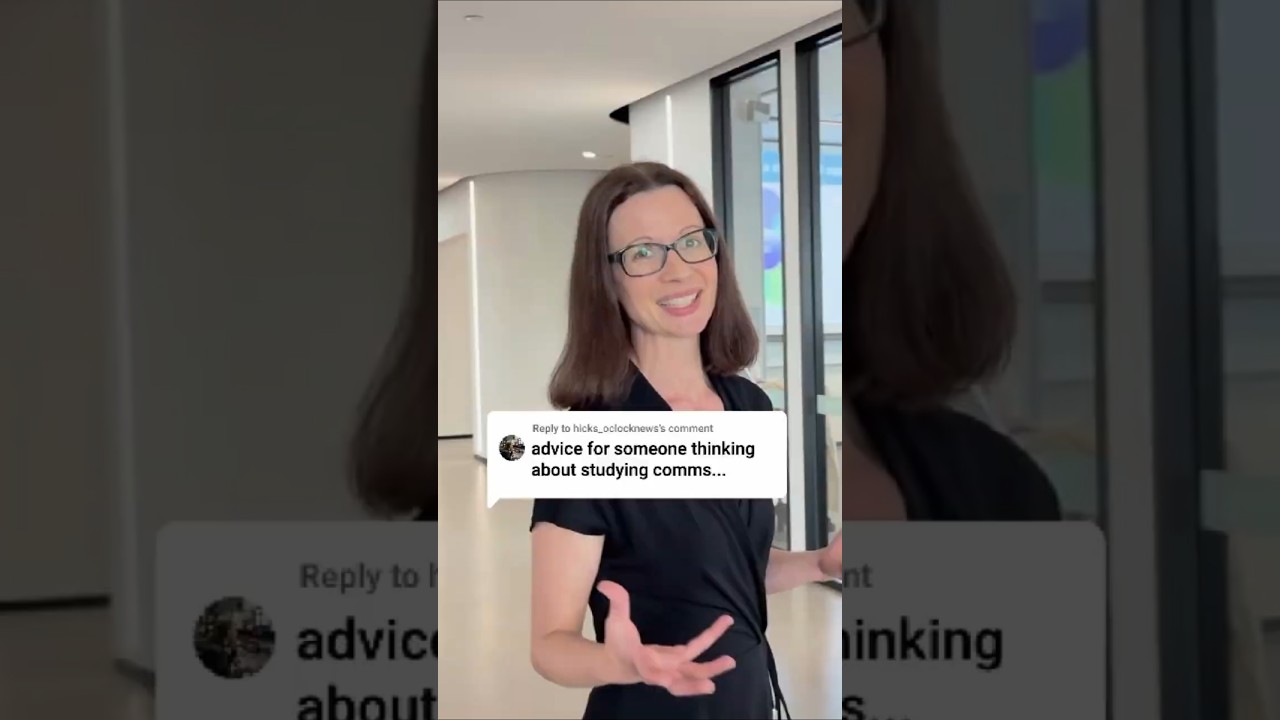




Download a course guide
Study at Deakin and be rewarded with new skills that will give you an edge in the job market
FAQs
Deakin's Master of Communication helps international students build global communication capability for public relations, media strategy, content, corporate affairs and stakeholder engagement roles. Studying in Australia gives you experience with professional communication practice, digital engagement and cross-cultural communication.
As a Deakin student, you'll have access to dedicated career support throughout your studies and after you graduate. Deakin offers one-on-one career coaching, resume and job application feedback, interview preparation, networking opportunities, employer events, career workshops and access to an exclusive jobs and internships board. You can also access guidance on career planning, work-integrated learning and building your professional skills to help you transition confidently into employment.
Master of Communication focuses on communication strategy, public relations, digital media and stakeholder engagement. It builds professional communication, strategic messaging, digital engagement and research-informed practice, helping students gain globally relevant skills with support for studying in Australia.
Yes. Deakin's Master of Communication can be completed in one year (8 credit points) for international students with a bachelor honours in communication or media, a bachelor in a related field plus two years of relevant experience, or a graduate certificate or diploma in a related area. A 1.5-year option is also available.
Related courses








*Deakin references data from a range of government, higher education and reputable media sources. Learn more about our achievements on our University rankings page, or explore our sources page for supporting references.
What will I study in the Master of Communication?
Build advanced communication knowledge, complete electives alongside a capstone project designed for professional or scholarly contexts.

Core communication foundations
Build core communication expertise
Study contemporary communication concepts and research approaches so you can analyse ideas, audiences and media practice.
Shape your specialist direction
Begin focused study in your chosen area while connecting it to the wider communication landscape.
Broaden your perspective
Use electives to expand your toolkit. Complement your specialisation or explore a new area.
Capstone and professional application
Turn research into purposeful work
Develop and refine a substantial project around an industry issue or scholarly question.
Choose a capstone pathway
Choose to complete the professional capstone project, which may include an internship. With approval, you can take an academic research pathway that may support future PhD study.
Graduate ready
Communicate confidently across platforms, solving complex problems and producing work for diverse audiences.
Course structure
To complete the Master of Communication, you must pass 8, 12 or 16 credit points. The number of credit points required may vary, depending on your entry point or how much credit you receive as recognition of prior learning (RPL) based on your professional experience and previous qualifications.
Most units are equal to one credit point. As a full-time student you will study four credit points per trimester and usually undertake two trimesters per year.
Are you a current student? For course information that applies to the year you started your degree, visit the handbook.
All students are required to meet the University's academic progress and conduct requirements
Units
Compulsory 0-credit point module
To be completed in the first trimester of study:
Digital Communication Discipline Core
Strategic Communication Discipline Core
Electives are to be chosen from units within the specialisations/disciplines of the Master of Arts (Writing and Literature), Master of Fine Arts, Master of Film and Television or Master of Artificial Intelligence for Design and Creative Practice.
Course electives may be used to form a specialisation/discipline by selecting 4 credit points from the ONE specialisation/discipline.
The internship unit ACC700 is also available.
Please Note: Course elective units may provide the opportunity for Work Integrated Learning experiences.

What to expect while studying
You may be able to study available units in the optional third trimester to fast-track your degree, however your course duration may be extended if there are delays in meeting course requirements, such as completing a placement.
Any unit which contains work integrated learning, a community placement or interaction with the community may require a police check, Working with Children Check or other check.
Elective units may provide the opportunity for Work Integrated Learning experiences.
Students will undertake a capstone research design and preparation unit worth one-credit-point, resulting in the completion of a professional practice-focused project for an industry audience. An academic research project (scholarly thesis) option is also available. Students who undertake the academic research project may be eligible to apply for future PhD study.
At Deakin, we're committed to ensuring an inclusive environment that supports all students to belong, thrive and succeed. We work closely with students, where needed, to identify potential barriers to participation and where possible, provide tailored support so students can engage with learning and assessment activities.
If you are neurodivergent, have a disability, health condition or mental health condition that may impact your study or participation in university life, and want to know how Deakin could support you, contact our Domestic students (opens in a new window) or International students (opens in a new window) or Disability Resource Centre (opens email client) teams for a collaborative and confidential discussion. This discussion is to support you to make plans for your studies and future career and will not have any bearing on your application to the course.
When can I start?
When you study depends on your course, location and available intakes. Check the table to see when you can start and how study is offered throughout the year.
Your course learning outcomes describe the knowledge, skills and capabilities you’ll develop and be able to demonstrate by the time you graduate. Built into your course through your units and assessments, they provide a clear picture of what you’ll be equipped to know, understand and do – preparing you to apply your learning with confidence beyond university.
| Course Learning Outcomes |
|---|
| Apply expert knowledge of contemporary communication methods in one or more specialist areas including Journalism, Public Relations, Digital Media, Sports Media, and Visual Communication Design, and in scholarly contexts. |
| Use expert, specialised skills to communicate across a range of platforms and share knowledge and research findings with diverse audiences, in a way that has impact in professional and scholarly contexts. |
| Utilize generic and specific digital technologies to address a range of communication needs in research and professional contexts and for diverse audiences within and outside the communication industries. |
| Critically analyse and evaluate complex ideas in communication theory, develop appropriate methodologies for application in industry or academic research projects, and communicate conclusions in the context of professional decision-making and scholarship. |
| Analyse, evaluate, and critique complex information in order to identify problems and develop creative solutions in a range of professional practice and scholarly contexts. |
| Employ high level autonomy, accountability and initiative in responding creatively to new situations in professional communication practice and/or in the completion of a substantial research-based project. |
| Work and learn collaboratively in professional communication practice and in scholarly contexts, including exercising initiative and accountability as a team member. |
| Critically reflect on communication-related issues in both domestic and global contexts as a scholar and in professional practice, taking into consideration cultural and socio-economic diversity, social and environmental responsibility, and the application of the highest ethical standards. |
Approved at Faculty Board May 2023
- Award granted
- Master of Communication
- Year
2027 course information
- Deakin code
- A743
- CRICOS code?Commonwealth Register of Institutions and Courses for Overseas Students
- 084000E Burwood (Melbourne)
- Level
- Higher Degree Coursework (Masters and Doctorates)
- Australian Qualifications Framework (AQF) recognition
The award conferred upon completion is recognised in the Australian Qualifications Framework at Level 9
Apply now

Apply directly to Deakin
Apply directly through StudyLink Connect. Depending on your location, you may need to apply through a Deakin Authorised Agent, who can support and submit your application.
See our guide to applying to Deakin for application steps and requirements.
Recognition of prior learning
We value your previous study and experience. Recognition of prior learning enables you to get credit for what you've already achieved. When you apply, we'll consider your previous study and experience for recognition of prior learning.