


1 in 4 Deakin arts graduates hold leadership roles

Employability units are built into the degree

Choose from 600+ employers for internships
Why choose arts at Deakin
Unlock your potential with a Deakin Bachelor of Arts degree: one in four Deakin arts graduates hold leadership or managerial roles and one in 10 are chief executives or managing directors. Fuel your creativity and launch a career with purpose, adaptability and global reach.
Be empowered to explore a diverse range of over 30 study areas in a way that suits you – from Indigenous studies and digital cultures to history, media studies, education and more. Personalise your degree with topics you care about to build a career you will love. As AI, automation and global change reshape careers, Deakin’s Bachelor of Arts prepares students to navigate uncertainty with enduring skills in communication, creativity, collaboration and critical thinking. It’s why two-thirds of Australia’s workforce have humanities and social sciences degrees, as do two in three CEOs of ASX200 listed companies.
-
Find your purpose
Tailor your degree to your interests. Choose from over 30 study areas including history, international relations, education, Indigenous knowledge and more.
-
Early career focus
Build on your career aspirations and entrepreneurial skills from the start. Network with industry, develop your personal brand, volunteer, attend conferences or take a study tour.
-
Supportive learning
Deakin academics are leaders in their fields. They will mentor and collaborate with you as you explore social issues, community organisations and industry partners.
-
Learn through experiences
Intern, study overseas, complete industry projects. Be supported by Deakin as you design your internship or choose from 600+ employers.


Connected to industry
Deakin’s strong industry connections help shape your learning. Build practical experience in real workplace contexts through work-integrated learning, mentoring and networking opportunities. Industry advisory boards also help shape our degrees, which means what you study is current, relevant and aligned to what your future employers need.
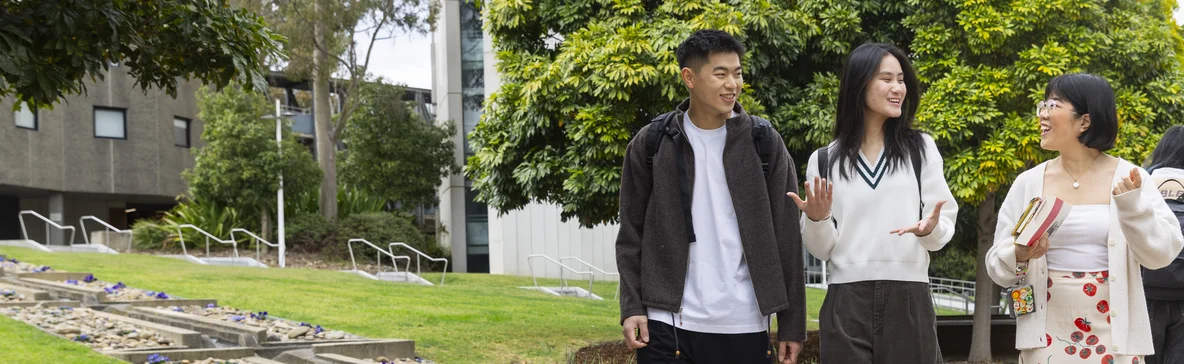
Deakin puts employability first
Career outcomes
Deakin arts graduates are uniquely equipped to shed light on critical issues. The mastery of critical thinking, communication and problem-solving skills is needed for future leaders and is highly sought-after across a range of industries.
Marketing communication specialist
Plan, create and deliver marketing communications across digital, print and campaign channels to build brand awareness, engage audiences and support business goals.
- $95k
Typical annual salary in Australia
- 12,900
More advertising and marketing jobs


Policy analyst
Work with the government or other large organisations to assist in the planning and development of policies. Review current policies and analyse data to assist with policy creation and modification.
- $110k
Typical annual salary in Australia
- 1,893
Jobs advertised
Professional areas
- Culture and creative arts
- Education
- Government and NGOs
- Media, writing and communications
- Language and international relations



“My arts degree taught me how to read a room, pick up on context and adapt quickly. That ability to understand different perspectives has been a big part of making it work.”
Michael FiliusDeakin graduate and Director Commercial Operations, etisalat and (e& UAE)
Stories that start here









FAQs
Choose a major based on your career goals. For example, criminology and politics and policy studies suit careers in law enforcement, policy, justice and related sectors. International relations pairs well with diplomacy, global organisations and NGO pathways. If you're drawn to media and communication and strategic advertising, these study areas lead into journalism, PR and marketing roles. Creative writing suits publishing and content creation, and visual communication design opens doors in graphic design. Combining two complementary majors can also broaden your career options across industries.
Deakin Bachelor of Arts graduates pursue careers in policy, culture and creative arts, education, government and NGOs, international relations, media and communication and business management. One in four Deakin arts graduates hold leadership or managerial roles globally. The degree's transferable skills – critical thinking, communication, cultural intelligence – are valued by employers across every industry and sector worldwide.
You'll develop critical thinking, analytical reasoning, communication, digital literacy and problem-solving skills. The World Economic Forum Future of Jobs Report identified these skills as among the most important for the future workforce, and increasingly vital as AI transforms the workplace. You will also build cultural intelligence and global awareness through diverse course content, supported by an employability sequence designed to translate those capabilities into a confident career start.
An employability sequence is a set of study experiences built into the Bachelor of Arts that helps you develop practical skills alongside your chosen study areas. Depending on the units you choose, you can build capabilities in areas such as professional communication, leadership, project work, community engagement or work integrated learning, giving you experience that complements your studies and prepares you for a wide range of careers after graduation.
Related courses








*Deakin references data from a range of government, higher education and reputable media sources. Learn more about our achievements on our University rankings page, or explore our sources page for supporting references.
What will I study in the Bachelor of Arts?
Explore meaningful ideas that matter to you. Prepare to make a positive impact on the world and reach new heights personally and professionally.

Build foundations
Commence major study from day one
Choose from over 30 study areas including anthropology, digital cultures, politics and policy studies, and Middle East studies.
Broaden your skill set
Add electives, or a minor that complements your majors, and expand your versatility.
Career pathways
It’s never too early to start thinking about your future career. Benefit from career development tools, services and strategies to ensure you graduate job-ready.
Strengthen your studies
Undertake an internship
Take the opportunity to gain valuable professional experience and expand your industry connections.
Develop professional capabilities
Build crucial communication, problem-solving and critical-thinking skills.
Deepen understanding and perspective
Strengthen your specialist knowledge while connecting current global challenges to social justice issues.
Specialise and apply
Prepare for future careers
Build professional capabilities through employability units, clarify your career goals, strengthen your leadership and communication skills and explore internships.
Complete your major sequence
Finalise advanced discipline units along with any remaining electives.
Translate theory into practice
Tackle authentic tasks and projects that reflect industry challenges.
Course structure
To complete the Bachelor of Arts, you must pass 24 credit points.
Most units are equal to one credit point. As a full-time student you will study four credit points per trimester and usually undertake two trimesters per year.
Are you a current student? For course information that applies to the year you started your degree, visit the handbook.
All students are required to meet the University's academic progress and conduct requirements
Units
Compulsory 0-credit point module
To be completed in the first trimester of study:
Employability sequence
Plus 1 credit point from:
Plus 1 credit point from:
A major or minor sequence is a group of units in a particular area of study taken over the three levels of your course. Each unit is usually worth 1 credit point.
A major sequence is made up of 8 credit points, and a minor sequence is made of 4 credit points.
Please check the rules of each major and minor sequence to see which units you need to complete to achieve the required credit points.
Students enrolled in other courses and faculties may take an Arts major sequence
(8 credit points), minor sequence (4 credit points) or individual electives from these discipline areas, subject to meeting the prerequisites.
| Area of Study | Availability | Location |
| Animation | Minor | Burwood (Melbourne) |
| Anthropology | Major and Minor | Burwood (Melbourne), Waurn Ponds (Geelong), Online |
| Arabic | Major and Minor | Burwood (Melbourne), Online |
| Chinese | Major and Minor | Burwood (Melbourne), Online |
| Criminology | Major and Minor | Burwood (Melbourne), Waurn Ponds (Geelong), Online |
| Digital cultures | Major and Minor | Burwood (Melbourne), Online |
| Design thinking | Minor | Burwood (Melbourne), Waurn Ponds (Geelong), Online |
| Education | Major and Minor | Burwood (Melbourne), Online |
| English - Children's literature | Major and Minor | Burwood (Melbourne), Waurn Ponds (Geelong), Online |
| English - Creative writing | Major and Minor | Burwood (Melbourne), Waurn Ponds (Geelong), Online |
| English - Literature | Major and Minor | Burwood (Melbourne), Waurn Ponds (Geelong), Online |
| Film and television studies | Major and Minor | Burwood (Melbourne), Online |
| Gender and sexuality studies | Major and Minor | Burwood (Melbourne), Online |
| Global challenges | Minor | Burwood (Melbourne), Waurn Ponds (Geelong), Online |
| History | Major and Minor | Burwood (Melbourne), Waurn Ponds (Geelong), Online |
| Indigenous studies | Major and Minor | Online |
| Indonesian | Major and Minor | Burwood (Melbourne), Online |
| International relations | Major and Minor | Burwood (Melbourne), Waterfront (Geelong), Online |
| Media and communication | Major and Minor | Burwood (Melbourne), Waurn Ponds (Geelong), Online |
| Media studies | Major and Minor | Burwood (Melbourne), Online |
| Middle east studies | Major and Minor | Burwood (Melbourne), Online |
| Performing arts | Major and Minor | Burwood (Melbourne) |
| Philosophy | Major and Minor | Burwood (Melbourne), Waurn Ponds (Geelong), Online |
| Politics and policy studies | Major and Minor | Burwood (Melbourne), Waurn Ponds (Geelong), Online |
| Public relations studies | Major and Minor | Burwood (Melbourne), Waurn Ponds (Geelong), Online |
| Religious studies | Major and Minor | Burwood (Melbourne), Waurn Ponds (Geelong), Online |
| Social media | Major and Minor | Burwood (Melbourne), Waurn Ponds (Geelong), Online |
| Sociology | Major and Minor | Burwood (Melbourne), Waurn Ponds (Geelong), Online |
| Spanish | Major and Minor | Burwood (Melbourne), Online |
| Sport and society | Minor | Burwood (Melbourne), Waurn Ponds (Geelong), Online |
| Sport journalism | Major and Minor | Burwood (Melbourne), Waurn Ponds (Geelong), Online |
| Strategic advertising | Major and Minor | Burwood (Melbourne), Online |
| UX* Design (*UX refers to User Experience) | Minor | Burwood (Melbourne), Waurn Ponds (Geelong), Online |
| Visual arts and photography | Major and Minor | Burwood (Melbourne) |
| Visual communication design | Major and Minor | Burwood (Melbourne), Waurn Ponds (Geelong), Online |
| Web design | Minor | Burwood (Melbourne), Online |
Interested in majoring in psychology? Consider a Bachelor of Arts (Psychology)
Professional recognition
Depending on your specialisation, certain majors are accredited by relevant bodies.
If you choose public relations, you will study subjects accredited by the Public Relations Institute of Australia. Our design-related units are also recognised by the Design Institute of Australia.

What to expect while studying
You may be able to study available units in the optional third trimester to fast-track your degree, however your course duration may be extended if there are delays in meeting course requirements, such as completing a placement.
Any unit which contains work integrated learning, a community placement or interaction with the community may require a police check, Working with Children Check or other check.
Deakin offers many courses which can be studied by distance education overseas.
However, international students living in Australia on a student visa, in each compulsory trimester (that is, Trimesters 1 and 2), must enrol in at least one unit that is offered as a Campus located unit and can, in addition enrol in units offered online. International students may undertake a maximum of up to one third (or equivalent) of their study as online study. Please note enrolment in one face to face unit in compulsory study periods is only allowed if the student is completing their final unit of study and will not exceed maximum one third (or equivalent) online requirement.
At Deakin, we're committed to ensuring an inclusive environment that supports all students to belong, thrive and succeed. We work closely with students, where needed, to identify potential barriers to participation and where possible, provide tailored support so students can engage with learning and assessment activities.
If you are neurodivergent, have a disability, health condition or mental health condition that may impact your study or participation in university life, and want to know how Deakin could support you, contact our Domestic students (opens in a new window) or International students (opens in a new window) or Disability Resource Centre (opens email client) teams for a collaborative and confidential discussion. This discussion is to support you to make plans for your studies and future career and will not have any bearing on your application to the course.
When can I start?
When you study depends on your course, location and available intakes. Check the table to see when you can start and how study is offered throughout the year.
Your course learning outcomes describe the knowledge, skills and capabilities you’ll develop and be able to demonstrate by the time you graduate. Built into your course through your units and assessments, they provide a clear picture of what you’ll be equipped to know, understand and do – preparing you to apply your learning with confidence beyond university.
| Course Learning Outcomes |
|---|
| Critically analyse and synthesise a broad and coherent body of knowledge in one or more Arts disciplines, and apply specialised conceptual understanding to professional practice and/or scholarship. |
| Articulate complex ideas using oral, written and digital communication skills and create professional and /or scholarly materials that effectively impart knowledge and research findings to diverse audiences. |
| Critically evaluate the effectiveness and ethical implications of digital technologies and apply them responsibly in the creation of research and analysis that is both authentic and accountable |
| Analyse, synthesise and evaluate, complex and wide-ranging knowledge and information to create logical judgements and informed perspectives in a range of professional and academic contexts. |
| Integrate cognitive, methodological, and creative skills to generate and communicate innovative approaches to unpredictable and complex problems |
| Plan and execute actions with a high level of responsibility, accountability, and independence, while maintaining a consistent commitment to continuous learning in professional and scholarly contexts. |
| Collaborate effectively and contribute constructively to team objectives with colleagues, other professionals, and members of the wider community in diverse professional and scholarly contexts. |
| Apply culturally responsive, critically reflective and embodied self-knowledge in decolonial practice and diversity principles, to engage ethically with Aboriginal and Torres Strait Island peoples as well as diverse communities and cultures, within professional and/or scholarly contexts. |
Approved at Faculty Board May 2025
- Award granted
- Bachelor of Arts
- Year
2027 course information
- VTAC code
- 1400314103 - Waurn Ponds (Geelong), International full-fee paying place
1400514103 - Burwood (Melbourne), International full-fee paying place - Deakin code
- A310
- CRICOS code?Commonwealth Register of Institutions and Courses for Overseas Students
- 109270F Burwood (Melbourne), Waurn Ponds (Geelong)
- Level
- Undergraduate
- Australian Qualifications Framework (AQF) recognition
The award conferred upon completion is recognised in the Australian Qualifications Framework at Level 7
Apply now

Apply directly to Deakin
Apply directly through StudyLink Connect. Depending on your location, you may need to apply through a Deakin Authorised Agent, who can support and submit your application.
See our guide to applying to Deakin for application steps and requirements.

Apply through VTAC
If you are an international student completing an Australian Year 12 in Australia or overseas, you must submit an application through the Victorian Tertiary Admissions Centre (VTAC). In addition, you may also apply directly to Deakin through StudyLink Connect - Deakin University's international student application service.
Recognition of prior learning
We value your previous study and experience. Recognition of prior learning enables you to get credit for what you've already achieved. When you apply, we'll consider your previous study and experience for recognition of prior learning.
Pathways
Don’t quite meet the entry requirements for this course? The Associate Degree of Arts (A250) can be used as a guaranteed entry pathway into the Bachelor of Arts and counts as credit towards your first year of study*. You’ll gain a solid foundation of relevant knowledge and be ready to transition seamlessly into your goal degree.
Upon completing your Bachelor of Arts, you are eligible for entry into a range of specialist masters degrees which will provide opportunities for you to become a highly-skilled professional, capable of rapid career development. Students with a Bachelor of Arts may be eligible for credit in these degrees, giving you a head start and allowing you to build on your undergraduate degree in areas such as:
The Humanities and Social Sciences - with Masters offered in Cultural Heritage and Museum Studies, Humanitarianism and Development, International Relations and Politics and Policy
Communication and Creative Arts - with Masters offered in Communication, Creative Arts, and Writing and Literature
Education - the Bachelor of Arts articulates into a postgraduate preservice teaching qualification through either the Master of Teaching (Primary) or Master of Teaching (Secondary).
Further Education pathway on offer: Education (Specialist Inclusive Education)
Research pathways - A Bachelor of Arts may also lead to a Bachelor of Arts (Honours), Bachelor of Communication and Creative Arts (Honours), or even a Higher Degree by Research.
*Specific units of study must be completed within A250 for full credit to be granted. We recommend speaking with one of our student advisers before selecting your units.
Early Exit Option
Students enrolled in the Bachelor of Arts are able to exit early through the Diploma of Arts (A215). The Diploma of Arts recognises the foundational knowledge and skills in a broad range of study areas in the humanities, social sciences, creative arts, communications and languages. It provides a basic for pursuing further pathways into future undergraduate university studies.
To be eligible to exit with a Diploma of Arts, students must have completed and passed 8 credit points, including a minimum of 6 credit points at level 1 from the Bachelor of Arts.