


Unbeatable employability career focused education

#1 public university in Australia for facilities and resources

#1 Melbourne university for course satisfaction
Why choose communication at Deakin
In a complex and changing world, effective communication is one of the most powerful tools to connect with people, pursue truth and inspire change. Study a Bachelor of Communication at Deakin and learn how to craft content that resonates with your audience across print, digital, audio and video platforms. Whether you are breaking a critical news story, writing a press release, creating a national campaign or running a high-profile event, you will create persuasive messages that inspire action.
Develop specialised industry skills, with the option to major in advertising, digital and social media, journalism or public relations. Along with your major, personalise your degree with minors in complementary study areas, like creative advertising, photojournalism and more. Turn theory into practice and gain real industry skills when you intern. Choose from 600+ employers like Edelman, Sports Entertainment Network or coordinate your own.
-
Cutting-edge technology
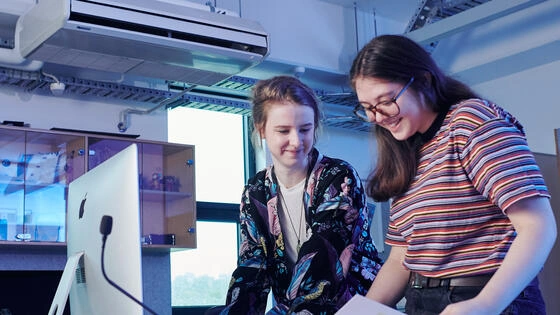
Spend your days learning in speciality spaces, like our industry-standard newsroom and creative media lab, at the #1 public university in Australia for facilities and resources.
-
Learn by doing
Answer industry briefs, gain valuable experience and build networks. Be supported by Deakin to design your internship – choose from 600+ employers or coordinate your own.
-
Double degrees
Boost your employability, consider a Bachelor of Commerce/Bachelor of Communication or Bachelor of Politics, Philosophy and Economics/Bachelor of Communication.
-
Professional recognition
Deakin’s Bachelor of Communication, majoring in public relations, is accredited by the Public Relations Institute of Australia (PRIA).


Connected to industry
Deakin’s strong industry connections help shape your learning. Build practical experience in real workplace contexts through work-integrated learning, mentoring and networking opportunities. Industry advisory boards also help shape our degrees, which means what you study is current, relevant and aligned to what your future employers need.
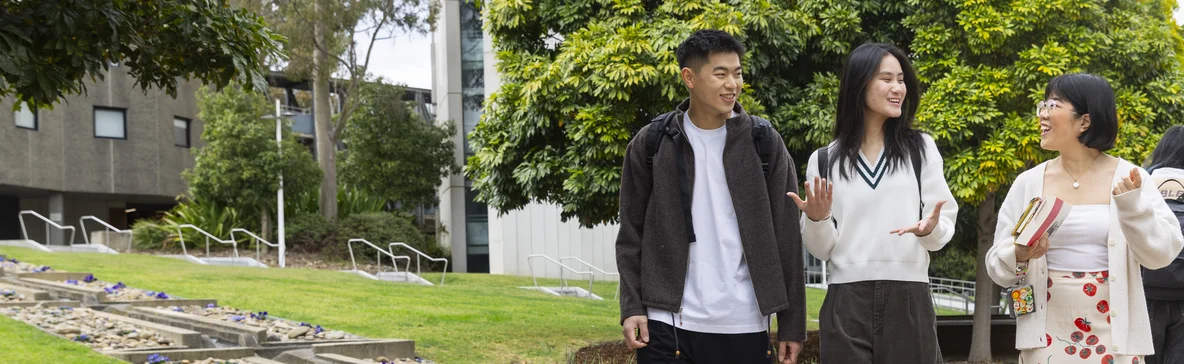
Deakin puts employability first
Career outcomes
Build adaptable communication skills for careers across media, agencies, digital businesses and public, private or not-for-profit organisations. You could create content, shape campaigns, report stories and engage audiences.
Marketing specialist
Plan, create and deliver marketing communications across digital, print and campaign channels to build brand awareness, engage audiences and support business goals.
- $88k
Typical salary in Australia
- 12.6%
Projected job growth in 5 years


Public relations specialist
Build and protect a positive brand image by managing media relations, creating media content and coordinating public events.
- $85K
Typical salary in Australia
- 15,500
More advertising, PR and sales jobs
Other jobs
- Communications officer
- Marketing assistant
- Journalist
- Advertising manager
- Content creator
- Social media manager

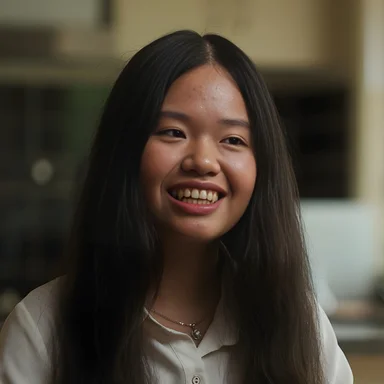

“I was finishing my second year at uni and I already had an entry-level role. This is because Deakin has a dedicated career support program. I'm the marketing specialist for a multi-national company called Schneider Electric.”
HoaBachelor of Communication
Stories that start here



FAQs
A communications degree delivers strong returns in an economy driven by content, media and digital connection. Deakin's Bachelor of Communication is designed with industry input, preparing graduates for journalism, public relations, digital media and corporate communications roles globally. Strong written and strategic communication skills are among the most transferable competencies in any sector.
Yes. The Bachelor of Communication includes opportunities to participate in work-integrated learning, which may include a final-year industry internship with a communications or media organisation. Depending on your interests, you could undertake placements in areas such as national broadcasting, public relations and advertising agencies, sports media, professional client projects or rural and regional community journalism, helping you build professional experience and industry connections.
The journalism major focuses on news writing, investigative reporting, multimedia production and editorial ethics – preparing you for media, broadcasting and digital publishing careers. The public relations major develops skills in strategic communications, media relations, reputation management and campaign development, suited to agencies, corporations and government. Both are offered within the Bachelor of Communication, and both build the writing and audience analysis skills that underpin a wide range of communications careers.
Choose journalism if you are passionate about independent storytelling, news, documentary or digital media production. Choose public relations if you are drawn to strategy, brand communications and reputation management. Choose advertising if you want to understand creative campaigns, brand strategy, audience insights and persuasive communication. The digital and social media major suits those focused on social content, personal branding and platforms. Your choice should reflect the career you want.
You’ll learn in Deakin's industry-standard newsroom and Creative Media Lab, with access to a green-screen studio, creative production suites, editing booths and collaborative news production spaces. Students can also borrow professional media equipment for projects from the Media Resource Centre. These facilities provide hands-on experience in journalism, digital media, content production and multimedia storytelling.
Related courses






*Deakin references data from a range of government, higher education and reputable media sources. Learn more about our achievements on our University rankings page, or explore our sources page for supporting references.
What will I study in the Bachelor of Communication?
Learn the mechanics of media and how to create messages that resonate across platforms, audiences and contexts.

Get the foundations right
Core communication toolkit
Develop skills in writing, storytelling and audience-focused messaging across contemporary media formats.
Pick your major
Choose your major from advertising, digital and social media, journalism or public relations.
Employability from the start
It’s never too early to start thinking about your future career. Begin a structured employability sequence that builds professional habits, confidence and skills.
Build depth and direction
Major-led skill building
Dive into deeper practice areas from campaign thinking and brand communication to platform-user content.
Choice with a purpose
Add a minor or electives that complement your major and expand your options.
Real industry work
Take on briefs, projects and hands-on tasks that help you build a portfolio and learn how to respond to feedback.
Apply, refine and graduate
Advanced communication practice
Tackle projects that reflect current industry communication challenges; planning, producing and evaluating messages for impact.
Ethics and reputation awareness
Strengthen your ability to communicate responsibly, including navigating persuasion, public interest and reputational risk in fast-moving media contexts.
Industry connection and experience
Access industry-linked learning, including internship opportunities, to graduate with professional networks and practical evidence of your abilities.
Course structure
To complete the Bachelor of Communication, you must pass 24 credit points.
Most units are equal to one credit point. As a full-time student you will study four credit points per trimester and usually undertake two trimesters per year.
Are you a current student? For course information that applies to the year you started your degree, visit the handbook.
All students are required to meet the University's academic progress and conduct requirements
Units
Plus 1 credit point from:
Plus 1 credit point from:
All Bachelor of Communication students are required to complete at least one major sequences from the following list:
Bachelor of Communication major sequences
Students may choose to complete a second major sequence from the following list:
School of Communication and Creative Arts major sequences
- Animation
- Communication Design
- Dance
- Interactive and UX^ Design
- Photography
- Screen Development
- Screen Production
- Theatre
- Visual Arts
- Writing
~Only available to students who commenced prior to 2025
^UX refers to User Experience
Please check the rules of each major sequence to see which units you need to complete to achieve the required credit points.
Refer to the details of each major sequence availability and sequence notes relating to incompatibility.
- 2D practices in the visual arts
- 3D practices in the visual arts
- animation and motion graphics
- brand design
- creative advertising
- creative writing
- dance
- design for social media
- digital media
- film studies
- gender and sexuality studies
- indigenous studies*
- interactive design
- journalism
- literature
- photography
- photojournalism
- professional writing
- public relations
- public relations strategy
- publication design
- screen production
- scriptwriting
- social media
- strategic advertising
- theatre
- technical production
- UX design^
- visual effects and virtual production
^ UX refers to User Experience
Please check the rules of each minor sequence to see which units you need to complete to achieve the required credit points.
Students are advised to refer to the details of each major or minor sequence for availability as some may be offered in campus and/or online mode only.
Professional recognition
The Bachelor of Communication (Public Relations Major) will be undergoing professional accreditation by Communication & Public Relations Australia (CPRA) in 2026. When accreditation is granted, students will be eligible for accelerated CPRA membership.

What to expect while studying
You may be able to study available units in the optional third trimester to fast-track your degree, however your course duration may be extended if there are delays in meeting course requirements, such as completing a placement.
Any unit which contains work integrated learning, a community placement or interaction with the community may require a police check, Working with Children Check or other check.
Prepare for your future by getting real world experience and the employability skills to succeed, while completing your degree. The Employability Stream is tailored to support you to be future ready. Deakin’s suite of Work Integrated Learning programs can connect you with internships, social impact programs and opportunities to extend your skills in settings across the globe.
Elective units may also provide additional opportunities for Work Integrated Learning experiences.
Deakin offers many courses which can be studied by distance education overseas.
However, international students living in Australia on a student visa, in each compulsory trimester (that is, Trimesters 1 and 2), must enrol in at least one unit that is offered as a Campus located unit and can, in addition enrol in units offered online. International students may undertake a maximum of up to one third (or equivalent) of their study as online study. Please note enrolment in one face to face unit in compulsory study periods is only allowed if the student is completing their final unit of study and will not exceed maximum one third (or equivalent) online requirement.
At Deakin, we're committed to ensuring an inclusive environment that supports all students to belong, thrive and succeed. We work closely with students, where needed, to identify potential barriers to participation and where possible, provide tailored support so students can engage with learning and assessment activities.
If you are neurodivergent, have a disability, health condition or mental health condition that may impact your study or participation in university life, and want to know how Deakin could support you, contact our Domestic students (opens in a new window) or International students (opens in a new window) or Disability Resource Centre (opens email client) teams for a collaborative and confidential discussion. This discussion is to support you to make plans for your studies and future career and will not have any bearing on your application to the course.
When can I start?
When you study depends on your course, location and available intakes. Check the table to see when you can start and how study is offered throughout the year.
Your course learning outcomes describe the knowledge, skills and capabilities you’ll develop and be able to demonstrate by the time you graduate. Built into your course through your units and assessments, they provide a clear picture of what you’ll be equipped to know, understand and do – preparing you to apply your learning with confidence beyond university.
| Course Learning Outcomes |
|---|
| Evaluate and apply knowledge of media and communication theories, frameworks, ecosystems, and creative practices to provide solutions to real-world contexts. |
| Work creatively, and professionally in written, oral, and multimedia formats to communicate with stakeholders, to achieve defined outcomes and to engage target media audiences. |
| Locate, gather, synthesise, produce, and publish information using industry-standard software across a range of media forms and platforms to inform and engage diverse audiences. |
| Exercise intellectual curiosity, reflexive self-awareness, and ethical judgement to critically analyse and evaluate data and information to inform decisions about communication and media industry practices. |
| Respond to complex and unpredictable challenges and situations that arise in a professional context and devise pragmatic and creative media and communication solutions that are strategic, legal, and ethical. |
| Recognise and exhibit actions consistent with principles of autonomy, responsibility and accountability required to work effectively as a communication professional in a range of contexts. |
| Collaborate respectfully and effectively in a timely way with people from different backgrounds and disciplines to foster successful relationships and achieve shared goals. |
| Apply relevant industry frameworks to inform ethical decision making that is respectful and inclusive of Indigenous voices and diverse cultures, and demonstrates an awareness of civic and social responsibility. |
Approved by Faculty Board February 2022
- Award granted
- Bachelor of Communication
- Year
2027 course information
- VTAC code
- 1400311383 - Waurn Ponds (Geelong), International full-fee paying place
1400511383 - Burwood (Melbourne), International full-fee paying place - Deakin code
- A318
- CRICOS code?Commonwealth Register of Institutions and Courses for Overseas Students
- 109272D Burwood (Melbourne), Waurn Ponds (Geelong)
- Level
- Undergraduate
- Australian Qualifications Framework (AQF) recognition
The award conferred upon completion is recognised in the Australian Qualifications Framework at Level 7
Apply now

Apply directly to Deakin
Apply directly through StudyLink Connect. Depending on your location, you may need to apply through a Deakin Authorised Agent, who can support and submit your application.
See our guide to applying to Deakin for application steps and requirements.

Apply through VTAC
If you are an international student completing an Australian Year 12 in Australia or overseas, you must submit an application through the Victorian Tertiary Admissions Centre (VTAC). In addition, you may also apply directly to Deakin through StudyLink Connect - Deakin University's international student application service.
Recognition of prior learning
We value your previous study and experience. Recognition of prior learning enables you to get credit for what you've already achieved. When you apply, we'll consider your previous study and experience for recognition of prior learning.
Pathways
Further studies are available at Honours and Postgraduate level. Many students choose to enter into the Bachelor of Communication and Creative Arts (Honours) or the Master of Communication.