

#1 sport science school in the world

ESSA-accredited course

$32 million sport science facilities
Why choose Deakin
Study at Deakin – home to the world's #1 ranked sport science school with Deakin's Bachelor of Exercise and Sport Science - Advanced (Honours). Build your expertise in the biological, physiological and behavioural foundations of human movement, health and performance, while developing leadership skills for careers in exercise and sport science, and allied industries.
Train in our elite sports precinct and gain 220 hours of practical experience in external organisations – more than any comparable Victorian course. Choose your specialisation by studying a major in an area like applied sport science, exercise physiology, sport nutrition, physical activity and health and strength and conditioning and complete an original research project in the embedded honours year. With more than 150 industry partners – including Geelong Football Club, Cricket Australia and Tennis Australia – you'll be ready for further study or for a career in Australia's $40 billion sport industry.
-
Proven employability with honours advantage
Graduate from the world’s #1 sport science school and get a career edge. Think critically, solve problems and work with leading experts in your honours research project.
-
Career-ready applied learning plus research depth
Build practical and research skills through 220 hours of placement and an honours project and tailor the course to your interests by choosing a major.
-
Industry-connected learning
Gain hands-on experience through placements with partners including Geelong Football Club, Cricket Australia, Tennis Australia and the Victorian Institute of Sport.
-
Train in elite facilities
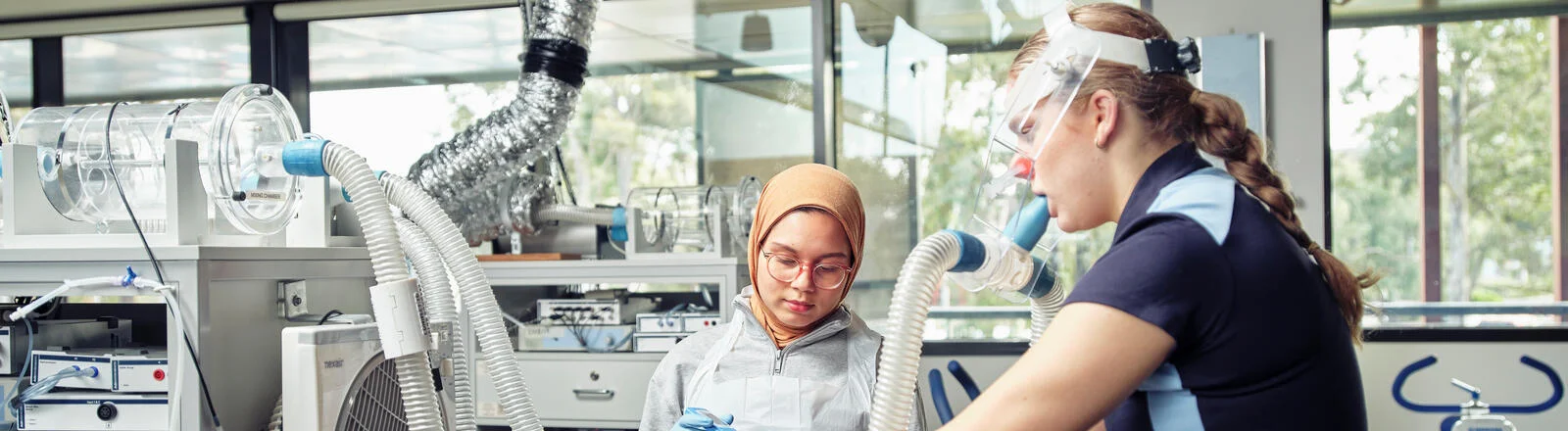
Access world-class biomechanics, physiology, motion capture and high-performance testing facilities used by elite athletes.


Connected to industry
Deakin’s strong industry connections help shape your learning. Build practical experience in real workplace contexts through work-integrated learning, mentoring and networking opportunities. Industry advisory boards also help shape our degrees, which means what you study is current, relevant and aligned to what your future employers need.

Deakin puts employability first
Career outcomes
Combine applied exercise and sport science learning with honours-level research experience and career-focused professional practice.
Exercise scientist
Apply exercise science knowledge to assess movement, prescribe exercise and support health, performance and participation outcomes.
- $70-79k
Average graduate salary
- $120,000+
Average salary after 10 years

Other jobs
- Strength and conditioning coach
- Performance analyst
- Research officer
- Sport development officer
- Exercise physiologist assistant
- Health and fitness coordinator


“Deakin is the ideal place to begin your career in sport. The variety of degrees allow students to have a multitude of roles and careers all around the world. It’s about how you creatively use the skillset developed at Deakin to pursue your chosen career path.”
MonicaExercise and sport science graduate
Key dates

Direct applications
Trimester 1 2027 applications close 7 February 2027

VTAC
FAQs
Yes – every Deakin student can access work-integrated learning (WIL) in their degree. Each year, more than 30,000+ students complete a placement or internship with partners including Microsoft, KPMG, EY and the National Australia Bank. You can access WIL through placements, industry projects, field-based experiences, simulations and global programs, helping you apply your skills and graduate with the experience and confidence employers value.
DeakinTALENT is Deakin's award-winning career service, and you can access it for life – not just while you're studying. From personalised career coaching sessions and AI-enhanced resume support to a jobs and internships board with employment opportunities, it’s designed to give you the career management skills and connections you need to stand out. Every Deakin degree is built with input from employers, so your course is designed around real workplace needs, now and into the future.
Entry requirements and the minimum ATAR vary by degree and are detailed on the degree page, but if your ATAR is below the cut-off, you still have options. Use the pathway finder tool to find the opportunities available to you, including associate degrees and Deakin Guaranteed ATAR, which offers eligible students a guaranteed entry score that's on average 10 points below the lowest selection rank. If you don't have an ATAR, Deakin Uni Ready is a free, supported program designed to build your skills and confidence and open doors to degrees in arts, health, science and business. Access programs and equity schemes are also available.
At Deakin, employability isn't an add-on – it's built in. Our degrees are designed with industry input, so your skills are aligned to what employers actually need. Every Deakin student can access work-integrated learning through opportunities such as placements, internships and industry projects, helping you build your professional network and practical experience before you even graduate. It's an approach that works: nine out of 10 Deakin graduates get a job within four to six months of finishing their degree.
Yes. Most eligible undergraduate students are offered a Commonwealth Supported Place meaning the government subsidises part of your tuition fees. If eligible, you can pay your student contribution using a HECS-HELP loan that you only start repaying once your income is above the repayment threshold. Deakin has scholarships that cater to our diverse student community, ranging from $5,000 per year for high ATAR achievers to $10,000 per year for students facing financial or personal hardship. The University also offers support services including financial counselling, budgeting help and access to short-term, interest-free loans to help you stay on track.
Deakin is the #1 Victorian university for student support and that starts the moment you accept your offer. Orientation is designed to help you feel welcome and get to know your community of classmates and teachers from day one. Across all campuses, there's a vibrant student community with clubs, events and opportunities to build real friendships. Deakin offers a range of services to help students stay healthy and safe, including sport and fitness facilities, free counselling, on-campus medical services and around-the-clock security.
Yes, and it's straightforward. You can transfer to Deakin in a few steps and apply for credit through recognition of prior learning (RPL), so you won't necessarily repeat subjects you've already completed. If you're coming from a TAFE partner, you may get guaranteed entry into second year with guaranteed RPL. Deakin's three-trimester system also means you may be able to start mid-year rather than waiting until March.
Most Deakin courses run across three trimesters per year instead of the traditional two semesters. Trimester 1 begins around March, Trimester 2 around July and Trimester 3 around November, each with roughly 12 weeks of teaching followed by an exam period. This means you can usually start your degree at three different points in the year and have more flexibility to manage your study load. Check the intakes by location section on the course page for details.
Related courses


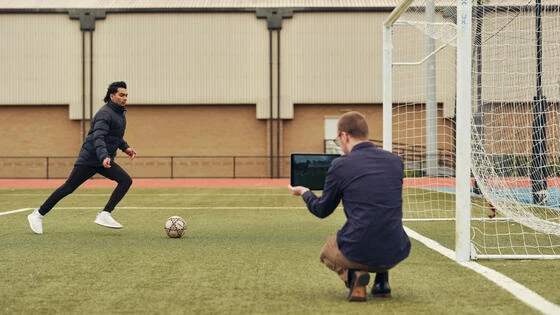
*Deakin references data from a range of government, higher education and reputable media sources. Learn more about our achievements on our University rankings page, or explore our sources page for supporting references.
^Australia is set to host over ten major global sporting events between 2022 – 2032
#Students must achieve a WAM of at least 65 in all level 3 units to progress through to the level 4 ‘honours’ year.
Some courses have limited places, apply early to avoid missing out.
What will I study in the Bachelor of Exercise and Sport Science - Advanced (Honours)?
This four-year program combines the full exercise and sport science curriculum with an embedded honours year designed for high-achieving students seeking advanced research capability, academic distinction and enhanced career progression.
Foundations of movement science
Human structure and function
Develop a comprehensive understanding of anatomy and physiology as the scientific basis for analysing movement and exercise responses.
Introduction to exercise science
Explore how the body adapts to physical activity and the principles underpinning training, health and performance.
Scientific skills
Build capability in data collection, interpretation and evidence-based reasoning, establishing foundations for advanced methodological study.
Developing applied capability
Exercise physiology and biomechanics
Analyse cardiovascular, muscular and mechanical factors influencing performance, adaptation and injury risk.
Performance assessment
Develop practical skills in measurement and evaluation across sport and health contexts, including fitness testing, movement screening and performance profiling.
Industry experience
Complete 80 hours of supervised professional placement to strengthen applied capability in professional exercise and sport settings.
Advanced integration and research development
Exercise programming
Design, implement and critically evaluate structured exercise interventions for athletic, clinical and community populations.
Health applications
Examine the role of exercise in preventing, rehabilitating and managing long-term conditions, integrating physiological, biomechanical and behavioural principles.
Professional practicum
Undertake a second extended placement experience to demonstrate advanced professional capability in an exercise and sport science setting.
Honours research
Advanced research design and ethics
Develop high-level capability in study design, ethical conduct and critical evaluation of contemporary research.
Independent supervised research thesis
Undertake a substantial original investigation in a specialist exercise and sport science area under close academic supervision with defined research milestones.
Advanced data analysis and research communication
Apply advanced statistical or analytical techniques to interpret complex datasets and communicate findings by completing a supervised thesis and formal academic presentation.
Course structure
To complete the Bachelor of Exercise and Sport Science – Advanced (Honours), you must pass 32 credit points.
Most units are equal to one credit point. As a full-time student you will study four credit points per trimester and usually undertake two trimesters per year.
Are you a current student? For course information that applies to the year you started your degree, visit the handbook.
All students are required to meet the University's academic progress and conduct requirements
Units
Year 1 - Trimester 1
plus one elective unit (recommended from level 1)
Trimester 2
plus one elective unit (recommended from level 1)
Year 2 - Trimester 1
plus one elective units (recommended from level 1 or level 2)
Trimester 2
plus one elective unit (recommended from level 2 or level 3)
Year 3 - Trimester 1
plus two elective unit (recommended from level 2 or level 3)
Trimester 2
plus two elective units (recommended from level 2 or level 3)
*Unit also available in Trimester 3
^Indicates compulsory practicum core unit students need to complete in this course - refer course structure
Year 4 - Semester 1
Semester 2
*Note: for 4th year admission students must achieve a WAM of at least 65 in all level 3 Deakin units.
Exercise and Sport Science elective units
Electives are offered subject to availability of resources and quotas where applicable.
Level 1 - Trimester 1
Level 1 - Trimester 2
Level 2 - Trimester 1
Level 2 - Trimester 2
Level 3 - Trimester 1
Level 3 - Trimester 2
Level 3 - Trimester 3
Refer to the details of each major sequence for availability.
- Exercise Physiology
- Applied Sport Science
- Physical Activity and Health
- Sports Nutrition
- Sport Coaching and Coaching Ecosystems *
- Strength and Conditioning
- Psychology - Individual units may not be available on every campus
- Nutrition
- Health Promotion
- Family, Society and Health
- Disability and Inclusion
Note: * Minor available
Students can choose to undertake majors from other courses as long as they can fit the major into their course structure and the majors are available to be undertaken.
Please ensure you discuss your request with your Student Adviser to ensure you are still meeting your course rules.
Professional recognition
Be a sought-after accredited Exercise Scientist. When you graduate with a Bachelor of Exercise and Sport Science - Advanced (Honours), you will be eligible to apply for accreditation with the peak national accrediting body Exercise and Sport Science Australia (ESSA). Deakin was first to achieve this nationally recognised accreditation in Victoria, a result of our long-standing commitment to high education standards and curriculum delivery in sport. For more information please refer to the ESSA-accredited course application process .
Recognition of Prior Learning will only be awarded based on formal learning, which includes at a minimum documented learning outcomes and assessments (e.g. course transcripts and course completion certificates). Students who received credits based on informal learning (e.g. work experience) will need to apply to become an accredited Exercise Scientist via the non-ESSA accredited course application pathway.
If you chose to undertake the nutrition major, you will also be eligible to apply for student membership with the Nutrition Society of Australia (NSA) while studying. Upon graduation you may be eligible to apply for ordinary membership of NSA or apply to become a registered Associate Nutritionist. Registration will ensure you are recognised as a qualified nutrition professional in the field.
It is an ESSA English language requirement if you’re seeking initial accreditation to show English language competence. Find out if you need to take an English language test. If you have any questions about this requirement, please contact info@essa.org.au.

What to expect while studying
^Indicates compulsory practicum core unit students need to complete in this course - refer course structure.
You may be able to study available units in the optional third trimester to fast-track your degree, however your course duration may be extended if there are delays in meeting course requirements, such as completing a placement.
There is a quota on places in the Exercise and Sport Science - Advanced (Honours) program and meeting the criteria does not guarantee acceptance into Honours.
Working with Children Check
Applicants will be required to hold a valid Working with Children Check (WWCC) for the relevant state prior to undertaking placements as part of this course. Further information and guidance will be provided to students when they enrol into their placement units.
Police record check
Applicants will be required to hold a valid National Police Record Check for placements as part of this course. Further information and guidance will be provided to students when they enrol into their placement units.
As a student in the Faculty of Health you can expect to participate in a range of teaching activities each week. This could include lectures, seminars, practical experience and online interaction. You can refer to the individual unit details in the course structure for more information. You will also need to study and complete assessment tasks in your own time.
The course contains compulsory practicum placements designed to meet the ESSA Accredited Exercise Scientist (AES) professional standards. Elective units may be selected that include compulsory placements, work-based training, community-based learning or collaborative research training arrangements.
Placement can occur at any time, including during standard holiday breaks. Learn about key dates at Deakin.
If you are an athlete registered with the Deakin Elite Athlete program. additional supports may be available to help you manage placement and course participation requirements.
Work Integrated Learning
The Bachelor of Exercise and Sport Science - Advanced (Honours) features compulsory practical experience through work-based practicum, so you can start your career before you graduate with hands-on work placement experience.
You have the opportunity to undertake hands-on experience in a variety of sporting, exercise or health environments. These may vary from local, state or national sporting organisations and professional sporting clubs; state and national institutes of sport; as well as health, fitness and exercise physiology rehabilitation providers. The roles can involve coaching, sport science, sports administration, sport management, exercise physiology and fitness. Many graduates are offered subsequent employment based on their excellent practicum/fieldwork performance.
To meet the ESSA professional standards for accreditation, at least 80 hours of course practicum hours must demonstrate attainment of competency in exercise assessment, prescription and delivery.
The units comprising of the practical experience outlined above are HSE312 Exercise and Sports Science Practicum (140 hours) and HSE302 Exercise Programming (80 hours).
At Deakin, we're committed to ensuring an inclusive environment that supports all students to belong, thrive and succeed. We work closely with students, where needed, to identify potential barriers to participation and where possible, provide tailored support so students can engage with learning and assessment activities.
If you are neurodivergent, have a disability, health condition or mental health condition that may impact your study or participation in university life, and want to know how Deakin could support you, contact our Domestic students (opens in a new window) or International students (opens in a new window) or Disability Resource Centre (opens email client) teams for a collaborative and confidential discussion. This discussion is to support you to make plans for your studies and future career and will not have any bearing on your application to the course.
When can I start?
When you study depends on your course, location and available intakes. Check the table to see when you can start and how study is offered throughout the year.
Your course learning outcomes describe the knowledge, skills and capabilities you’ll develop and be able to demonstrate by the time you graduate. Built into your course through your units and assessments, they provide a clear picture of what you’ll be equipped to know, understand and do – preparing you to apply your learning with confidence beyond university.
| Course Learning Outcomes |
|---|
| Demonstrate autonomy, responsibility and well-developed theoretical and technical knowledge within the broad disciplines of exercise and sport science. Acquire and apply advanced knowledge of the philosophies, ethics, methods and principles of research in one or more discipline areas of practice in exercise and sports science to plan and execute a substantial research project. |
| Demonstrate clear and accurate communication using a range of modes to select and deliver relevant information, and advanced oral and written communication skills in the clear and coherent communication of research questions, design and outcomes to a diverse audience. |
| Use a range of digital tools within exercise and sport science environments to accurately and efficiently locate, evaluate and disseminate information, including the collection and analysis of data, and acquire advanced skills in using appropriate technologies to research, analyse, manage, synthesise and disseminate evidence-based information to an academic audience and specialists in the field of exercise and sports science. |
| Use information from multiple sources of evidence to inform decision making applied to exercise and sport science. Employ intellectual independence to critically analyse, evaluate and synthesise scientific literature and to apply appropriate methodologies and analytical techniques to answer the research question. Apply advanced theoretical knowledge to interpret outcomes and to identify how they contribute to advancing the field of exercise and sports science. |
| Independently deconstruct a range of real world and complex problems within exercise and sport science environments to formulate, execute and evaluate possible solutions. Identify an original research question and, under supervision, apply appropriate theories and methodologies to address this question in an ethical manner. |
| Demonstrate the capacity to learn and work independently, taking personal responsibility for actions and outcomes commensurate with priorities and timeframes established both personally and by others. Take initiative to identify personal learning goals and needs, in order to undertake and manage an independent research project including the communication of research outcomes. |
| Consistently demonstrate professional behaviours while making effective contributions across a range of roles when undertaking collaborative work within intra- and inter-disciplinary teams, including contributing constructively and collaboratively as a member of research and professional team of specialists, peers, academics and others from a range of disciplines and backgrounds. |
| Practise ethical and professional behaviours with an awareness of, and sensitivity to, diverse global and local perspectives in exercise and sport science and apply ethical standards governing research and professional practice in the field of exercise and sports science whilst maintaining confidentiality, and respecting inclusive, cultural sensitivities. |
- Award granted
- Bachelor of Exercise and Sport Science - Advanced (Honours)
- Year
2027 course information
- VTAC code
- 1400311581 - Waurn Ponds (Geelong), Commonwealth Supported Place (CSP)
- Deakin code
- H353
- Level
- Undergraduate
- Australian Qualifications Framework (AQF) recognition
The award conferred upon completion is recognised in the Australian Qualifications Framework at Level 8
Fees
Estimated tuition fee
$14,029
for 1 yr full-time - Commonwealth Supported Place (CSP)
The estimated tuition (student contribution) fee above is based on a typical first-year full-time enrolment of 8 credit points and is provided as a guide only. Your student contribution is determined by the units you enrol in and will vary depending on the units you choose, your study load, the course duration, and any approved recognition of prior learning. You may also be eligible for a HECS-HELP loan to defer payment of all or part of your student contribution.
Check your eligibility or learn more about CSP or HECS-HELP.
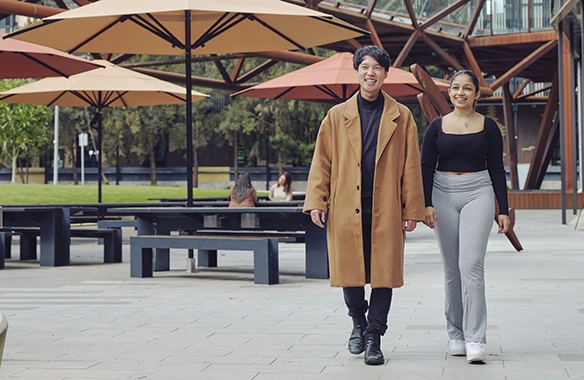
Scholarships
We want to help you excel at Deakin. Our scholarships recognise your dedication and achievements, providing financial support that can ease the cost of living and studying. With less pressure, you'll have more freedom to focus on what matters most – your education and future success.
Applications for 2027 are open
Ready to take the next step? Apply now to start your journey at Deakin and get ready for what’s next.
Key dates
Direct applications
Trimester 1 2027 applications close 7 February 2027
VTAC
Apply now
Apply direct
Simply create an account in the Deakin Application Portal, enter your personal and educational details, upload your supporting documents and submit your application.

Apply through VTAC
Applications are open. Apply through VTAC if you're:
- currently in Year 12 and applying for Trimester 1 or Semester 1
- applying for multiple undergraduate courses
Need help? Follow our step-by-step undergraduate guide to prepare and submit your application.
Recognition of prior learning
We value your previous study and experience. Recognition of prior learning enables you to get credit for what you've already achieved. When you apply, we'll consider your previous study and experience for recognition of prior learning.
The University aims to provide students with as much credit as possible for approved prior study or informal learning which exceeds the normal entrance requirements for the course and is within the constraints of the course regulations. Students are required to complete a minimum of one-third of the course at Deakin University, or four credit points, whichever is the greater.
You can also refer to the recognition of prior learning (RPL) system which outlines the credit that may be granted towards a Deakin University degree and how to apply for credit.
Recognition of Prior Learning (RPL) will only be awarded based on formal learning that includes documented learning outcomes and assessment, such as course transcripts and completion certificates. Students seeking RPL based on informal or non-formal learning, such as work experience, and who wish to obtain ESSA professional accreditation, will need to apply through the non-ESSA accredited course application pathway and should refer to the Professional Recognition section for further information.
Not sure if you'll meet entry requirements?
Deakin offers a range of pathways into the Bachelor of Exercise and Sport Science - Advanced (Honours) to suit your background and goals. Explore the pathways finder to see how previous study, diplomas or alternative qualifications can lead you into the course.
Pathways
This course can be a pathway to:
Master of Applied Sport Science (H707)
Master of Clinical Exercise Physiology (H743)
Doctor of Philosophy (H940)