


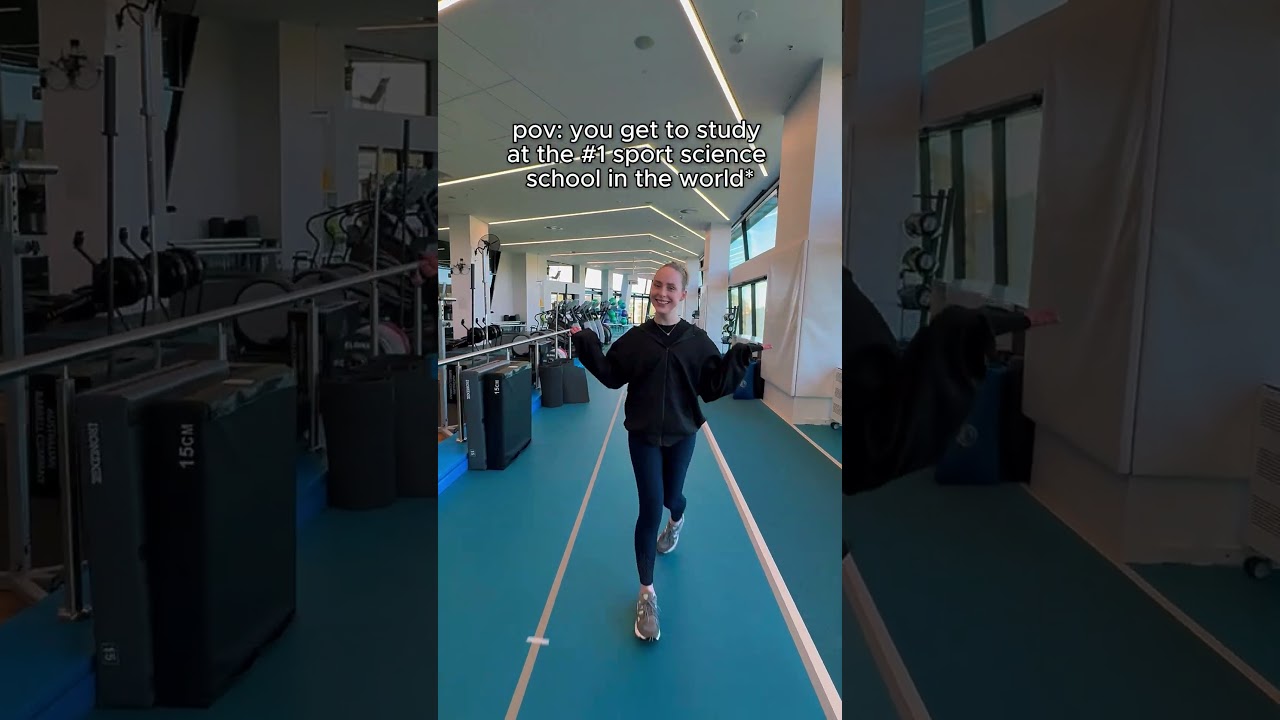
#1 sport science school in the world

ESSA-accredited exercise science degree

220+ hours of placement experience
Why choose exercise and sport science at Deakin
Study at Deakin, home to the world's #1 ranked sport science school for five years, with the Bachelor of Exercise and Sport Science. This professionally recognised degree provides a pathway to Exercise and Sports Science Australia (ESSA) accreditation as an Accredited Exercise Scientist. Build a strong foundation in the physiological, anatomical and behavioural principles of exercise and sport, and learn how these are applied across health, performance and participation.
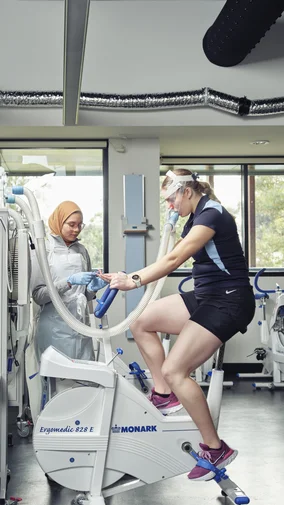
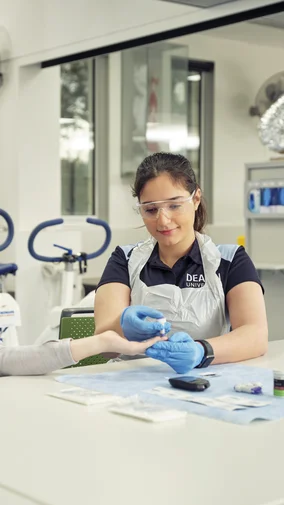
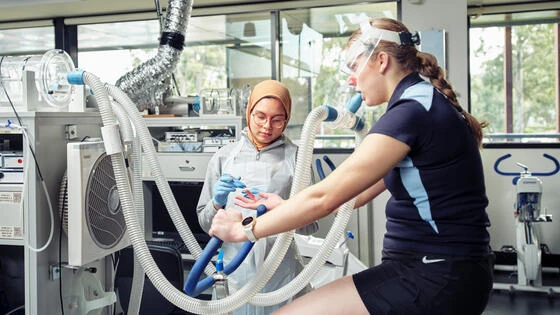
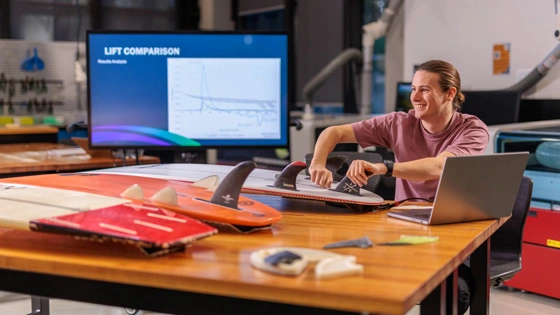
Gain hands-on experience in world-class facilities across Deakin's campuses, including a climate chamber and biomechanics and motor learning laboratories. You will have access to a dedicated athletics track and Elite Sports Precinct in Geelong, supporting athletes from community to elite level. With 220 hours of practical experience – more than any comparable accredited program in Victoria – you will graduate with hands-on experience and strong grounding in contemporary exercise and sport science practice.
-
Unbeatable employability
Study sport at the world’s #1 sport science school. More students choose Deakin for sport than any other university in Australia.
-
Career-ready applied learning
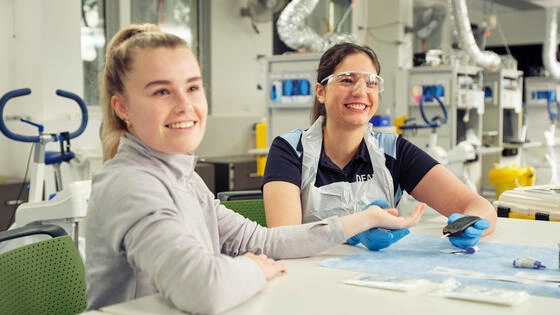
Build practical skills in exercise and sport science. Complete 220 hours of practical placement and study hands-on units grounded in evidence-based practice.
-
Industry-connected learning
Gain real experience through placements with partners including Geelong Football Club, Cricket Australia, Tennis Australia and the Victorian Institute of Sport.
-
Train in elite facilities
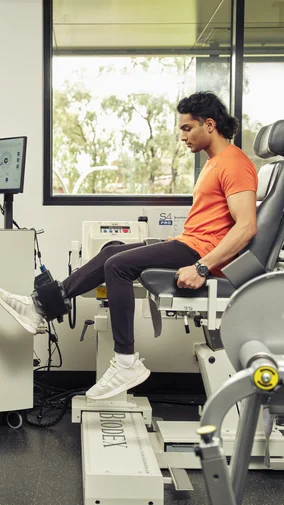
Train in Deakin’s multi-million dollar biomechanics, physiology and motion capture labs, along with high-performance and environmental testing facilities.


Connected to industry
Deakin’s strong industry connections help shape your learning. Build practical experience in real workplace contexts through work-integrated learning, mentoring and networking opportunities. Industry advisory boards also help shape our degrees, which means what you study is current, relevant and aligned to what your future employers need.

Deakin puts employability first
Career outcomes
Prepare for careers that apply exercise and sport science to health, performance, participation and active communities.
Exercise scientist
Apply exercise science knowledge to assess movement, prescribe exercise and support health, performance and participation outcomes.
- $70-79k
Entry-level annual salary
- $120,000
Average salary after 10 years

Other jobs
- Strength and conditioning coach
- Performance analyst
- Sport development officer
- Exercise physiologist assistant
- Research assistant
- Health and fitness coordinator

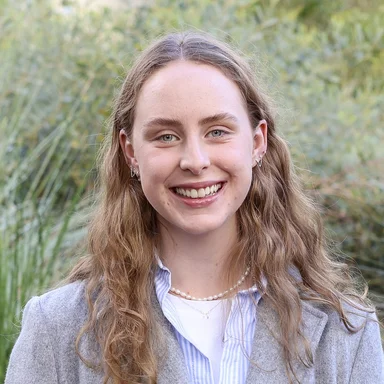

“I want to pursue research and complete my honours and PhD, however, for those wishing to work in industry, this degree does an excellent job of preparing us for that. Between two placements and practical components for nearly every core unit, the focus is on making us industry-ready, which I appreciate.”
CaseyBachelor of Exercise and Sport Science
Stories that start here
Key dates

Direct applications
Trimester 1 2027 applications close 7 February 2027

VTAC

Download a course guide
Study at Deakin and be rewarded with new skills that will give you an edge in the job market
FAQs
Exercise and sport science is the study of human movement, physiology, biomechanics and the psychology of physical activity and performance. It underpins careers in elite sport, community health, rehabilitation, corporate wellness and clinical exercise. The Bachelor of Exercise and Sport Science is accredited by Exercise and Sports Science Australia (ESSA) – the peak professional body for exercise scientists in Australia.
Graduates work as exercise scientists, strength and conditioning coaches, sport performance analysts, rehabilitation specialists and health promotion officers. With further study, you may qualify as an accredited exercise physiologist, sports dietitian or physiotherapist. The degree also supports pathways into coaching, sports administration and allied health. The Bachelor of Exercise and Sport Science includes compulsory placements that meet the Exercise and Sport Science Australia (ESSA) Accredited Exercise Scientist (AES) professional standards. When you graduate, you'll also be eligible to apply for accreditation with ESSA.
One pathway to becoming an Accredited Exercise Physiologist (AEP) is to complete an Exercise and Sport Science Australia (ESSA) accredited undergraduate degree in exercise and sport science, followed by an ESSA-accredited postgraduate degree in exercise physiology. Deakin’s Bachelor of Exercise and Sport Science provides the undergraduate step. You can then progress to the Master of Exercise Physiology at Deakin, which meets ESSA requirements and prepares you to apply for accreditation as an AEP.
Yes. If you don't meet direct entry requirements, diploma and TAFE pathways can provide a guaranteed route into the degree. Depending on your previous study, you may also be considered for admission based on your work and life experience. Contact Deakin to discuss your circumstances, or explore pathways programs for more information.
Yes, hands-on learning is central to the degree, you’ll participate in two industry-based practical experiences. In your second year you’ll complete 80 hours of practical experience at a pre-approved host organisation and a minimum 140 hours of practical experience in your final year. Industry placements give you experience in settings like elite sport clubs, rehabilitation clinics and community health organisations. You’ll also complete laboratory practicals, field testing and performance analysis sessions throughout the course.
Related courses



*Deakin references data from a range of government, higher education and reputable media sources. Learn more about our achievements on our University rankings page, or explore our sources page for supporting references.
What will I study in the Bachelor of Exercise and Sport Science?
This degree explores how the body moves, adapts and performs across health, rehabilitation and sport environments. You’ll learn to use exercise to support behaviour change, disease prevention and performance enhancement, while building a strong foundation for roles in the exercise and sport sector and pathways to further accreditation.
Foundations of movement
Human anatomy and physiology
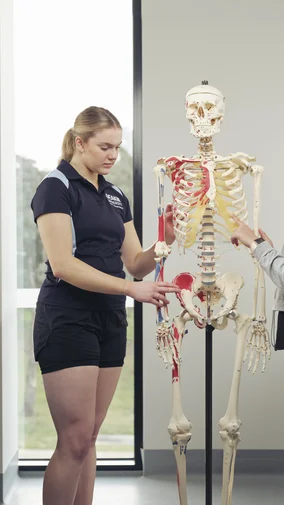
Explore how the body's structure, function and development relate to movement and physical activity.
Exercise science principles
Examine the health benefits of physical activity and barriers to participation, develop skills in exercise prescription and delivery, and study research methods and data analysis.
Start your major
From Year 1 tailor your degree to your career goals by choosing from 11 majors related to performance, participation and health.
Applied performance science
Exercise physiology and health science
Analyse cardiovascular and muscular responses to training using lab testing, applied case studies and performance data interpretation and develop skills in designing and evaluating physical activity interventions across diverse settings.
Biomechanics and performance analysis
Examine movement efficiency and skill acquisition using motion analysis and observational assessment tools.
Placement experience
Complete 80 hours of practical experience at a host organisation to strengthen your professional capability.
Professional preparation
Exercise prescription and program design
Develop structured programs for health and performance outcomes, tailored to diverse populations and supported by evidence-based principles.
Exercise and chronic disease
Investigate exercise in prevention and management across community, clinical and high-performance settings.
Placement experience
Apply professional skills during a second placement in an exercise and sport organisational setting.
Course structure
To complete the Bachelor of Exercise and Sport Science, you must pass 24 credit points.
Most units are equal to one credit point. As a full-time student you will study four credit points per trimester and usually undertake two trimesters per year.
Are you a current student? For course information that applies to the year you started your degree, visit the handbook.
All students are required to meet the University's academic progress and conduct requirements
Units
Level 1 - Trimester 1
plus one elective unit (recommended from level 1)
Level 1 - Trimester 2
plus one elective unit (recommended from level 1)
Level 2 - Trimester 1
plus one elective units (recommended from level 1 or level 2)
Level 2 - Trimester 2
plus one elective unit (recommended from level 2 or level 3)
Level 3 - Trimester 1
plus two elective unit (recommended from level 2 or level 3)
Level 3 - Trimester 2
plus two elective units (recommended from level 2 or level 3)
* Unit also available in Trimester 3
^Indicates compulsory practicum core unit students need to complete in this course
Exercise and Sport Science elective units
Electives are offered subject to availability of resources and quotas where applicable.
Level 1 - Trimester 1
Level 1 - Trimester 2
Level 2 - Trimester 1
Level 2 - Trimester 2
Level 3 - Trimester 1
Level 3 - Trimester 2
Level 3 - Trimester 3
H718 Master of Dietetics Pre-Requisite units information
Students wishing to be eligible to enrol in postgraduate dietetics at Deakin should refer to the H718 Master of Dietetics Pre-requisite unit information
Refer to the details of each major sequence for availability.
- Exercise Physiology
- Applied Sport Science
- Physical Activity and Health
- Sports Nutrition
- Sport Coaching and Coaching Ecosystems *
- Strength and Conditioning
- Psychology - Individual units may not be available on every campus
- Nutrition
- Health Promotion
- Family, Society and Health
- Disability and Inclusion
Note * minor available
Students can choose to undertake majors from other courses as long as they can fit the major into their course structure and the majors are available for you to undertake.
Please ensure you discuss your request with your Course Adviser to ensure you are still meeting your course rules
Professional recognition
Exercise and Sports Science Australia (ESSA)
Be a sought-after Accredited Exercise Scientist. When you graduate with a Bachelor of Exercise and Sport Science, you will be eligible to apply for accreditation with the peak national accrediting body Exercise and Sport Science Australia (ESSA). Deakin was first to achieve this nationally recognised accreditation in Victoria, a result of our long-standing commitment to high education standards and curriculum delivery in sport.
For more information please refer to the ESSA-accredited course application process .
Recognition of Prior Learning will only be awarded based on formal learning, which includes at a minimum documented learning outcomes and assessments (eg. course transcripts and course completion certificates). Students who received credits based on informal learning (eg. work experience) will need to apply to become an Accredited Exercise Scientist via the non-ESSA accredited course application pathway .
It is an ESSA English language requirement if you’re seeking initial accreditation to show English language competence. Find out if you need to take an English language test. If you have any questions about this requirement, please contact info@essa.org.au.
If you chose to undertake the Nutrition major, you will also be eligible to apply for student membership with the Nutrition Society of Australia (NSA) while studying. Upon graduation you may be eligible to apply for ordinary membership of NSA or apply to become a registered Associate Nutritionist. Registration will ensure you are recognised as a qualified nutrition professional in the field.

What to expect while studying
^Indicates compulsory practicum core unit students need to complete in this course - refer course structure.
You may be able to study available units in the optional third trimester to fast-track your degree, however your course duration may be extended if there are delays in meeting course requirements, such as completing a placement.
Working with Children Check
Applicants will be required to hold a valid Working with Children Check (WWCC) for the relevant state prior to undertaking placements as part of this course. Further information and guidance will be provided to students when they enrol into their placement units.
Police record check
Applicants will be required to hold a valid National Police Record Check for placements as part of this course. Further information and guidance will be provided to students when they enrol into their placement units.
As a student in the Faculty of Health you can expect to participate in a range of teaching activities each week. This could include lectures, seminars, practicals and online interaction. You can refer to the individual unit details in the course structure for more information. You will also need to study and complete assessment tasks in your own time.
The course contains compulsory practicum placements designed to meet the ESSA Accredited Exercise Scientist (AES) professional standards. Elective units may be selected that include compulsory placements, work-based training, community-based learning or collaborative research training arrangements.
Placement can occur at any time, including during standard holiday breaks. Learn about key dates at Deakin.
If you are an athlete registered with the Deakin Elite Athlete program. additional supports may be available to help you manage placement and course participation requirements.
Work Integrated Learning
The Bachelor of Exercise and Sport Science features compulsory practical experience through work-based practicum, so you can start your career before you graduate with hands-on work placement experience.
You can undertake hands-on experience in a variety of sporting, exercise or health environments. These may vary from local, state or national sporting organisations and professional sporting clubs; state and national institutes of sport; as well as health, fitness and exercise physiology rehabilitation providers. The roles can involve coaching, sport science, sports administration, sport management, exercise physiology and fitness, while many graduates have been offered subsequent employment based on their excellent practicum/fieldwork performance.
To meet the ESSA professional standards for accreditation, at least 80 hours of course practicum hours must demonstrate attainment of competency in exercise assessment, prescription and delivery.
The units comprising of the practical experience outlined above are HSE312 Exercise and Sports Science Practicum (140 hours) and HSE302 Exercise Programming (80 hours).
At Deakin, we're committed to ensuring an inclusive environment that supports all students to belong, thrive and succeed. We work closely with students, where needed, to identify potential barriers to participation and where possible, provide tailored support so students can engage with learning and assessment activities.
If you are neurodivergent, have a disability, health condition or mental health condition that may impact your study or participation in university life, and want to know how Deakin could support you, contact our Domestic students (opens in a new window) or International students (opens in a new window) or Disability Resource Centre (opens email client) teams for a collaborative and confidential discussion. This discussion is to support you to make plans for your studies and future career and will not have any bearing on your application to the course.
When can I start?
When you study depends on your course, location and available intakes. Check the table to see when you can start and how study is offered throughout the year.
Your course learning outcomes describe the knowledge, skills and capabilities you’ll develop and be able to demonstrate by the time you graduate. Built into your course through your units and assessments, they provide a clear picture of what you’ll be equipped to know, understand and do – preparing you to apply your learning with confidence beyond university.
| Course Learning Outcomes |
|---|
| Demonstrate autonomy, responsibility and well-developed theoretical and technical knowledge within the broad disciplines of exercise and sport science. |
| Demonstrate clear and accurate communication using a range of modes to select and deliver relevant information. |
| Use a range of digital tools within exercise and sport science environments to accurately and efficiently locate, evaluate, and disseminate information, including the collection and analysis of data. |
| Use information from multiple sources of evidence to inform decision making applied to exercise and sport science. |
| Independently deconstruct a range of real world and complex problems within exercise and sport science environments to formulate, execute and evaluate possible solutions. |
| Demonstrate the capacity to learn and work independently, taking personal responsibility for actions and outcomes commensurate with priorities and timeframes established both personally and by others. |
| Consistently demonstrate professional behaviours while making effective contributions across a range of roles when undertaking collaborative work within intra- and inter-disciplinary teams. |
| Practise ethical and professional behaviours with an awareness of, and sensitivity to, diverse global and local perspectives in exercise and sport science. |
- Award granted
- Bachelor of Exercise and Sport Science
- Year
2027 course information
- VTAC code
1400310381 - Waurn Ponds (Geelong), Commonwealth Supported Place (HECS) - Regional and Remote
1400314411 - Waurn Ponds (Geelong), Commonwealth Supported Place (HECS)
1400514411 - Burwood (Melbourne), Commonwealth Supported Place (HECS)
- Deakin code
- H343
- Level
- Undergraduate
- Australian Qualifications Framework (AQF) recognition
The award conferred upon completion is recognised in the Australian Qualifications Framework at Level 7
Fees
Estimated tuition fee
$13,660
for 1 yr full-time - Commonwealth Supported Place (CSP)
The estimated tuition (student contribution) fee above is based on a typical first-year full-time enrolment of 8 credit points and is provided as a guide only. Your student contribution is determined by the units you enrol in and will vary depending on the units you choose, your study load, the course duration, and any approved recognition of prior learning. You may also be eligible for a HECS-HELP loan to defer payment of all or part of your student contribution.
Check your eligibility or learn more about CSP or HECS-HELP.
Scholarships
We want to help you excel at Deakin. Our scholarships recognise your dedication and achievements, providing financial support that can ease the cost of living and studying. With less pressure, you'll have more freedom to focus on what matters most – your education and future success.
Applications for 2027 are open
Ready to take the next step? Apply now to start your journey at Deakin and get ready for what’s next.
Key dates
Direct applications
Trimester 1 2027 applications close 7 February 2027
VTAC
Apply now
Apply direct
Simply create an account in the Deakin Application Portal, enter your personal and educational details, upload your supporting documents and submit your application.

Apply through VTAC
Applications are open. Apply through VTAC if you're:
- currently in Year 12 and applying for Trimester 1 or Semester 1
- applying for multiple undergraduate courses
Need help? Follow our step-by-step undergraduate guide to prepare and submit your application.
Indigenous Access Scheme
If you’re an Indigenous student, you can apply for this course through the Indigenous Access Scheme. We recognise a broader range of achievements alongside ATAR and academic results, considering your skills, experience and community work as preparation for university study.
Recognition of prior learning
We value your previous study and experience. Recognition of prior learning enables you to get credit for what you've already achieved. When you apply, we'll consider your previous study and experience for recognition of prior learning.
The University aims to provide students with as much credit as possible for approved prior study or informal learning which exceeds the normal entrance requirements for the course and is within the constraints of the course regulations. Students are required to complete a minimum of one-third of the course at Deakin University, or four credit points, whichever is the greater.
You can also refer to the recognition of prior learning (RPL) system which outlines the credit that may be granted towards a Deakin University degree and how to apply for credit.
Recognition of Prior Learning (RPL) will only be awarded based on formal learning that includes documented learning outcomes and assessment, such as course transcripts and completion certificates. Students seeking RPL based on informal or non-formal learning, such as work experience, and who wish to obtain ESSA professional accreditation, will need to apply through the non-ESSA accredited course application pathway and should refer to the Professional Recognition section for further information.
Not sure if you'll meet entry requirements?
Deakin offers a range of pathways into the Bachelor of Exercise and Sport Science to suit your background and goals. Explore the pathways finder to see how previous study, diplomas or alternative qualifications can lead you into the course.