


Two degrees in four years to be a teacher

Teaching placements arranged for you by Deakin

Employer-valued trauma-informed toolkit
Why choose arts and teaching (secondary) at Deakin
Combine your passion for the arts with inspiring the next generation by studying Deakin’s Bachelor of Arts/Master of Teaching (Secondary), at a university ranked #3 in Australia and #13 globally for education and educational research. Choosing arts means backing your future: one in four Deakin arts graduates hold leadership or managerial roles.
Accelerate your studies and graduate with two versatile degrees in just four years. With 14 arts majors, including history, media studies, performing arts and more, you can complement your teaching expertise while expanding your career options. Both streams include practical learning, with 60+ days of professional placements in schools arranged for you.
In arts you can take a study tour, study overseas, complete industry projects, intern with one of our 600+ employers or coordinate your own. We are also the only university to embed the Berry Street Education Model - trauma informed strategies, into all initial teaching degrees.
-
Fast-tracked study
Graduate with a Bachelor of Arts and Master of Teaching (Secondary) in four years, with 14 arts study areas to choose from.
-
Real classroom practice
Complete at least 60 days of placement through Deakin’s 1,400+ school network and be mentored by experienced teachers.
-
Trauma-informed teaching
Deakin is the only university in Australia to embed the Berry Street Education Model, which uses trauma informed strategies in all initial teaching degrees.
-
Achieve work-life balance
Deakin’s blend of online and on-campus learning means you can balance work, study and personal development.


Connected to industry
Build classroom-ready skills through professional placements across our network of more than 1,400 schools and 500 early childhood centres. With industry-shaped, trauma-informed, accredited courses, you will graduate ready to support all learners.

Deakin puts employability first
Career outcomes
As a graduate of the Bachelor of Arts/Master of Teaching (Secondary), you will be qualified to teach in secondary schools within Victoria, in the private, independent or public education sectors.
Secondary school teacher
Secondary school teachers promote the academic progress and general wellbeing of young people (typically aged 12 to 18 years) in the high school system.
- $103k
Typical salary in Australia
- 5.4%
Projected job growth in 5 years


Education officer
Develop and deliver learning programs, resources and workshops for schools, communities or public audiences, often in museums, galleries, government or not-for-profit settings.
- $95k
Typical salary in Australia
- 1.32m
Employed in Australia's education sector

Industries you may work in
- Education
- Community services
- Government
- Not-for-profit organisations



“I have a love for history and literature, and I want to pass on these passions to other people and help them learn to appreciate the subjects they cover. Teaching seemed a natural way for me to engage and connect with learners and provide support for those who may struggle to understand the topics.”
ThomasBachelor of Arts/Master of Teaching (Secondary)
Stories that start here


Key dates

Direct applications
Trimester 1 2027 applications close 7 February 2027

VTAC
FAQs
To teach in Victorian secondary schools, you need to complete an accredited initial teacher education degree and register with the Victorian Institute of Teaching (VIT). Deakin's Bachelor of Arts/Master of Teaching (Secondary) delivers both qualifications in four years. You'll complete at least 60 days of supervised school placement and pass literacy and numeracy tests before graduating. Graduates are eligible to apply for VIT registration upon completion.
The combination gives you deep subject expertise in the arts disciplines you'll actually teach, plus a fully accredited teaching qualification – two versatile degrees in four years, faster than studying them separately. Teaching is in strong demand – the Australian Government projects 156,000 new education jobs by 2033, including 5,800 new secondary school teacher positions. Deakin is also the only Australian university to embed the Berry Street Education Model into all initial teaching degrees, equipping you with evidence-based, trauma-informed strategies that make a genuine difference in the classroom.
To teach visual arts, performing arts or media in Victorian secondary schools, you need an accredited initial teacher education qualification and VIT registration. Deakin's Bachelor of Arts/Master of Teaching (Secondary) lets you specialise in one of dance, drama, media, music or visual arts. You'll complete 60 days of supervised school placements and graduate ready to apply for VIT registration and begin your teaching career.
Yes, though you'll need to check the registration requirements in your intended state or territory, as conditions vary. This degree is VIT-accredited for Victorian secondary school teaching, and most Australian states have teacher registration boards with mutual recognition arrangements. Always check your destination state's requirements before commencing placements, as interstate applicants must meet all conditions for placements in their jurisdiction.
Your eligible teaching method areas are based on the arts major and any supporting study you complete in the Bachelor of Arts. You'll graduate with two teaching method areas that align with your discipline studies and the Australian Curriculum, helping prepare you to teach those subjects in secondary schools. If you're unsure which method areas your study qualifies you for, see Deakin's guide to secondary teaching methods.
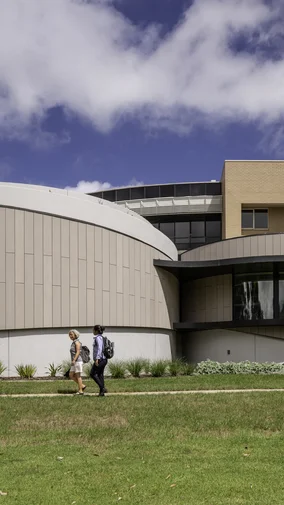
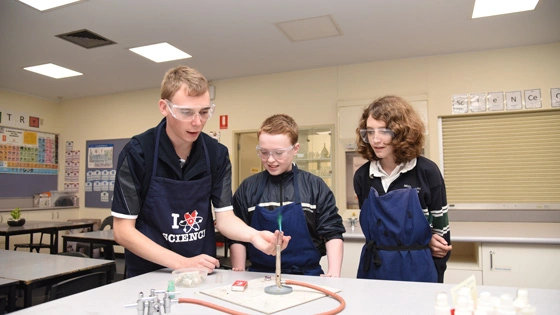
Education students can build confidence in specialised teaching spaces, classrooms and digital learning environments. At Geelong Waurn Ponds Campus, the Nyaal interactive learning precinct includes a 360-degree theatre and collaborative spaces that help you explore classroom scenarios and prepare for professional placements. At the Melbourne Burwood Campus, there are specialist arts spaces and science teaching labs available to support your learning.
Related courses





*Deakin references data from a range of government, higher education and reputable media sources. Learn more about our achievements on our University rankings page, or explore our sources page for supporting references.
What will I study in the Bachelor of Arts/Master of Teaching (Secondary)?
This combined course runs for four years full time. You will spend the first three years building your arts studies, then begin the Master of Teaching in Trimester 3 of Year 3 and complete the postgraduate phase in Year 4.
Arts foundations
Build two arts majors
Start shaping two arts major pathways, while building confidence in how you read, question, analyse and create.
Diversify with electives
Broaden your perspective and explore complementary interests through elective subjects.
Start teaching pathway
Complete foundation requirements that support academic integrity, literacy, numeracy and trauma-informed practice from the start.
Expand your disciplines
Strengthen major sequences
Develop advanced knowledge in your chosen areas so your subject expertise keeps building.
Connect arts with education
Take education electives that introduce ideas about learning, development, and the role of literacy and numeracy across the curriculum.
Keep your options open
Use your remaining electives to broaden your studies.
Transition to teaching
Finish strong in arts
Consolidate advanced study across your majors and electives, before postgraduate progression.
Bridge into professional study
Draw together disciplinary depth and education-focused learning so you are ready to move into the Master of Teaching.
Begin the postgraduate phase
In Trimester 3, after completing the mandatory Casper test, teaching-focused study starts and the pace changes, so you begin preparing for school-based professional experience.
Professional teaching practice
Learn how to teach your subjects
Study pedagogy and curriculum in two teaching specialist areas across middle and senior years.
Build inclusive classroom practice
Develop approaches shaped by diversity, relationships and trauma-informed teaching, supported by Deakin’s Berry Street Education Model.
Put theory into practice
Complete at least 60 days of supervised professional experience and graduate from a VIT-accredited course, ready to apply for registration as a secondary teacher.
Course structure
To complete the Bachelor of Arts/Master of Teaching (Secondary), you must pass 36 credit points.
Most units are equal to one credit point. As a full-time student you will study four credit points per trimester and usually undertake two trimesters per year.
Note:
To progress into the Master of Teaching (Secondary) level of studies of the course, students must have completed all 24 credit points of the undergraduate course, achieve a Weighted Average Mark (WAM) of above 60 and meet the entry requirements for the Master of Teaching (Secondary). A WAM of less than 60 results in an alternative exit from D303 Bachelor of Arts/Master of Teaching (Secondary) with the award: A310 Bachelor of Arts
Are you a current student? For course information that applies to the year you started your degree, visit the handbook.
All students are required to meet the University's academic progress and conduct requirements
Units
Compulsory 0-credit point module
To be completed in the first trimester of study:
Units
Students to select:
- 2 approved Arts major sequences of at least 8 credit points each selected from the following listing:
Humanities: One of below majors, plus select 2 credit points of units from one other of these disciplines (or History)
| Area of Study | Availability |
| Anthropology | Burwood (Melbourne), Online |
| Indigenous Studies | Online~ |
| International Relations | Burwood (Melbourne), Online |
| Middle East Studies | Burwood (Melbourne), Online |
| Philosophy | Burwood (Melbourne), Online |
| Politics and Policy Studies | Burwood (Melbourne), Online |
| Sociology | Burwood (Melbourne), Online |
~ The Indigenous Studies major sequence is offered in the online mode only. International on-campus students must first seek approval from Student Central with a course map plan to ensure they do not exceed one-third (or equivalent) of their course completed online and meet all other course and enrolment rules.
English: one of the below
| Area of Study | Availability |
| English - Children's Literature | Burwood (Melbourne), Online |
| English - Literature | Burwood (Melbourne), Online |
Languages Other than English (LOTE)*
| Area of Study | Availability |
| Chinese | Online |
*Arabic, Indonesian and Spanish Major Sequences, only available to students who commenced prior to 2027.
History
| Area of Study | Availability |
| History | Burwood (Melbourne), Online |
Religious Studies
| Area of Study | Availability |
| Religious Studies | Burwood (Melbourne), Online |
Media Studies
| Area of Study | Availability |
| Media Studies | Burwood (Melbourne), Online |
Performing Arts
| Area of Study | Availability |
| Performing Arts | Burwood (Melbourne) |
Visual Arts and Photography
| Area of Study | Availability |
| Visual Arts and Photography | Burwood (Melbourne) |
- Plus 4 electives selected from another Arts major discipline listed above
- Plus 4 four credit points as specified below:
Plus 2 credit points selected from:
Secondary curriculum study units
All Secondary candidates will have 2 methods (disciplines) as reflected in their undergraduate major and minor sequences related to the Australian Curriculum.
Candidates undertake 2 curriculum studies units (as prescribed) per method (four units in total), across one of two learning areas.
Note: D303 permits a choice between the following learning areas: English, Humanities, History, LOTE, The Arts, Religious Education.
English
Humanities
History
*A student who is completing Humanities and History would replace the second offering of EHU701 with EMM743 Teaching Strategies for the Middle Years
Language Other Than English (LOTE)
The Arts
Single method: One of Dance, Drama, Media, Music or Visual Arts
Second Arts method: One of Dance, Drama, Media, Music or Visual Arts
Religious Education
Compulsory 0-credit point units
To be completed in the first year of study:
Units
Professional readiness units*
(*please note unit rules for order in which these must be completed)
- Plus
2 Secondary Curriculum Studies units in a first teaching method area
And
2 Secondary Curriculum Studies units in a second teaching method area
Professional recognition

This course is accredited by the Victorian Institute of Teaching (VIT) as a nationally accredited course and students are eligible to apply for registration with VIT upon graduation. If you intend to apply for registration in Victoria or interstate you may be required to provide further information.
Applicants are advised to check the registration requirements in their state or territory, carefully.

What to expect while studying
Note:
To complete the course in 4 years as a full-time student; students must commence the Master of Teaching (Secondary) in Trimester 3 of their third year of study.
A Working with Children Check and completion of Casper selection is required before commencing any units from the Master of Teaching (Secondary).
Students will be required to hold a valid Working with Children (WWC) Check prior to undertaking professional placements as part of this course in Year 3, Trimester 3. Learn more about Working with Children Checks.
Interstate applicants must check the requirements and meet all conditions for undertaking professional experience in schools for their state or territory before undertaking professional experience placements as part of this course.
Inherent requirements
It is expected that all students will be able to abide by, and ensure their behaviour is in accordance with the Victorian Institute of Teaching Code of Conduct.
Immunisations
Immunisation and/or vaccination requirements will be communicated by the Professional Experience Office in line with the Department of Education and Training's directions at the time of placement.
For further information contact the School of Education, Professional Experience Office.
Teacher Education Graduation requirements
Students undertaking an initial teacher education course must pass an approved literacy and numeracy test in order to be eligible to graduate and apply for teacher registration. Learn more about the literacy and numeracy test.
Students are required to complete units in Trimester 3 of the third year of study.
Please note that this combined degree course is comprised of 36 credit points (24 counted towards the Bachelor of Arts and 12 counted towards the Master of Teaching (Secondary). The structure of the course utilises the University's trimester model, allowing students to fast-track their studies to complete in a minimum of 4 calendar years (9 teaching periods), with the Master's component completed over 1 calendar year (3 teaching periods).
Trimester 3 in the third year will become compulsory for all students (3 consecutive teaching periods).
This course includes 60-days of supervised professional experience, and students must successfully complete the Deakin Teaching Performance Assessment. Successful completion of this course indicates that a student has met the expected standard of performance for each of the Graduate Teacher Standards.
At Deakin, we're committed to ensuring an inclusive environment that supports all students to belong, thrive and succeed. We work closely with students, where needed, to identify potential barriers to participation and where possible, provide tailored support so students can engage with learning and assessment activities.
If you are neurodivergent, have a disability, health condition or mental health condition that may impact your study or participation in university life, and want to know how Deakin could support you, contact our Domestic students (opens in a new window) or International students (opens in a new window) or Disability Resource Centre (opens email client) teams for a collaborative and confidential discussion. This discussion is to support you to make plans for your studies and future career and will not have any bearing on your application to the course.
When can I start?
When you study depends on your course, location and available intakes. Check the table to see when you can start and how study is offered throughout the year.
Your course learning outcomes describe the knowledge, skills and capabilities you’ll develop and be able to demonstrate by the time you graduate. Built into your course through your units and assessments, they provide a clear picture of what you’ll be equipped to know, understand and do – preparing you to apply your learning with confidence beyond university.
| Course Learning Outcomes Bachelor of Arts (A310) | Course Learning Outcomes Master of Teaching (Secondary) (E779) |
|---|---|
| Demonstrate a broad and coherent body of knowledge in the Arts disciplines, with depth in the underlying principles and concepts in one or more disciplines or areas of practice. | Contribute to critical, professional debates about education theory; local, national and global trends; curriculum; Indigenous and intercultural perspectives; and legal, professional and ethical codes and standards, and critique and apply these understandings to inform their own practice. |
| Demonstrate highly developed skills in oral, written and electronic communication and the ability to communicate research outcomes, and produce scholarly papers. | Apply critical thinking, pedagogical knowledge and effective interpersonal, oral, written and multimodal communication skills to demonstrate empathy, foster learner agency, establish positive and inclusive learning-friendly environments, and build effective professional partnerships and trust with families/caregivers, teaching colleagues and other stakeholders. |
| Research, analyse, synthesise and disseminate information using a range of appropriate technologies and resources in a rapidly-changing global environment. | Act in accordance with the ethical and legal frameworks and policy that inform responsible and ethical practice in digital environments, and critically discuss, evaluate and employ a range of appropriate digital literacies, resources and technologies for professional/community/learner engagement and agency. |
| Use critical and analytical thinking and judgement in selecting and applying appropriate theories and methodologies to evaluate information and knowledge about society, culture and the arts. | Contribute to critical and professional debates about education trends, theory, policy and research and use these understandings to critically reflect on and evaluate own teaching practices and diverse learning data sets to make informed evidence-based judgements for enhancements and innovations to improve learner agency and outcomes. |
| Apply cognitive, technical and creative skills to generate solutions to unpredictable and sometimes complex problems in the Humanities, Social Sciences and the Creative Arts, including cross-disciplinary approaches. | Collaboratively and independently use evidence and research to identify, prioritise and creatively respond to problems that arise in professional learning and practice. |
| Demonstrate autonomy, responsibility and accountability for personal actions and a continued commitment to learning in personal, professional, and scholarly contexts. | Engage autonomously and responsibly with critical self-reflection, self-assessment and feedback from others, to inform their own learning, plan for professional development and to balance academic demands with self-care /self-management. |
| Work and learn collaboratively with colleagues, other professionals and members of the wider community. | Actively and collaboratively participate in, and/or lead learning communities, involving learners, families, community members, colleagues and the broader profession to deepen understandings of education and to optimise learning and learner well-being. |
| Demonstrate an awareness of ethical issues, cultural diversity, and social responsibility when engaging in scholarship and professional roles in the local, national or international community. | Apply culturally responsive, critically reflective and embodied self-knowledge of decolonial praxis in the design, delivery and evaluation of teaching and learning that honours and respects the educational expectations of Aboriginal and Torres Strait Islander students and diverse learners, families and communities. |
Approved at Faculty Board
- Award granted
Bachelor of Arts / Master of Teaching (Secondary)
- Year
2027 course information
- VTAC code
- 1400510301 - Burwood (Melbourne), Commonwealth Supported Place (CSP)
1400610301 - Online, Commonwealth Supported Place (CSP) - Deakin code
- D303
- Level
- Undergraduate
- Australian Qualifications Framework (AQF) recognition
The award conferred upon completion is recognised in the Australian Qualifications Framework at Level 7/9
Fees
Estimated tuition fee
$13,526
for 1 yr full-time - Commonwealth Supported Place (CSP)
The estimated tuition (student contribution) fee above is based on a typical first-year full-time enrolment of 8 credit points and is provided as a guide only. Your student contribution is determined by the units you enrol in and will vary depending on the units you choose, your study load, the course duration, and any approved recognition of prior learning. You may also be eligible for a HECS-HELP loan to defer payment of all or part of your student contribution.
Check your eligibility or learn more about CSP or HECS-HELP.
Scholarships
A Deakin scholarship can open the door to new opportunities. Whether you have something unique to offer or simply need a bit of extra support to reach your goals, we’re here to help. Scholarships can assist with course fees, living costs and study materials – so you can focus on achieving your best.
Commonwealth Teaching Scholarship
The Commonwealth Teaching Scholarships Program provides up to $40,000 to new undergraduate and up to $20,000 to new postgraduate teacher education students. In return for a scholarship, recipients need to teach in government schools or government-run early learning settings after finishing their degree.
Deakin’s Regional and Inclusive Secondary Education (RISE) program, funded by the Victorian Government Department of Education’s Teach Today initiative, gives eligible Master of Teaching (Secondary) students the opportunity to gain para-professional teaching employment within a Victorian Government Secondary School while still studying.
Victorian Government paid teaching placement
Take your teaching placement to a regional or remote Victorian Government school and receive $100-200 per day through the Victorian Government Pre-service Teacher Placement Grant.
If you're eligible, the Commonwealth Prac Payment (CPP) can help with the costs of completing a mandatory placement as part of your course.
Applications for 2027 are open
Ready to take the next step? Apply now to start your journey at Deakin and get ready for what’s next.
Key dates
Direct applications
Trimester 1 2027 applications close 7 February 2027
VTAC
Apply now
Apply direct
Simply create an account in the Deakin Application Portal, enter your personal and educational details, upload your supporting documents and submit your application.

Apply through VTAC
Applications are open. Apply through VTAC if you're:
- currently in Year 12 and applying for Trimester 1 or Semester 1
- applying for multiple undergraduate courses
Need help? Follow our step-by-step undergraduate guide to prepare and submit your application.
Recognition of prior learning
We value your previous study and experience. Recognition of prior learning enables you to get credit for what you've already achieved. When you apply, we'll consider your previous study and experience for recognition of prior learning.
Recognition for Prior Learning in the Master of Teaching (Secondary) is restricted by the professional accreditation structures of the course. Students are encouraged to apply for RPL for comparable curriculum discipline units completed at postgraduate level. Credit is not available for any work experience whether paid or unpaid, qualified or unqualified teacher or teacher aide against the academic professional experience units. You can also refer to the recognition of prior learning (RPL) system which outlines the credit that may be granted towards a Deakin University degree and how to apply for credit.
Not sure if you'll meet entry requirements?
Deakin offers a range of pathways into the Bachelor of Arts/Master of Teaching (Secondary) to suit your background and goals. Explore the pathways finder to see how previous study, diplomas or alternative qualifications can lead you into the course.