
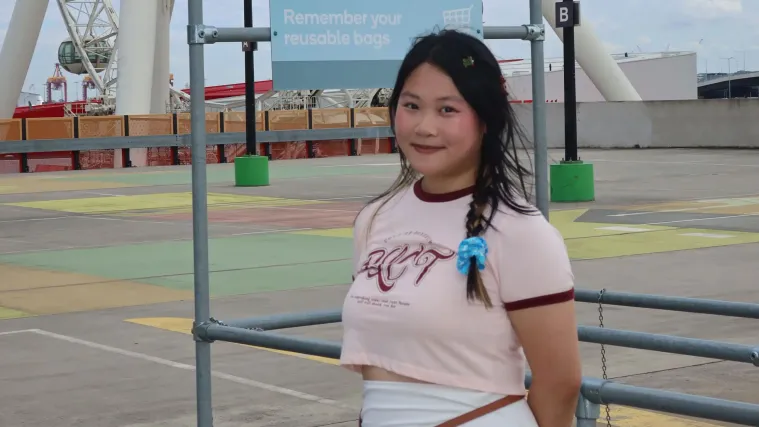
Joycely's story
For a long time, I learned how to survive by staying quiet. I became skilled at appearing 'okay', attending classes, meeting expectations, and continuing forward, even when inside I felt disconnected, overwhelmed, and exhausted. I didn’t have the language to describe what I was feeling, and even if I did, I wasn’t sure it was safe to speak it out loud. Growing up, mental health was rarely discussed openly. Struggle was something to endure privately, not something to name.
Being a neurodiverse woman navigating these mental health challenges in university life brought its own set of pressures. Independence and resilience were celebrated, but vulnerability felt invisible. I told myself that if I worked harder, stayed disciplined, or pushed through, the heaviness would eventually disappear. Instead, it followed me quietly, showing up in anxiety, self-doubt, and emotional burnout.
Living with multiple diagnoses and being on the autism spectrum added layers of complexity that were difficult to explain. Each part of me interacts in ways that are often invisible to others and sometimes even to myself. Emotional storms, racing thoughts, sensory overload, and cycles of self-criticism or numbness could happen all at once, and the world rarely made space for someone experiencing all of these at the same time.
Being a neurodiverse woman navigating these mental health challenges in university life brought its own set of pressures. Independence and resilience were celebrated, but vulnerability felt invisible. I told myself that if I worked harder, stayed disciplined, or pushed through, the heaviness would eventually disappear. Instead, it followed me quietly, showing up in anxiety, self-doubt, and emotional burnout. Cultural expectations and social norms layered on top of my internal struggles, making it even harder to speak openly about my experiences.
There came a point when holding everything in became more painful than the fear of being seen. Reaching out for support didn’t happen all at once – it was a gradual process of acknowledging my struggles and allowing myself to be honest. Speaking my truth felt uncomfortable and unfamiliar, but it also brought relief. For the first time, I realised my experiences didn’t need to be compared, minimised, or justified to be valid.
Recovery has not been linear. Some days are clear and strong, others are simply about getting through. What changed was not the absence of struggle, but my relationship with it. I learned to listen to myself with compassion, to ask for help without shame, and to honour the small victories that reflect resilience, insight, and self-respect.
Navigating life with intersecting mental health diagnoses, neurodiversity, and cultural expectations continues to be challenging, but it has also deepened my empathy, patience, and understanding. My story is not complete, but it is real, and in its complexity, it is valid.
– Joycely
Conversations about mental health and mental illness can sometimes be difficult, and reading about other people going through the same things as you might be confronting. If you need to talk, reach out to our counselling team.