
Indonesia – Gwyn
Student: Gwyn
Course: Bachelor of Laws/Bachelor of International Studies
Program: Trimester exchange T2 2023
New Colombo Plan Scholar
Describe the city you were living in: the landscape, the culture, the weather etc.
Compared to my home city of Geelong, and even Melbourne, Jakarta is a completely different world. With a population of 11.35 million (more than double Melbourne's population), you're never truly alone. Jakarta so large that for administrative purposes it’s considered a province and divided into five 'cities'. Common sights include an abundance of mega malls, clusters of skyscrapers, warungs (local roadside vendors), and swarms of scooters. When talking about Jakarta, it's impossible not to mention the traffic jams and pollution. During rush hour, it can take 30 minutes to travel just 5 kilometres. The air quality is so poor that it sometimes feels hard to breathe, the stars aren’t visible at night, and you can’t see the sunset on the horizon. That said, you quickly learn to appreciate the rare clear sky or a refreshing breeze, and you certainly get plenty of opportunities to practice patience. Despite these challenges, they stand in stark contrast to the warmth of the people and the richness of the culture.
Did you go on any memorable trips to explore your host country or maybe a nearby country?
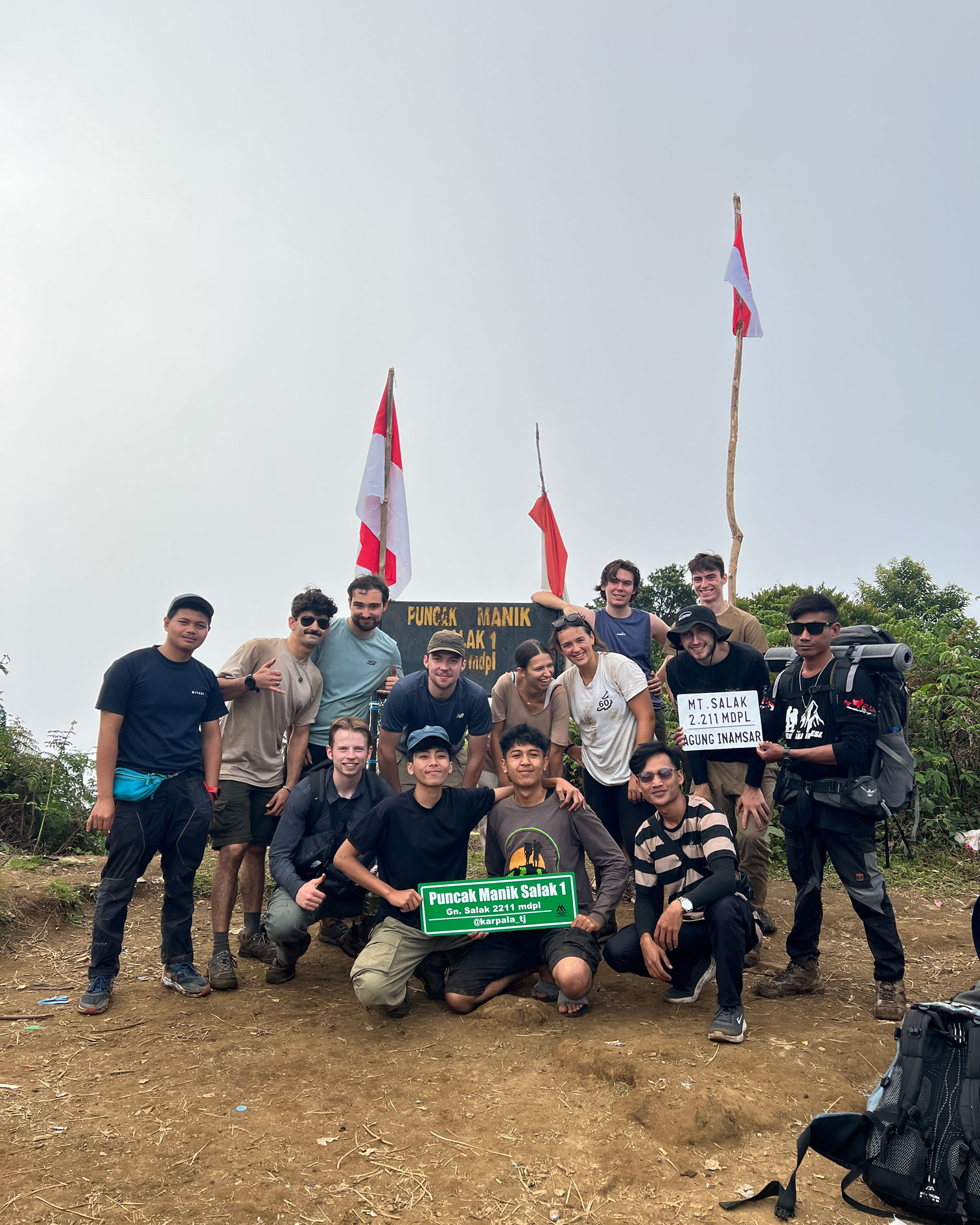
Studying in Jakarta is the perfect gateway to exploring Indonesia. From the capital, it’s easy to catch a flight to nearby islands like Bali, Lombok, or Sumatra, or even hop over to Malaysia. However, some of the most memorable trips were much closer to home. A short boat ride north takes you to Kepulauan Seribu (the Thousand Islands), a serene getaway ideal for snorkeling and escaping Jakarta’s bustle. Just an hour south by train is Bogor, where I hiked Mt. Salak with fellow exchange students from France and the Netherlands. Beyond the cities, Indonesia is world-renowned for its breathtaking landscapes, lush greenery, and diverse wildlife, so there’s plenty to see.
How did you make friends and what sort of things did you do together?
Making friends was incredibly easy, thanks to how welcoming everyone is. In most of my classes, people were quick to introduce themselves and start conversations, as there’s a natural curiosity about international students. When I wanted to be more proactive in meeting people and networking, I found it helpful to ask a question—like where a particular building was or when an event was happening—even if I already knew the answer.
Because of Jakarta’s traffic and the fact that most university students in Indonesia don’t work, many hang around on campus after class. The university canteen, in particular, is a social hotspot. You can go from knowing just a few people to being acquainted with most of the faculty, as everyone gathers there to eat, chat, drink coffee, and smoke.
What is the one big thing you will always remember from your experience? Or one big lesson that you learnt?
At the risk of getting a bit deep, I learned what it truly means to be hospitable and to give without expecting anything in return. I’ll never forget the way I was invited to meals and welcomed into people’s homes as a stranger—regardless of whether they had much or little, I was honoured as a guest in ways I didn’t deserve.
Indonesian friends are incredibly eager to involve you in their lives, often going above and beyond to help—whether it’s finding accommodation, organising trips, connecting you with opportunities, or simply checking in. When I was sick, they were quick to recommend medicines, and on several occasions, they even showed up at my place with food and medicine. The tradition of treating guests is taken very seriously; as a guest, you’re never allowed to pay, and when it comes to paying for them, it can only be done in secret—otherwise, they won’t accept it.
How will your trip add value to your studies ie. Did you gain credit? Was it to increase your employability?
My program was incredibly valuable for reasons beyond just earning academic credit. One of the biggest benefits was the strong network I built. I specifically chose the University of Indonesia for this reason—it’s located in the country’s largest city and is known for producing some of Indonesia’s most successful individuals, including lawyers, politicians, singers, businesspeople, and civil servants.
Another key advantage was the opportunity to boost my employability through internships. The connections I made not only provided advice on which companies and organisations I might want to approach in the future but also introduced me to relatives in the legal profession who could offer potential opportunities.