
South Korea - Rafael
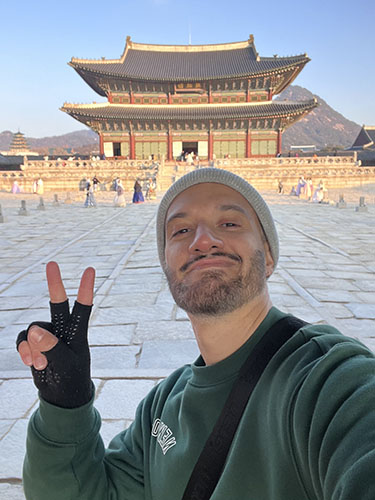
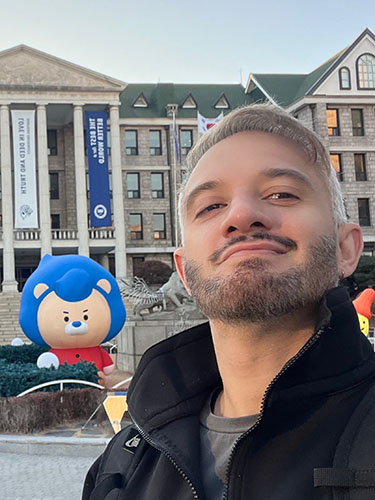
Student: Rafael
Course: Bachelor of International Studies
Program: Short-term exchange T3 2025
Describe the city you were living in: the landscape, the culture, the weather etc.
I was living in Seoul, a city where tradition and hyper-modern life exist side by side. One moment you’re surrounded by glass towers, neon signs, and fast-moving crowds, and the next you’re walking through palace grounds, temple courtyards, or quiet streets lined with hanok houses. The city feels vertical and alive – cafés stacked on multiple floors, subway lines running like arteries beneath everything, and mountains visible in the distance no matter where you are.
The culture is very social but also deeply respectful. There’s a strong emphasis on etiquette, presentation, and community, especially in public spaces. The weather during my stay was cold and crisp, which made the city feel even more cinematic – steam rising from street food stalls, people wrapped in long coats, and warm cafés becoming little refuges from the cold.
What were some of the differences you observed to Australia when you arrived?
The biggest difference was pace and density. Seoul feels constantly in motion compared to Australia – public transport is incredibly efficient, streets are busy late into the night, and everything feels designed for people rather than cars.
Socially, I noticed a stronger sense of formality and hierarchy, especially in how people speak to each other and interact in academic or service settings. At the same time, there’s a huge culture of shared experiences – eating together, studying together, and socialising late into the night, which felt very different from the more individualistic lifestyle I’m used to in Australia.
Describe a normal day in your life overseas: your university, your work placement or your study tour.
A normal day usually started with a coffee from a local café near my accommodation before heading to campus for classes and lectures. My mornings were focused on academic sessions, discussions, and group activities, often with students from different countries, which made every class feel international and dynamic.
In the afternoons, I would explore a different part of the city – museums, libraries, cultural villages, or just walking through neighbourhoods like Hongdae, Insadong, or around the palaces. Evenings were usually spent trying new food spots, journaling, or meeting friends in cafés or casual restaurants.
How did you spend your weekends?
Weekends were for exploration. I visited major cultural landmarks like palaces, traditional villages, art districts, and scenic viewpoints like Seoul Tower and the old city walls. I also loved going to night markets, spa complexes, and late-night food streets where the city feels most alive.
Some weekends were slower and more reflective – sitting in aesthetic cafés, writing in my journal, and people-watching, which became one of my favourite ways to absorb the culture.
Did you go on any memorable trips to explore your host country or maybe a nearby country?
One of the most memorable experiences was exploring areas outside the main city centre, including cultural villages and large national museums that gave me a deeper understanding of Korea’s history and identity. Visiting spa complexes and traditional neighbourhoods also felt like stepping into a different rhythm of Korean life, away from the fast pace of the city.
What's the best/most memorable thing you ate?
The most memorable food experience was Korean comfort food on cold nights – handmade noodles, dumpling soups, and sizzling street food. One standout for me was a simple but perfect bowl of knife-cut noodles and dumplings from a small, busy restaurant – warm, filling, and deeply comforting after long days of walking and studying.
How did you make friends and what sort of things did you do together?
I made most of my friends through university classes and group activities. Being an international student created an instant sense of connection because everyone was navigating a new culture together.
How did you decide which study abroad opportunity to do?
I chose this program because I wanted an experience that went beyond just studying in another country. I was looking for a place where culture, history, and everyday life felt deeply intertwined, and Seoul offered that balance. The academic focus aligned well with my broader studies in international and cultural contexts, and I was also drawn to the idea of living in a city that is both globally connected and culturally distinct.
Was there some aspect of your trip that was different to your expectations?
I expected Seoul to feel very fast-paced and technologically driven, but what surprised me most was how warm and human the experience felt. Behind the efficiency and modernity, there was a strong sense of community – from small café owners who remembered my order to students who were eager to include me in their social and study groups. It felt more personal than I had imagined.
What was something that challenged you?
The language barrier was my biggest challenge. While many people speak some English, daily tasks like reading signs, ordering food, or navigating less tourist-oriented areas pushed me to become more patient, observant, and confident in communicating non-verbally. It was uncomfortable at first, but it became one of the most valuable parts of the experience.
What's your one piece of advice for a student who is preparing to study abroad? How should they prepare?
My advice is to prepare practically, but also emotionally. Learn a few key phrases in the local language, understand basic cultural etiquette, and organise your documents early. But just as importantly, go in with curiosity rather than expectations. The more open you are to uncertainty and difference, the richer the experience becomes.
What is the one big thing you will always remember from your experience? Or one big lesson that you learnt?
The biggest lesson I learned is that growth often happens in the quiet, everyday moments – figuring out public transport, sharing meals with new friends, or getting lost in a neighbourhood and discovering something unexpected. Those small moments built my confidence and sense of independence far more than any single “big” event.
How did you finance your trip? How much did your trip cost?
I financed my trip through personal savings and careful budgeting. I chose affordable accommodation, relied heavily on public transport, and balanced eating out with simple, low-cost meals. Overall, I kept my expenses focused on experiences rather than luxury, which allowed me to make the most of my time without overspending.
How will your trip add value to your studies? Did you gain credit? Was it to increase your employability?
The program contributed directly to my academic pathway by strengthening my understanding of international and cross-cultural contexts. Beyond formal credit, it significantly increased my employability by developing my intercultural communication skills, adaptability, and confidence working in unfamiliar environments – all of which are highly valued in global and people-focused professions.